• 文献检索
  • 文档翻译
  • 深度研究
  • 学术资讯
  • Suppr Zotero 插件Zotero 插件
  • 邀请有礼
  • 套餐&价格
  • 历史记录
应用&插件
Suppr Zotero 插件Zotero 插件浏览器插件Mac 客户端Windows 客户端微信小程序
定价
高级版会员购买积分包购买API积分包
服务
文献检索文档翻译深度研究API 文档MCP 服务
关于我们
关于 Suppr公司介绍联系我们用户协议隐私条款
关注我们

Suppr 超能文献

核心技术专利:CN118964589B侵权必究
粤ICP备2023148730 号-1Suppr @ 2026

文献检索

告别复杂PubMed语法,用中文像聊天一样搜索,搜遍4000万医学文献。AI智能推荐,让科研检索更轻松。

立即免费搜索

文件翻译

保留排版,准确专业,支持PDF/Word/PPT等文件格式,支持 12+语言互译。

免费翻译文档

深度研究

AI帮你快速写综述,25分钟生成高质量综述,智能提取关键信息,辅助科研写作。

立即免费体验

将移动健康设备整合到社区青少年心理健康团队以管理严重精神疾病:一项随机对照试验的方案

Integrating a Mobile Health Device Into a Community Youth Mental Health Team to Manage Severe Mental Illness: Protocol for a Randomized Controlled Trial.

作者信息

Byrne Simon, Kotze Beth, Ramos Fabio, Casties Achim, Starling Jean, Harris Anthony

机构信息

Western Sydney Local Health District Mental Health Service, Sydney, NSW, Australia.

Westmead Institute for Medical Research, Sydney, Australia.

出版信息

JMIR Res Protoc. 2020 Nov 2;9(11):e19510. doi: 10.2196/19510.

DOI:10.2196/19510
PMID:33136053
原文链接:https://pmc.ncbi.nlm.nih.gov/articles/PMC7669449/
Abstract

BACKGROUND

Symptoms of mental illness are often triggered by stress, and individuals with mental illness are sensitive to these effects. The development of mobile health (mHealth) devices allows continuous recording of biometrics associated with activity, sleep, and arousal. Deviations in these measures could indicate a stressed state requiring early intervention. This paper describes a protocol for integrating an mHealth device into a community mental health team to enhance management of severe mental illness in young adults.

OBJECTIVE

The aim of this study is to examine (1) whether an mHealth device integrated into a community mental health team can improve outcomes for young adults with severe mental illness and (2) whether the device detects periods of mental health versus deterioration.

METHODS

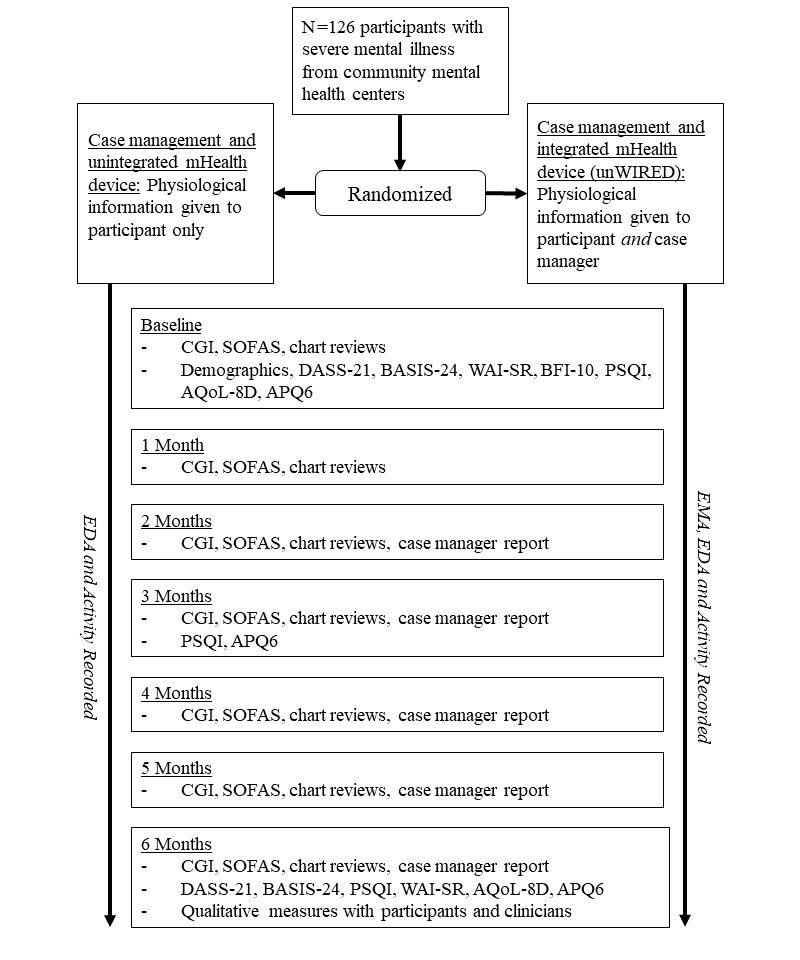
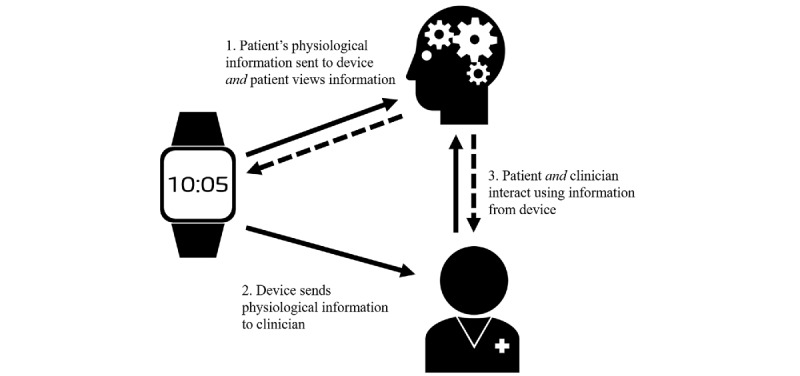
This study examines whether physiological information from an mHealth device prevents mental deterioration when shared with the participant and clinical team versus with the participant alone. A randomized controlled trial (RCT) will allocate 126 young adults from community mental health services for 6 months to standard case management combined with an integrated mHealth device (ie, physiological information is viewed by both participant and case manager: unWIRED intervention) or an unintegrated mHealth device (ie, participant alone self-monitors: control). Participants will wear the Empatica Embrace2 device, which continuously records electrodermal activity and actigraphy (ie, rest and activity). The study also examines whether the Embrace2 can detect periods of mental health versus deterioration. A variety of measurements will be taken, including physiological data from the Embrace2; participant and case manager self-report regarding symptoms, functioning, and quality of life; chart reviews; and ecological momentary assessments of stress in real time. Changes in each participant's Clinical Global Impression Scale scores will be assessed by blinded raters as the primary outcome. In addition, participants and case managers will provide qualitative data regarding their experience with the integrated mHealth device, which will be thematically analyzed.

RESULTS

The study has received ethical approval from the Western Sydney Local Health District Human Research Ethics Committee. It is due to start in October 2020 and conclude in October 2022.

CONCLUSIONS

The RCT will provide insight as to whether an integrated mHealth device enables case managers and participants to pre-emptively manage early warning signs and prevent relapse. We anticipate that unWIRED will enhance early intervention by improving detection of stress and allowing case managers and patients to better engage and respond to symptoms.

TRIAL REGISTRATION

Australian New Zealand Clinical Trials Registry (ANZCTR) ACTRN12620000642987; https://www.anzctr.org.au/ACTRN12620000642987.aspx.

INTERNATIONAL REGISTERED REPORT IDENTIFIER (IRRID): PRR1-10.2196/19510.
https://cdn.ncbi.nlm.nih.gov/pmc/blobs/aa75/7669449/4f4cfe9cddde/resprot_v9i11e19510_fig2.jpg
https://cdn.ncbi.nlm.nih.gov/pmc/blobs/aa75/7669449/3261b95f9b36/resprot_v9i11e19510_fig1.jpg
https://cdn.ncbi.nlm.nih.gov/pmc/blobs/aa75/7669449/4f4cfe9cddde/resprot_v9i11e19510_fig2.jpg
https://cdn.ncbi.nlm.nih.gov/pmc/blobs/aa75/7669449/3261b95f9b36/resprot_v9i11e19510_fig1.jpg
https://cdn.ncbi.nlm.nih.gov/pmc/blobs/aa75/7669449/4f4cfe9cddde/resprot_v9i11e19510_fig2.jpg
摘要

背景

精神疾病症状常由压力引发,患有精神疾病的个体对这些影响较为敏感。移动健康(mHealth)设备的发展使得与活动、睡眠和觉醒相关的生物特征能够被持续记录。这些指标的偏差可能表明处于需要早期干预的压力状态。本文描述了一项将mHealth设备整合到社区精神卫生团队中以加强对年轻成年人严重精神疾病管理的方案。

目的

本研究的目的是检验(1)整合到社区精神卫生团队中的mHealth设备是否能改善患有严重精神疾病的年轻成年人的治疗效果,以及(2)该设备能否检测出精神健康期与病情恶化期。

方法

本研究考察与参与者单独分享相比,当与参与者及临床团队分享来自mHealth设备的生理信息时,是否能预防精神衰退。一项随机对照试验(RCT)将把126名来自社区精神卫生服务机构的年轻成年人分配到为期6个月的标准病例管理组,其中一组结合整合式mHealth设备(即参与者和病例管理员都能查看生理信息:未连线干预),另一组结合非整合式mHealth设备(即参与者独自进行自我监测:对照组)。参与者将佩戴Empatica Embrace2设备,该设备可持续记录皮肤电活动和活动记录仪数据(即休息和活动情况)。该研究还考察Embrace2能否检测出精神健康期与病情恶化期。将进行多种测量,包括来自Embrace2的生理数据;参与者和病例管理员关于症状、功能和生活质量的自我报告;病历审查;以及实时的压力生态瞬时评估。由不知情的评估者评估每位参与者临床总体印象量表评分的变化作为主要结果。此外,参与者和病例管理员将提供关于他们使用整合式mHealth设备体验的定性数据,并进行主题分析。

结果

该研究已获得西悉尼地方卫生区人类研究伦理委员会的伦理批准。研究定于2020年10月开始,2022年10月结束。

结论

该随机对照试验将提供关于整合式mHealth设备是否能使病例管理员和参与者预先管理早期预警信号并预防复发的见解。我们预计未连线干预将通过改善压力检测并使病例管理员和患者能更好地应对症状来加强早期干预。

试验注册

澳大利亚新西兰临床试验注册中心(ANZCTR)ACTRN12620000642987;https://www.anzctr.org.au/ACTRN12620000642987.aspx。

国际注册报告识别码(IRRID):PRR1-10.2196/19510。

相似文献

1
Integrating a Mobile Health Device Into a Community Youth Mental Health Team to Manage Severe Mental Illness: Protocol for a Randomized Controlled Trial.将移动健康设备整合到社区青少年心理健康团队以管理严重精神疾病:一项随机对照试验的方案
JMIR Res Protoc. 2020 Nov 2;9(11):e19510. doi: 10.2196/19510.
2
Using a mobile health device to manage severe mental illness in the community: What is the potential and what are the challenges?使用移动医疗设备管理社区中的严重精神疾病:有哪些潜力和挑战?
Aust N Z J Psychiatry. 2020 Oct;54(10):964-969. doi: 10.1177/0004867420945782. Epub 2020 Aug 8.
3
A Web-Based Intervention for Young Adults Whose Parents Have a Mental Illness or Substance Use Concern: Protocol for a Randomized Controlled Trial.一项针对父母患有精神疾病或存在物质使用问题的年轻人的基于网络的干预措施:一项随机对照试验的方案
JMIR Res Protoc. 2020 Jun 18;9(6):e15626. doi: 10.2196/15626.
4
A Mobile Peer Intervention for Preventing Mental Health and Substance Use Problems in Adolescents: Protocol for a Randomized Controlled Trial (The Mind Your Mate Study).一项预防青少年心理健康和物质使用问题的移动同伴干预措施:一项随机对照试验的方案(关注你的同伴研究)
JMIR Res Protoc. 2021 Jul 30;10(7):e26796. doi: 10.2196/26796.
5
Reducing Cannabis Use in Young Adults With Psychosis Using iCanChange, a Mobile Health App: Protocol for a Pilot Randomized Controlled Trial (ReCAP-iCC).使用移动健康应用程序iCanChange减少患有精神病的年轻人的大麻使用:一项试点随机对照试验(ReCAP-iCC)的方案
JMIR Res Protoc. 2022 Nov 25;11(11):e40817. doi: 10.2196/40817.
6
Efficacy of a Web-Based Guided Recommendation Service for a Curated List of Readily Available Mental Health and Well-Being Mobile Apps for Young People: Randomized Controlled Trial.基于网络的针对青少年现成心理健康与幸福移动应用精选列表的引导式推荐服务的效果:随机对照试验
J Med Internet Res. 2017 May 12;19(5):e141. doi: 10.2196/jmir.6775.
7
A Mobile Health Intervention (LifeBuoy App) to Help Young People Manage Suicidal Thoughts: Protocol for a Mixed-Methods Randomized Controlled Trial.一种帮助年轻人管理自杀念头的移动健康干预措施(卫宝应用程序):一项混合方法随机对照试验的方案
JMIR Res Protoc. 2020 Oct 27;9(10):e23655. doi: 10.2196/23655.
8
A Complex mHealth Coaching Intervention to Prevent Overweight, Obesity, and Diabetes in High-Risk Women in Antenatal Care: Protocol for a Hybrid Type 2 Effectiveness-Implementation Study.一项用于预防产前保健高危女性超重、肥胖和糖尿病的复杂移动健康指导干预措施:一项混合型2期有效性-实施性研究方案
JMIR Res Protoc. 2023 Sep 18;12:e51431. doi: 10.2196/51431.
9
Coping Skills Mobile App to Support the Emotional Well-Being of Young People During the COVID-19 Pandemic: Protocol for a Mixed Methods Study.应对技能移动应用程序在新冠疫情期间支持年轻人的情绪健康:一项混合方法研究的方案
JMIR Res Protoc. 2020 Oct 8;9(10):e23716. doi: 10.2196/23716.
10
A Gambling Just-In-Time Adaptive Intervention (GamblingLess: In-The-Moment): Protocol for a Microrandomized Trial.一种即时自适应赌博干预措施(减少赌博:即时):微随机试验方案
JMIR Res Protoc. 2022 Aug 23;11(8):e38958. doi: 10.2196/38958.

引用本文的文献

1
Leveraging Personal Technologies in the Treatment of Schizophrenia Spectrum Disorders: Scoping Review.利用个人技术治疗精神分裂谱系障碍:范围综述。
JMIR Ment Health. 2024 Sep 30;11:e57150. doi: 10.2196/57150.
2
A collaborative realist review of remote measurement technologies for depression in young people.青少年抑郁症远程测量技术的协同现实主义评价研究
Nat Hum Behav. 2024 Mar;8(3):480-492. doi: 10.1038/s41562-023-01793-5. Epub 2024 Jan 15.

本文引用的文献

1
Using a mobile health device to manage severe mental illness in the community: What is the potential and what are the challenges?使用移动医疗设备管理社区中的严重精神疾病:有哪些潜力和挑战?
Aust N Z J Psychiatry. 2020 Oct;54(10):964-969. doi: 10.1177/0004867420945782. Epub 2020 Aug 8.
2
Blending active and passive digital technology methods to improve symptom monitoring in early psychosis.融合主动和被动数字技术方法以改善早期精神病症状监测。
Early Interv Psychiatry. 2019 Oct;13(5):1271-1275. doi: 10.1111/eip.12796. Epub 2019 Feb 28.
3
Identifying Objective Physiological Markers and Modifiable Behaviors for Self-Reported Stress and Mental Health Status Using Wearable Sensors and Mobile Phones: Observational Study.
使用可穿戴传感器和手机识别自我报告的压力和心理健康状况的客观生理标志物及可改变行为:观察性研究
J Med Internet Res. 2018 Jun 8;20(6):e210. doi: 10.2196/jmir.9410.
4
A survey on sleep assessment methods.一项关于睡眠评估方法的调查。
PeerJ. 2018 May 25;6:e4849. doi: 10.7717/peerj.4849. eCollection 2018.
5
Using wearable technology to detect the autonomic signature of illness severity in schizophrenia.使用可穿戴技术检测精神分裂症患者疾病严重程度的自主特征。
Schizophr Res. 2018 May;195:537-542. doi: 10.1016/j.schres.2017.09.028. Epub 2017 Oct 3.
6
Intensive case management for severe mental illness.严重精神疾病的强化个案管理。
Cochrane Database Syst Rev. 2017 Jan 6;1(1):CD007906. doi: 10.1002/14651858.CD007906.pub3.
7
Machine learning, statistical learning and the future of biological research in psychiatry.机器学习、统计学习与精神病学领域生物研究的未来
Psychol Med. 2016 Sep;46(12):2455-65. doi: 10.1017/S0033291716001367. Epub 2016 Jul 13.
8
Treatment engagement of individuals experiencing mental illness: review and update.患有精神疾病个体的治疗参与度:综述与更新
World Psychiatry. 2016 Feb;15(1):13-20. doi: 10.1002/wps.20306.
9
Mobile-health: A review of current state in 2015.移动健康:2015年现状综述
J Biomed Inform. 2015 Aug;56:265-72. doi: 10.1016/j.jbi.2015.06.003. Epub 2015 Jun 11.
10
Psychometric properties of the BASIS-24© (Behaviour and Symptom Identification Scale-Revised) Mental Health Outcome Measure.BASIS-24©(行为和症状识别量表修订版)心理健康结局测量的心理计量学特性。
Int J Psychiatry Clin Pract. 2007;11(1):36-43. doi: 10.1080/13651500600885531.