IDLab-Faculty of Applied Engineering, University of Antwerp-imec, Sint-Pietersvliet 7, 2000 Antwerp, Belgium.
Sensors (Basel). 2020 Oct 29;20(21):6172. doi: 10.3390/s20216172.
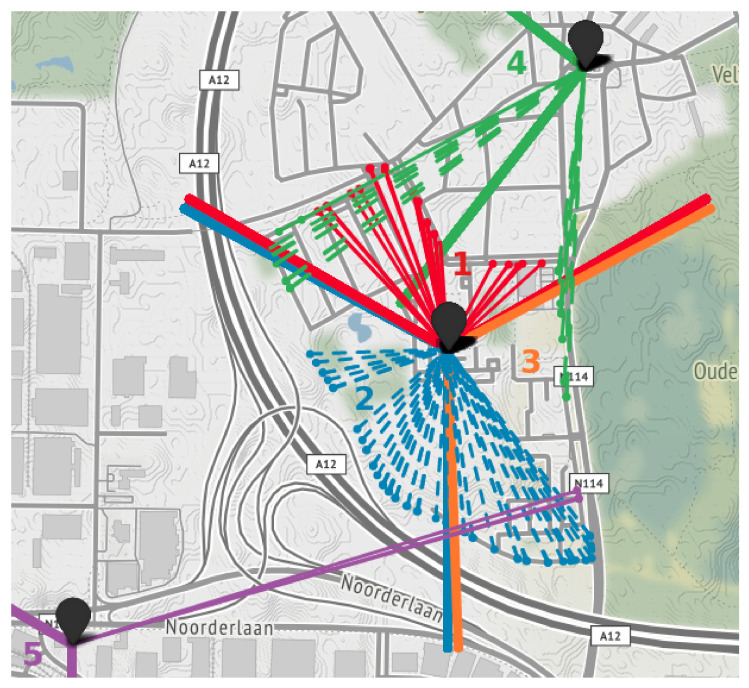
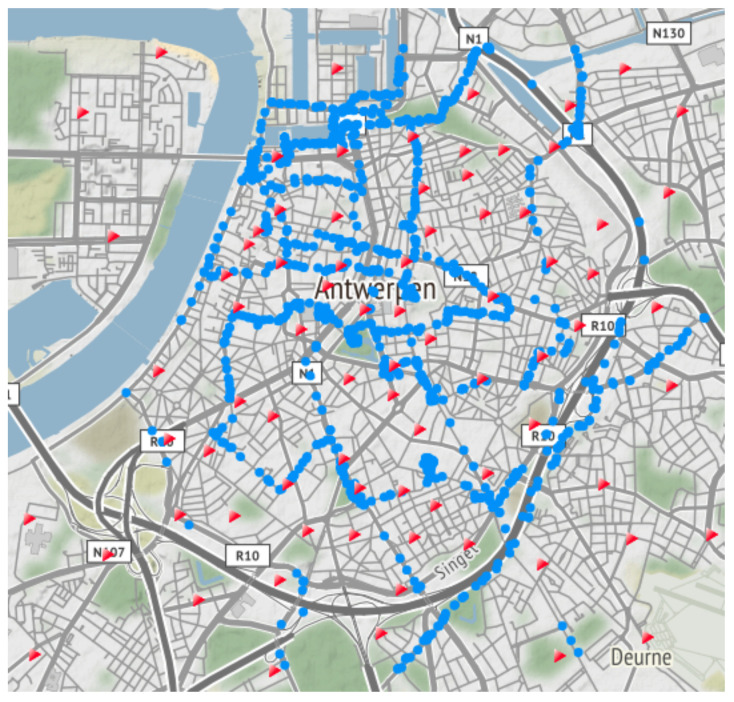
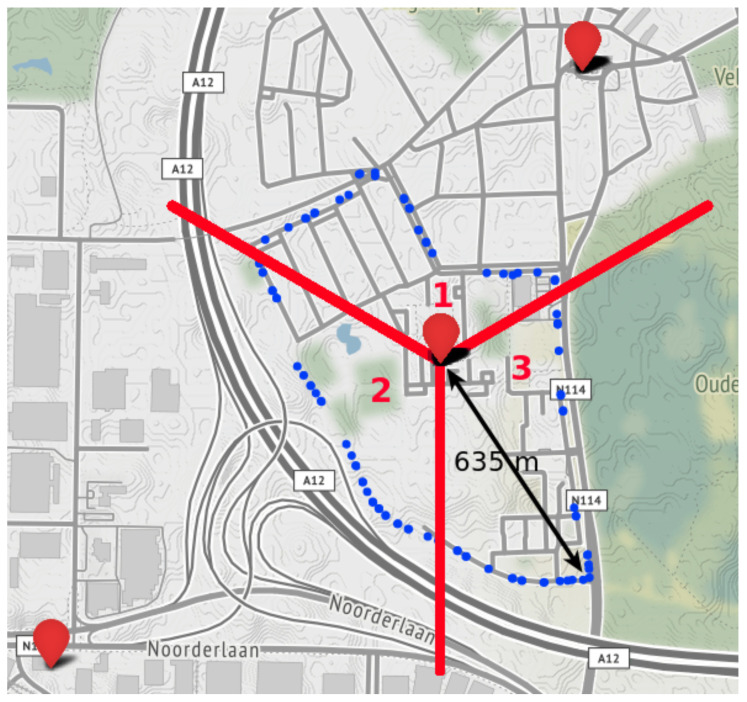
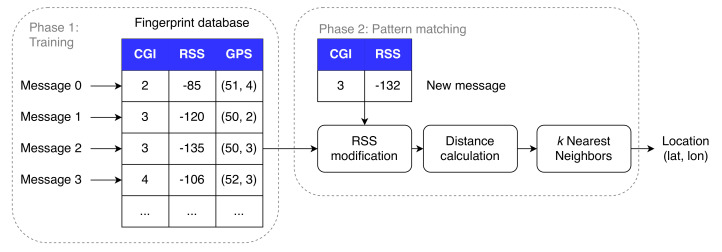
Low Power Wide Area Networks (LPWAN) have the ability to localize a mobile transmitter using signals of opportunity, as a low power and low cost alternative to satellite-based solutions. In this paper, we evaluate the accuracy of three localization approaches based on the Received Signal Strength (RSS). More specifically, the performance of a proximity, range-based and optimized fingerprint-based algorithm is evaluated in a large-scale urban environment using a public Narrowband Internet of Things (NB-IoT) network. The results show a mean location estimation error of 340, 320 and 204 m, respectively. During the measurement campaign, we discovered a mobility issue in NB-IoT. In contrast to other LPWAN and cellular technologies which use multiple gateways or cells to locate a device, only a single cell antenna can be used for RSS-based localization in NB-IoT. Therefore, we address this limitation in the current NB-IoT hardware and software by studying the mobility of the cellular-based 3GPP standard in a localization context. Experimental results show that the lack of handover support leads to increased cell reselection time and poor cell sector reliability, which in turn results in reduced localization performance.
低功耗广域网 (LPWAN) 具有利用机会信号对移动发射器进行定位的能力,是一种低功耗、低成本的卫星解决方案替代方案。在本文中,我们评估了三种基于接收信号强度 (RSS) 的定位方法的准确性。具体来说,在使用公共窄带物联网 (NB-IoT) 网络的大规模城市环境中,评估了一种接近度、基于范围和优化的指纹算法的性能。结果表明,位置估计误差的平均值分别为 340、320 和 204 米。在测量活动期间,我们发现了 NB-IoT 中的一个移动性问题。与使用多个网关或小区来定位设备的其他 LPWAN 和蜂窝技术不同,在 NB-IoT 中,仅可以使用单个小区天线进行基于 RSS 的定位。因此,我们通过研究定位环境中的基于蜂窝的 3GPP 标准的移动性来解决当前 NB-IoT 硬件和软件中的此限制。实验结果表明,缺乏切换支持会导致小区重新选择时间增加和小区扇区可靠性降低,从而导致定位性能下降。