Department of Ophthalmology, The First Hospital of China Medical University, Shenyang, Liaoning, People's Republic of China.
Technol Cancer Res Treat. 2020 Jan-Dec;19:1533033820956987. doi: 10.1177/1533033820956987.
According to different reports, miR-9-5p either facilitates or suppresses the occurrence of tumors. BRAF is a serine/threonine kinase involved in the MAPK pathway and is a proto-oncogene promoting the progression of many tumors, especially melanoma. The present study aimed to reveal the mechanism of action of miR-9-5p and BRAF in choroidal melanoma (CM).
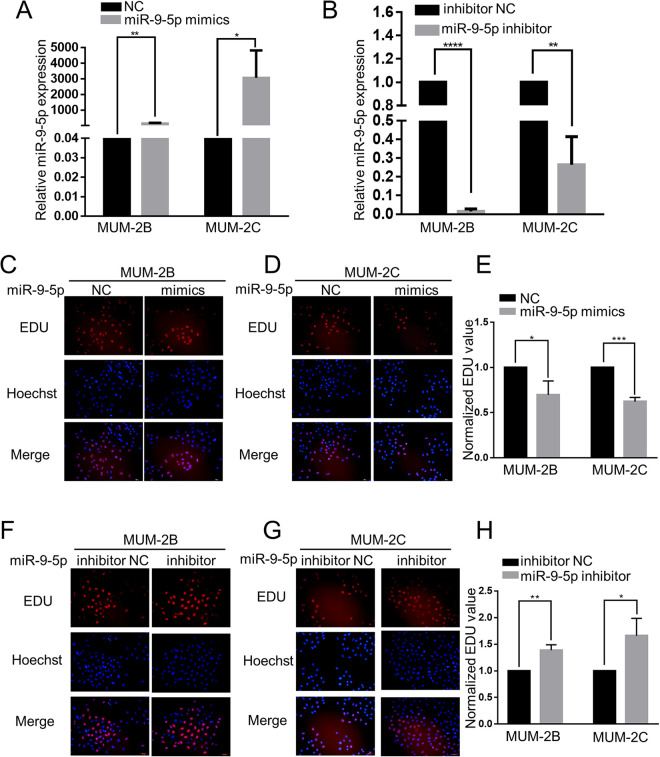
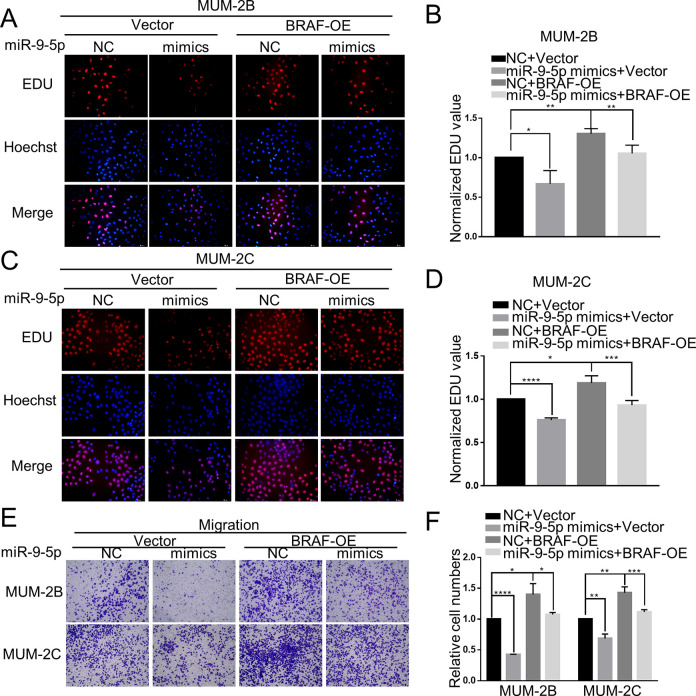
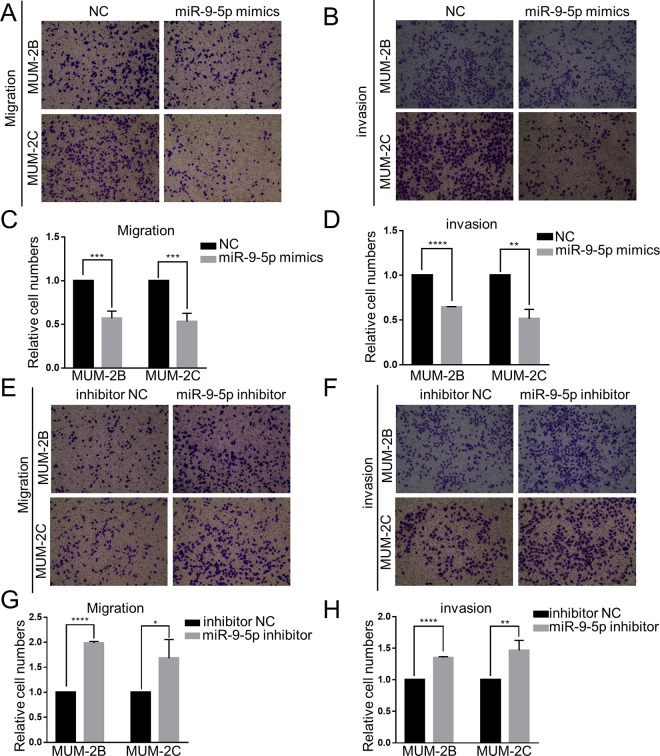
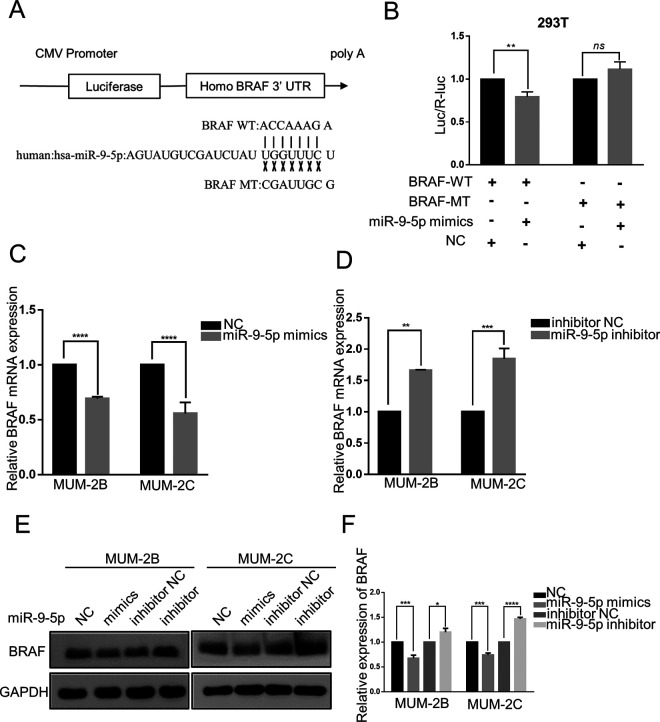
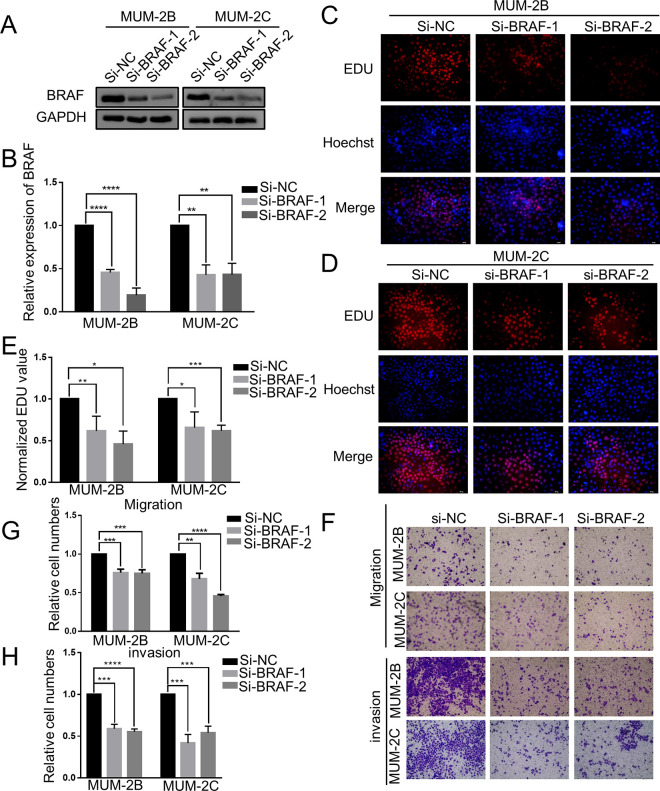
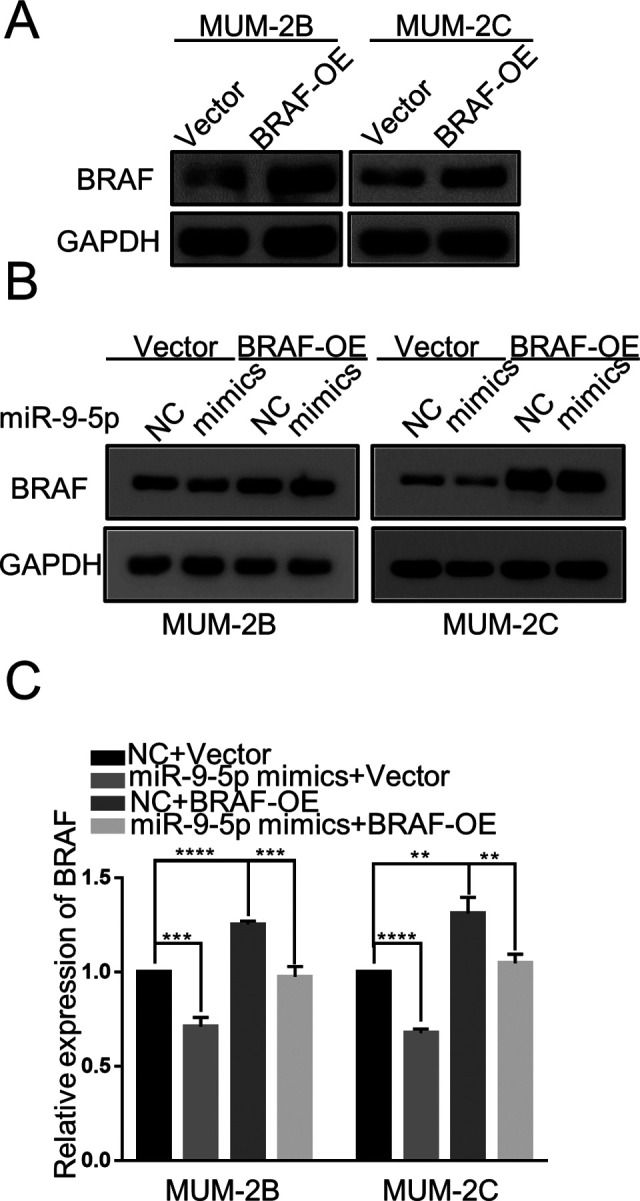
RT-qPCR was used to detect the expression of miR-9-5p in CM cells after transfection with miR-9-5p mimics and inhibitor. EdU assay and Transwell assay, respectively, showed the proliferation, migration and invasion of CM cells after transfection with miR-9-5p mimics and inhibitor. A bioinformatics website was used for target prediction and the dual luciferase reporter assay was used to verify the interaction between miR-9-5p and BRAF. RT-qPCR and Western blot were performed to examine the expression of BRAF mRNA and protein, respectively. The BRAF protein was knocked down by siRNAs and then examined by Western blot. The effects of BRAF in CM cells were investigated by EdU assay and Transwell assay. Overexpressing BRAF and transfecting miR-9-5p mimics into choroidal melanoma cells confirmed the interaction between miR-9-5p and BRAF.
miR-9-5p could bind to the BRAF mRNA 3'UTR and inhibit the transcription and translation of BRAF, thereby suppressing the proliferation, migration and invasion of CM cell lines. Moreover, silencing BRAF inhibited the progression of CM cells.
In conclusion, this study is the first to investigate the association among BRAF, miR-9-5p and the progression of CM cells. In addition, the interaction between BRAF and miR-9-5p was explored for the first time in CM. Thus, our study suggests that miR-9-5p, BRAF and their interaction may act as potential therapeutic targets for CM.
根据不同的报道,miR-9-5p 既促进也抑制肿瘤的发生。BRAF 是丝氨酸/苏氨酸激酶,参与 MAPK 通路,是一种原癌基因,促进许多肿瘤,尤其是黑色素瘤的进展。本研究旨在揭示 miR-9-5p 和 BRAF 在脉络膜黑色素瘤(CM)中的作用机制。
用 miR-9-5p 模拟物和抑制剂转染 CM 细胞后,采用 RT-qPCR 检测 miR-9-5p 的表达。EdU 检测和 Transwell 检测分别显示 miR-9-5p 模拟物和抑制剂转染后 CM 细胞的增殖、迁移和侵袭。利用生物信息学网站进行靶基因预测,采用双荧光素酶报告基因检测验证 miR-9-5p 与 BRAF 的相互作用。采用 RT-qPCR 和 Western blot 分别检测 BRAF mRNA 和蛋白的表达。用 siRNAs 敲低 BRAF 蛋白,然后用 Western blot 检测。EdU 检测和 Transwell 检测 BRAF 对 CM 细胞的影响。过表达 BRAF 并转染 miR-9-5p 模拟物入脉络膜黑色素瘤细胞,验证 miR-9-5p 与 BRAF 之间的相互作用。
miR-9-5p 可与 BRAF mRNA 3'UTR 结合,抑制 BRAF 的转录和翻译,从而抑制 CM 细胞系的增殖、迁移和侵袭。此外,沉默 BRAF 抑制 CM 细胞的进展。
综上所述,本研究首次探讨了 BRAF、miR-9-5p 与 CM 细胞进展之间的关系。此外,首次在 CM 中探讨了 BRAF 和 miR-9-5p 之间的相互作用。因此,我们的研究表明,miR-9-5p、BRAF 及其相互作用可能作为 CM 的潜在治疗靶点。