Combes Alexis J, Courau Tristan, Kuhn Nicholas F, Hu Kenneth H, Ray Arja, Chen William S, Cleary Simon J, Chew Nayvin W, Kushnoor Divyashree, Reeder Gabriella C, Shen Alan, Tsui Jessica, Hiam-Galvez Kamir J, Muñoz-Sandoval Priscila, Zhu Wandi S, Lee David S, Sun Yang, You Ran, Magnen Mélia, Rodriguez Lauren, Leligdowicz Aleksandra, Zamecnik Colin R, Loudermilk Rita P, Wilson Michael R, Ye Chun J, Fragiadakis Gabriela K, Looney Mark R, Chan Vincent, Ward Alyssa, Carrillo Sidney, Matthay Michael, Erle David J, Woodruff Prescott G, Langelier Charles, Kangelaris Kirsten, Hendrickson Carolyn M, Calfee Carolyn, Rao Arjun Arkal, Krummel Matthew F
Department of Pathology, San Francisco, 513 Parnassus Ave, HSW512, San Francisco, CA 94143-0511, USA.
ImmunoX Initiative, San Francisco, 513 Parnassus Ave, HSW512, San Francisco, CA 94143-0511, USA.
Res Sq. 2020 Oct 28:rs.3.rs-97042. doi: 10.21203/rs.3.rs-97042/v1.
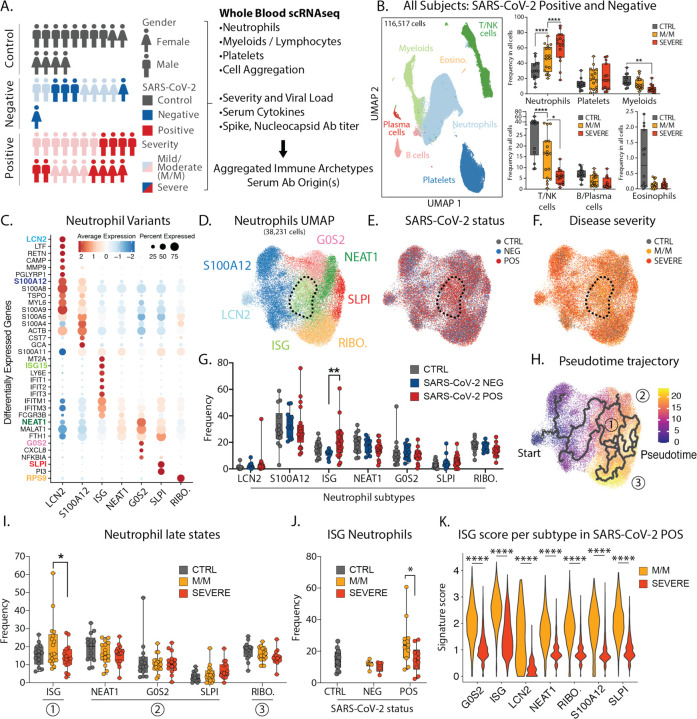
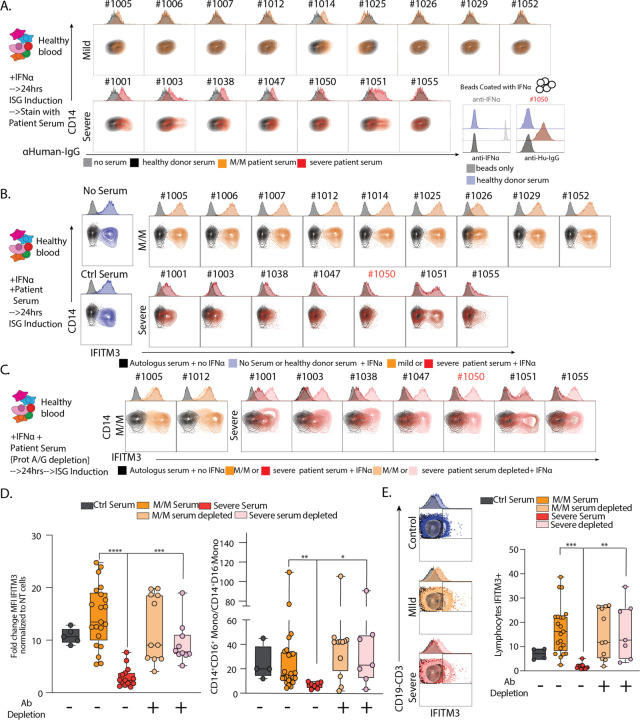
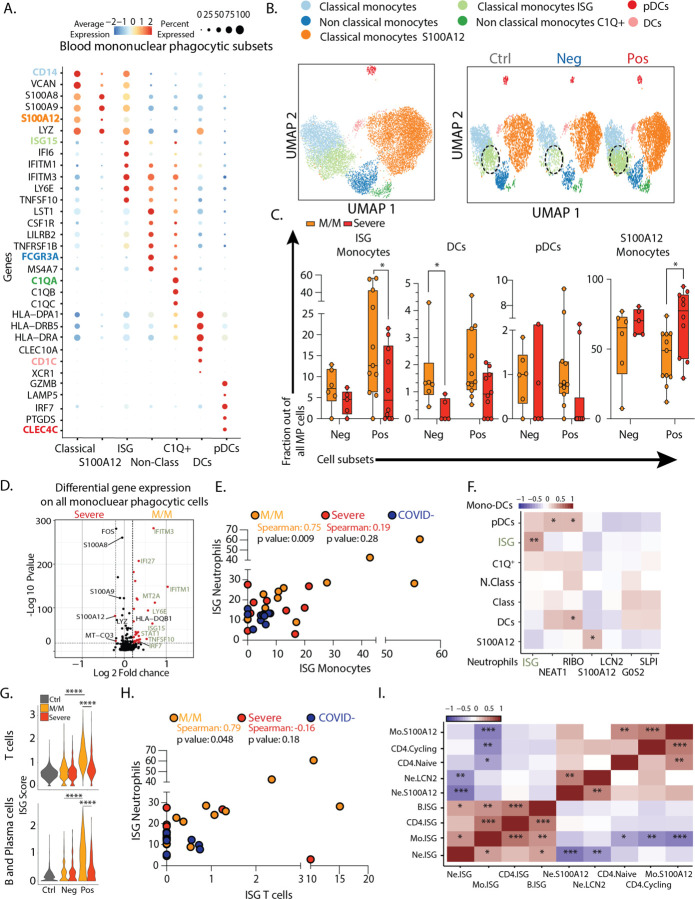
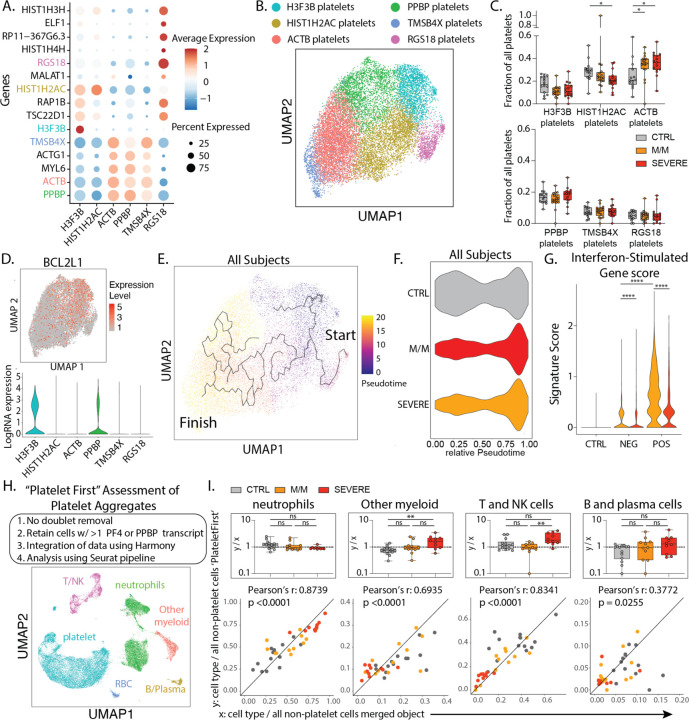
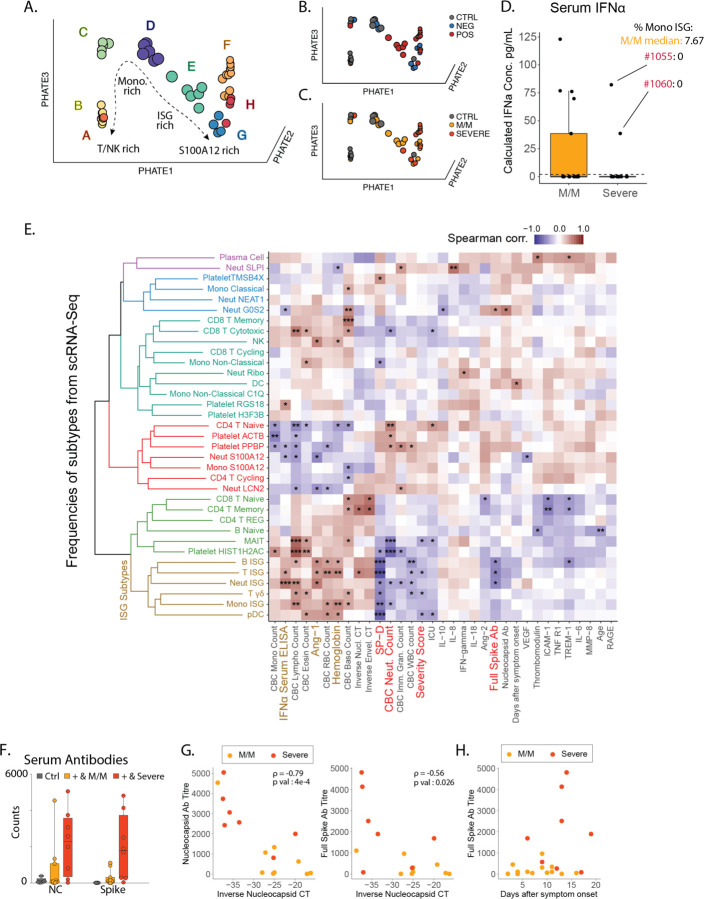
While SARS-CoV-2 infection has pleiotropic and systemic effects in some patients, many others experience milder symptoms. We sought a holistic understanding of the severe/mild distinction in COVID-19 pathology, and its origins. We performed a wholeblood preserving single-cell analysis protocol to integrate contributions from all major cell types including neutrophils, monocytes, platelets, lymphocytes and the contents of serum. Patients with mild COVID-19 disease display a coordinated pattern of interferonstimulated gene (ISG) expression across every cell population and these cells are systemically absent in patients with severe disease. Severe COVID-19 patients also paradoxically produce very high anti-SARS-CoV-2 antibody titers and have lower viral load as compared to mild disease. Examination of the serum from severe patients demonstrates that they uniquely produce antibodies with multiple patterns of specificity against interferon-stimulated cells and that those antibodies functionally block the production of the mild disease-associated ISG-expressing cells. Overzealous and autodirected antibody responses pit the immune system against itself in many COVID-19 patients and this defines targets for immunotherapies to allow immune systems to provide viral defense.
虽然严重急性呼吸综合征冠状病毒2(SARS-CoV-2)感染在一些患者中具有多效性和全身性影响,但其他许多患者症状较轻。我们试图全面了解2019冠状病毒病(COVID-19)病理学中重症/轻症的区别及其根源。我们实施了一项全血保存单细胞分析方案,以整合包括中性粒细胞、单核细胞、血小板、淋巴细胞和血清成分在内的所有主要细胞类型的作用。轻症COVID-19患者在每个细胞群体中均表现出协调的干扰素刺激基因(ISG)表达模式,而重症患者体内则普遍缺乏这些细胞。与轻症患者相比,重症COVID-19患者还反常地产生非常高的抗SARS-CoV-2抗体滴度,且病毒载量较低。对重症患者血清的检测表明,他们独特地产生针对干扰素刺激细胞具有多种特异性模式的抗体,并且这些抗体在功能上阻断了轻症疾病相关的ISG表达细胞的产生。在许多COVID-19患者中,过度活跃和自我导向的抗体反应使免疫系统自相攻击,这为免疫疗法确定了靶点,以使免疫系统能够提供病毒防御。