Concordia University, Montreal, QC, Canada.
Neoplasia. 2020 Dec;22(12):759-769. doi: 10.1016/j.neo.2020.09.008. Epub 2020 Oct 24.
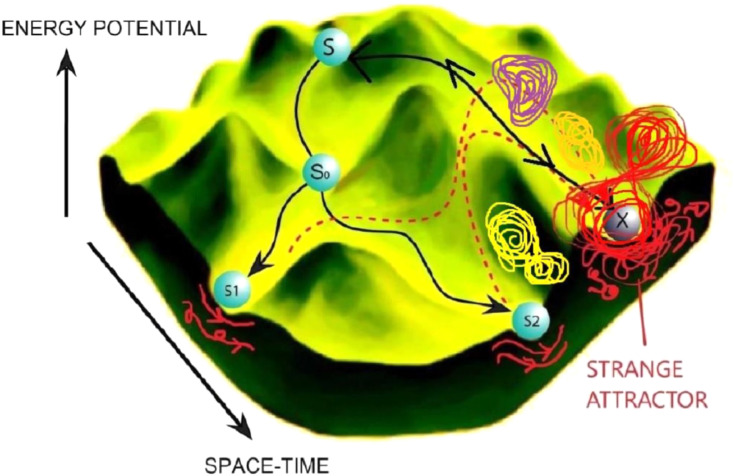
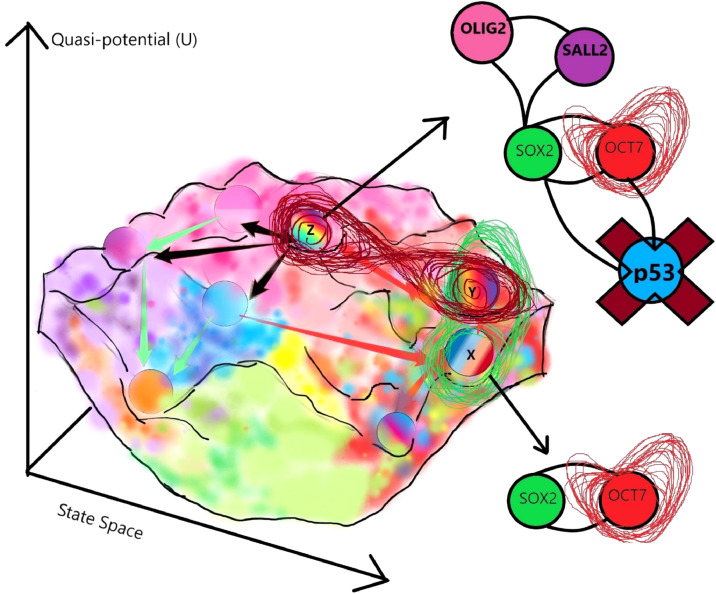
Cancers are complex, adaptive ecosystems. They remain the leading cause of disease-related death among children in North America. As we approach computational oncology and Deep Learning Healthcare, our mathematical models of cancer dynamics must be revised. Recent findings support the perspective that cancer-microenvironment interactions may consist of chaotic gene expressions and turbulent protein flows during pattern formation. As such, cancer pattern formation, protein-folding and metastatic invasion are discussed herein as processes driven by chemical turbulence within the framework of complex systems theory. To conclude, cancer stem cells are presented as strange attractors of the Waddington landscape.
癌症是复杂的、自适应的生态系统。它们仍然是北美的儿童因病死亡的主要原因。随着我们进入计算肿瘤学和深度学习医疗保健领域,我们对癌症动力学的数学模型必须进行修正。最近的研究结果支持这样一种观点,即癌症-微环境相互作用可能包括在模式形成过程中混沌的基因表达和汹涌的蛋白质流动。因此,在这里,癌症的模式形成、蛋白质折叠和转移入侵被讨论为复杂系统理论框架内化学湍流驱动的过程。最后,癌症干细胞被描述为沃丁顿景观的奇异吸引子。