La Salle Campus, Ramon Llull University, 08022 Barcelona, Spain.
Sensors (Basel). 2020 Oct 31;20(21):6232. doi: 10.3390/s20216232.
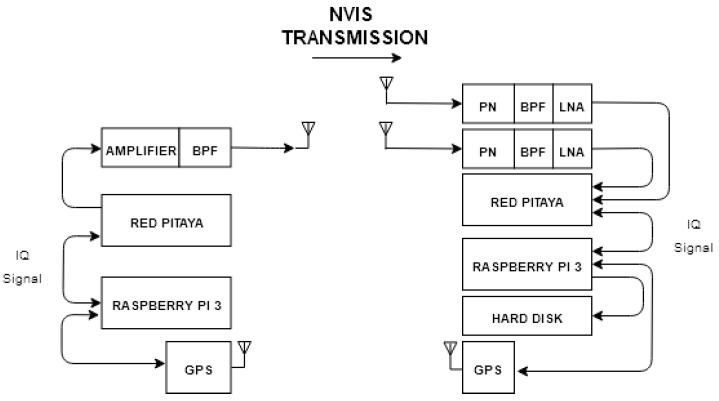
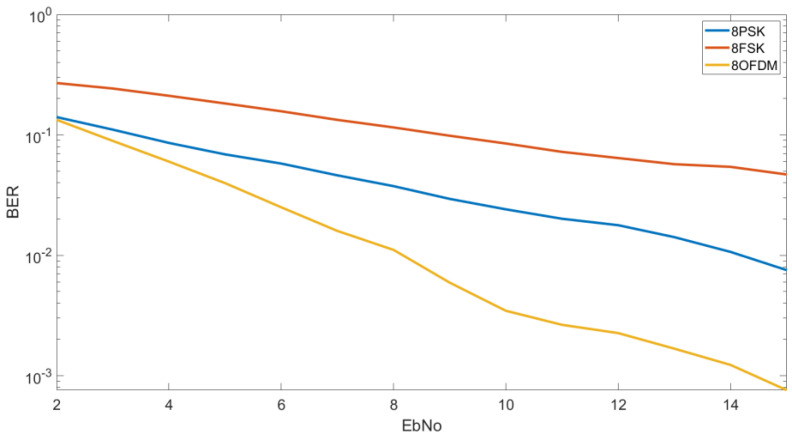
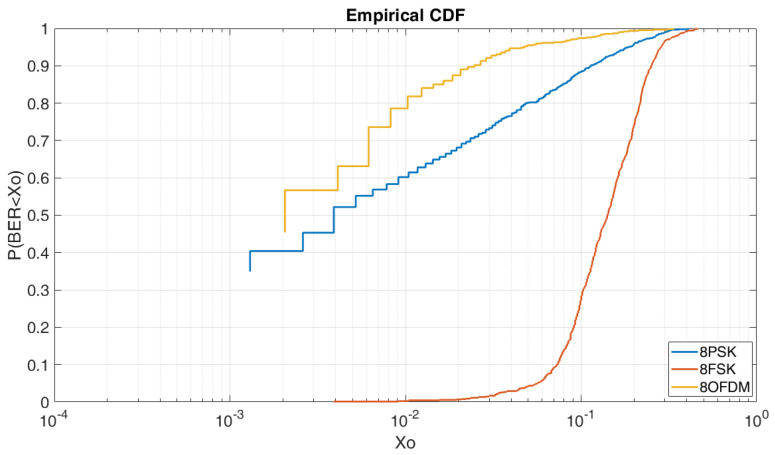
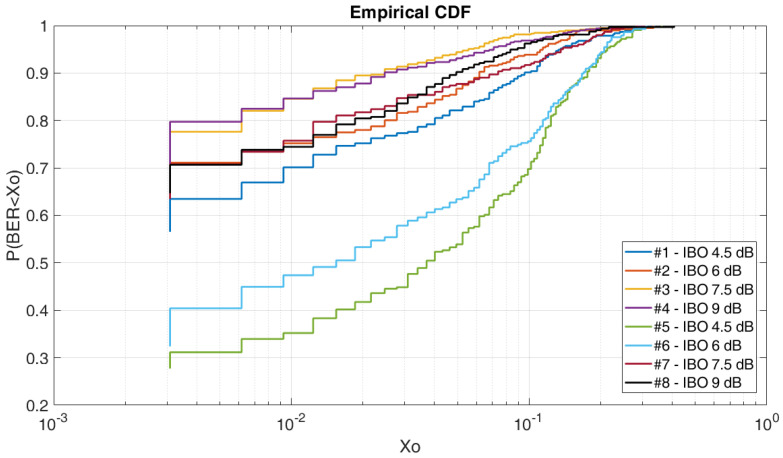
The number of Internet of Things (IoT) devices has experienced a large growth during the last decade, as well as the data volume gathered from remote sensors. Satellites are still a suitable communication method and may be preferable for a remote ubiquitous sensor network (USN), which sometimes are located in places without much communications infrastructure where coverage is the principal drawback. Alternatively, the proposed solution for this article aims at a near-vertical incidence skywave (NVIS) channel for high frequencies (HF) with a low-cost platform, allowing a low-power transmissions coverage area up to 250 km for USN. The HF standards are focused on generic communication channels not being robust for NVIS communications. In this article we study and test an alternative based on orthogonal frequency-division multiplexing (OFDM) modulations to make them more robust and less dependent on the channel NVIS communications. For that purpose, we test the HF standard modulations and a designed OFDM modulation to prove the robustness of each. This study has been tested between Barcelona and Tarragona, using different transmission power levels and modulation orders.
在过去的十年中,物联网 (IoT) 设备的数量经历了大幅增长,同时远程传感器收集的数据量也在增加。卫星仍然是一种合适的通信方式,对于有时位于通信基础设施不完善的偏远地区的无处不在的传感器网络 (USN) 来说,卫星可能是首选。或者,本文提出的解决方案旨在利用低成本平台实现高频 (HF) 的近垂直入射天波 (NVIS) 信道,允许 USN 进行低功率传输,覆盖范围可达 250 公里。HF 标准侧重于通用通信信道,对于 NVIS 通信来说不够稳健。在本文中,我们研究并测试了一种基于正交频分复用 (OFDM) 调制的替代方案,以使它们更加稳健,并且不那么依赖于 NVIS 通信信道。为此,我们测试了 HF 标准调制和设计的 OFDM 调制,以证明每种调制的稳健性。这项研究在巴塞罗那和塔拉戈纳之间进行,使用了不同的传输功率水平和调制阶数。