Center for Behavioral Health Services and Implementation Research, Department of Psychiatry and Behavioral Sciences, Stanford University School of Medicine, Palo Alto, CA, USA.
Feinberg School of Medicine, Northwestern University, Chicago, IL, USA.
Subst Abuse Treat Prev Policy. 2020 Nov 4;15(1):84. doi: 10.1186/s13011-020-00326-x.
The US 21st Century Cures Act provided $7.5 billion in grant funding to states and territories for evidence-based responses to the opioid epidemic. Currently, little is known about optimal strategies for sustaining these programs beyond this start-up funding.
Using an inductive, conventional content analysis, we conducted key informant interviews with former and current state leaders (n = 16) about barriers/facilitators to sustainment and strategies for sustaining time-limited grants.
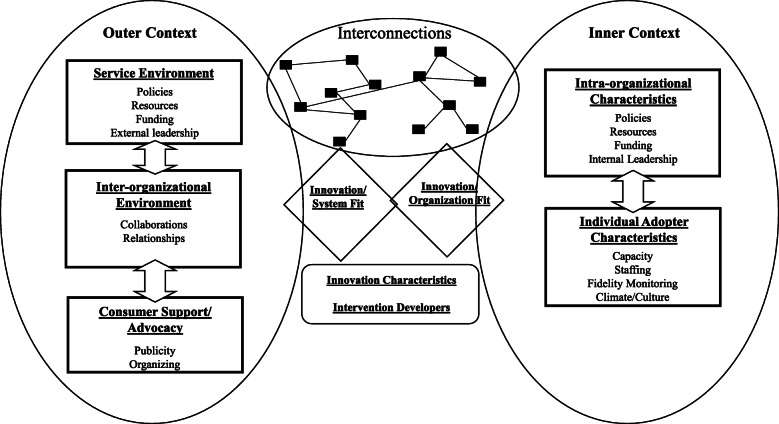
Financing and reimbursement, service integration, and workforce capacity were the most cited barriers to sustainment. Status in state government structure, public support, and spending flexibility were noted as key facilitators. Effective levers to increase chances for sustainment included strong partnerships with other state agencies, workforce and credentialing changes, and marshalling advocacy through public awareness campaigns.
Understanding the strategies that leaders have successfully used to sustain programs in the past can inform how to continue future time-limited, grant-funded initiatives.
美国 21 世纪治愈法案为各州和地区提供了 75 亿美元的赠款资金,用于对阿片类药物泛滥采取基于证据的应对措施。目前,对于如何在启动资金之外维持这些项目,人们知之甚少。
我们采用归纳性常规内容分析法,对前现任州领导人(n=16)进行了关键知情人访谈,了解了维持时间有限的赠款所面临的障碍/促进因素以及维持策略。
筹资和报销、服务整合以及劳动力能力是维持的最大障碍。州政府结构中的地位、公众支持和支出灵活性被认为是关键的促进因素。增加维持机会的有效手段包括与其他州机构建立强有力的伙伴关系、劳动力和认证的改变,以及通过公共宣传活动调动宣传。
了解领导者过去成功用于维持项目的策略可以为如何继续未来的限时、赠款资助的举措提供信息。