Laboratoire des Sciences Horticoles LR13AGR01, Université de Carthage, Institut National Agronomique de Tunisie, Tunis, Mahrajène, Tunisia.
Université du Littoral Côte d'Opale, Unité de Chimie Environnementale et Interactions sur le Vivant (UCEIV), SFR Condorcet FR CNRS 3417, Calais, France.
PLoS One. 2020 Nov 5;15(11):e0241794. doi: 10.1371/journal.pone.0241794. eCollection 2020.
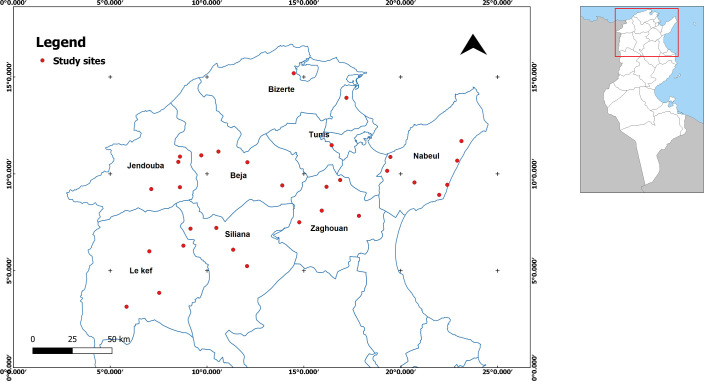
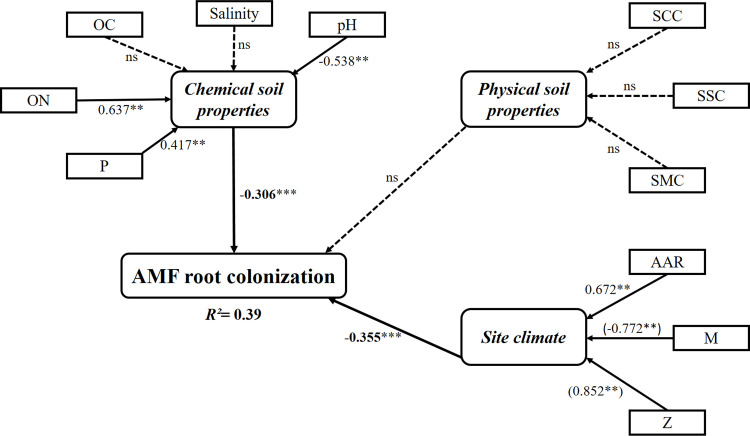
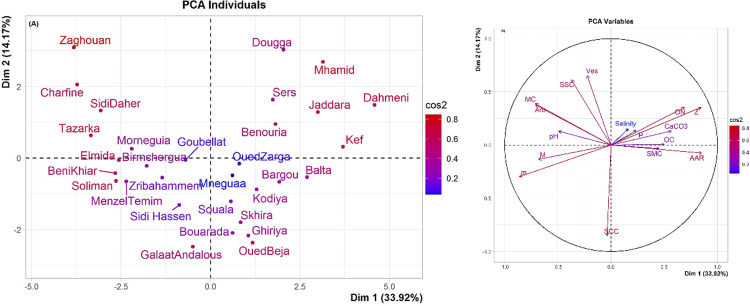
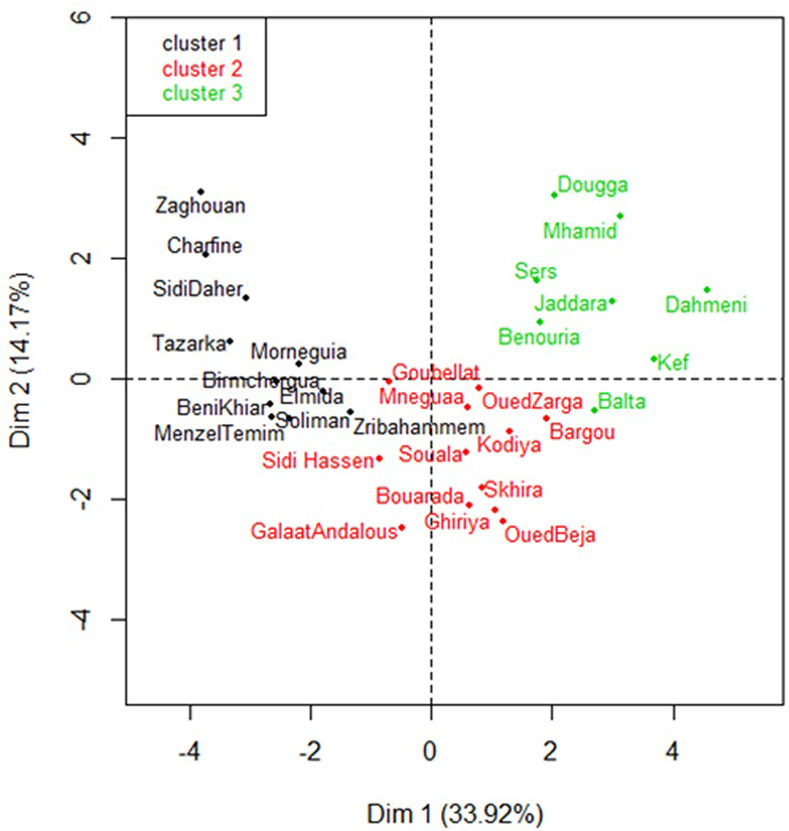
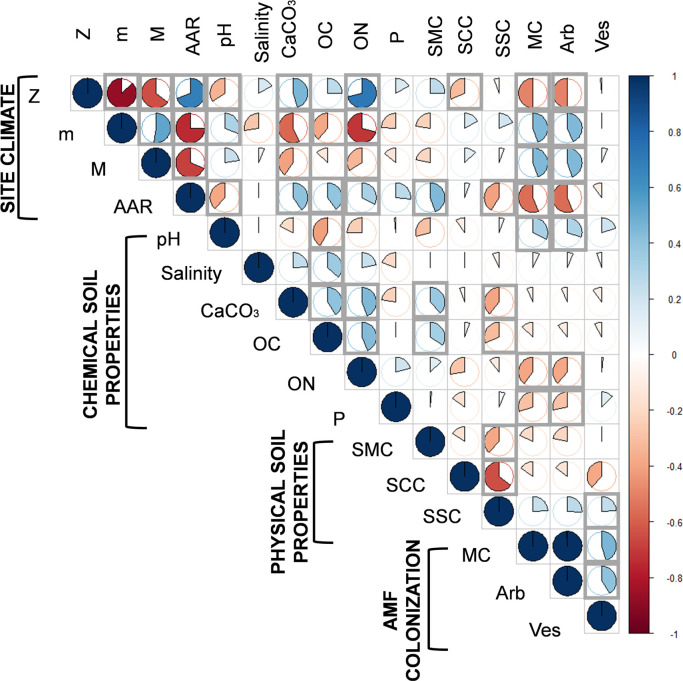
Whereas the role of arbuscular mycorrhizal fungi (AMF) in plant growth improvement has been well described in agroecosystems, little is known about the effect of environmental factors on AMF root colonization status of barley, the fourth most important cereal crop all over the world. In order to understand the influence of environmental factors, such as climatic and soil physico-chemical properties, on the spontaneous mycorrhizal ability of barley (Hordeum vulgare L.), a field investigation was conducted in 31 different sites in sub-humid, upper and middle semi-arid areas of Northern Tunisia. Mycorrhizal root colonization of H. vulgare varied considerably among sites. Principal component analysis showed that barley mycorrhization is influenced by both climatic and edaphic factors. A partial least square structural equation modelling (PLS-SEM) revealed that 39% (R²) of the total variation in AMF mycorrhizal rate of barley roots was mainly explained by chemical soil properties and climatic characteristics. Whereas barley root mycorrhizal rates were inversely correlated with soil organic nitrogen (ON), available phosphorus amounts (P), altitude (Z), average annual rainfall (AAR), they were directly correlated with soil pH and temperature. Our results indicated that AMF root colonization of barley was strongly related to climatic characteristics than chemical soil properties. The current study highlights the importance of the PLS-SEM to understand the interactions between climate, soil properties and AMF symbiosis of barley in field conditions.
虽然丛枝菌根真菌 (AMF) 在农业生态系统中对植物生长的促进作用已得到充分描述,但对于环境因素对全球第四大重要粮食作物大麦的 AMF 根定殖状况的影响却知之甚少。为了了解气候和土壤理化性质等环境因素对大麦(Hordeum vulgare L.)自然菌根能力的影响,在突尼斯北部半湿润、上中和中半干旱地区的 31 个不同地点进行了实地调查。大麦的菌根根定植在不同地点之间差异很大。主成分分析表明,大麦的菌根化受气候和土壤因素的影响。偏最小二乘结构方程模型(PLS-SEM)表明,AMF 对大麦根系的菌根率的总变异的 39%(R²)主要由土壤化学性质和气候特征来解释。而大麦根系的菌根率与土壤有机氮(ON)、有效磷含量(P)、海拔(Z)、年平均降雨量(AAR)呈负相关,与土壤 pH 值和温度呈正相关。我们的结果表明,AMF 对大麦的根定殖与气候特征的关系比与土壤化学性质的关系更为密切。本研究强调了 PLS-SEM 对于理解田间条件下气候、土壤特性和 AMF 与大麦共生之间相互作用的重要性。