Li Pengpeng, Zhang Xiaodong, Li Jing, Zhao Jiapan, Huang Junping, Zhang Shuo, Zhou Shixin
Key Laboratory of Petroleum Resources, Gansu Province, Northwest Institute of Eco-Environment and Resources, Chinese Academy of Sciences, Lanzhou 730000, P. R. China.
University of Chinese Academy of Sciences, Beijing 100049, P. R. China.
ACS Omega. 2020 Oct 21;5(43):28012-28026. doi: 10.1021/acsomega.0c03540. eCollection 2020 Nov 3.
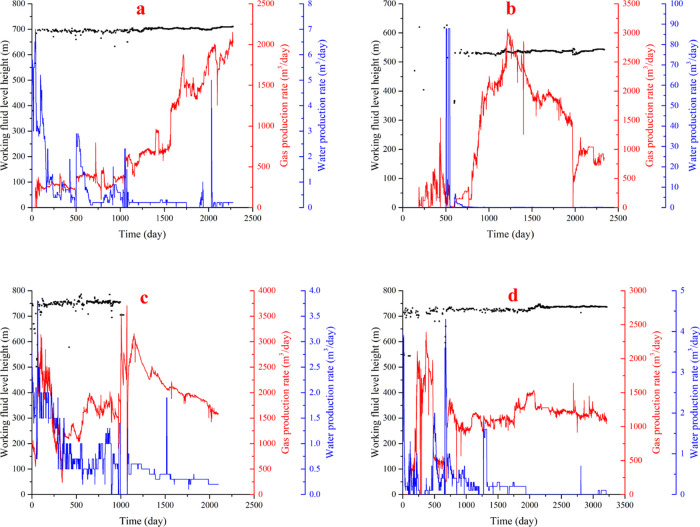
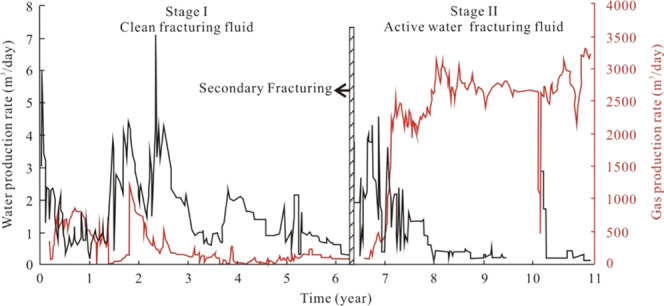
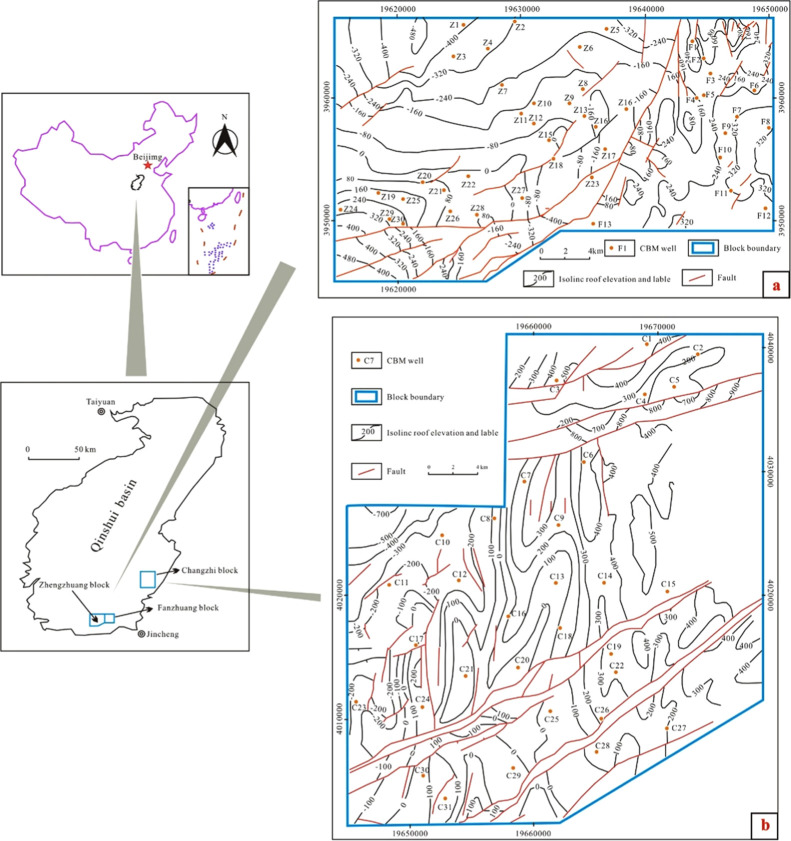
In the present study, three CBM blocks in the central and southern Qinshui Basin, China, including Fanzhuang, Zhengzhuang, and Changzhi blocks, were selected. Combined with the data, such as the physical properties of coal reservoirs, logging, hydrofracture operation, injection/drawdown well testing, microseismic fracture monitoring technology, and over 2000 days gas production rate, the key factors affecting the gas production rate of CBM wells were analyzed comprehensively and systematically. Unimodal and bimodal models can be identified according to the long-term gas production rate data. The unimodal model corresponds to a declining pump pressure curve, meaning that caprock integrity is destroyed during hydrofracture operations, commonly causing poor gas production performance. The bimodal model is associated with fluctuating-rising and stable pump pressure curves, indicating good hydrofracture consequences. On the premise of the relatively high gas content, the gas saturation/critical-reservoir pressure ratio, permeability, and coal deformation are the major geological factors that affect the long-term gas production performance of CBM wells. Engineering factors, including pollution by the drilling fluid and cement paste, the type of the fracturing fluid, tonstein intercalation, coal deformation, and in situ stress, affect gas production performances via the following four mechanisms: the effect of hydrofracture operations on caprock integrity, the effect of fluids pumped on the pore-fracture system, the initiation and propagation of artificially induced fractures, and the performances of proppants pumped. This work can provide guidelines for the optimization and development of high-rank CBM blocks.
在本研究中,选取了中国沁水盆地中南部的3个煤层气区块,包括樊庄、郑庄和长治区块。结合煤储层物性、测井、水力压裂作业、注入/压降试井、微地震裂缝监测技术以及2000余天气产量数据等资料,全面系统地分析了影响煤层气井产气速率的关键因素。根据长期产气速率数据可识别出单峰和双峰模型。单峰模型对应泵压曲线下降,意味着在水力压裂作业过程中盖层完整性遭到破坏,通常导致产气性能不佳。双峰模型与泵压曲线波动上升且稳定相关,表明水力压裂效果良好。在煤层气含量相对较高的前提下,气体饱和度/临界储层压力比、渗透率和煤体变形是影响煤层气井长期产气性能的主要地质因素。工程因素,包括钻井液和水泥浆污染、压裂液类型、夹矸层、煤体变形和地应力,通过以下四种机制影响产气性能:水力压裂作业对盖层完整性的影响、注入流体对孔隙 - 裂缝系统的影响、人工诱导裂缝的起裂与扩展以及注入支撑剂的性能。这项工作可为高煤阶煤层气区块的优化开发提供指导。