Nikam Shradha, Mandal Debapriya
Homi Bhabha National Institute, Mumbai 400094, India.
Alkali Material and Metal Division, Bhabha Atomic Research Centre, Mumbai 400085, India.
ACS Omega. 2020 Oct 22;5(43):28080-28087. doi: 10.1021/acsomega.0c03648. eCollection 2020 Nov 3.
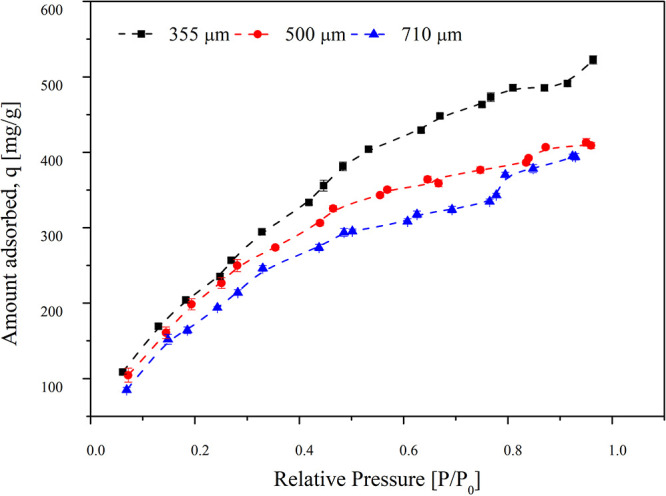
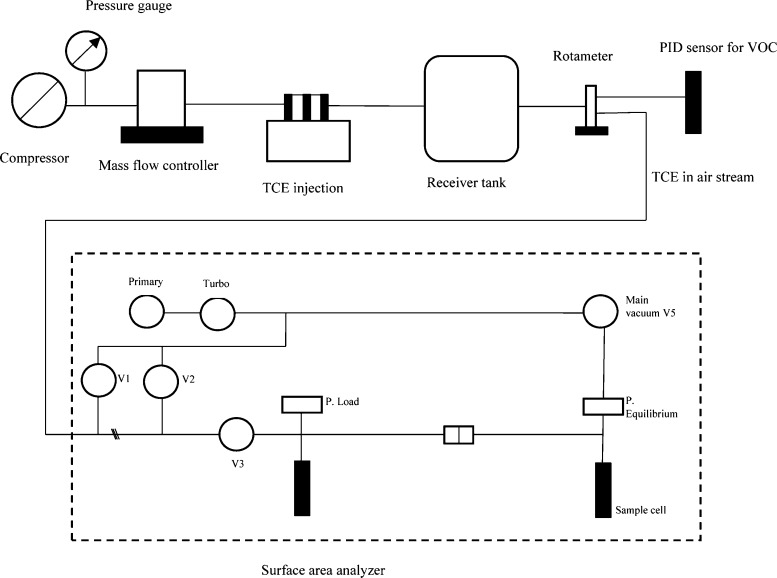
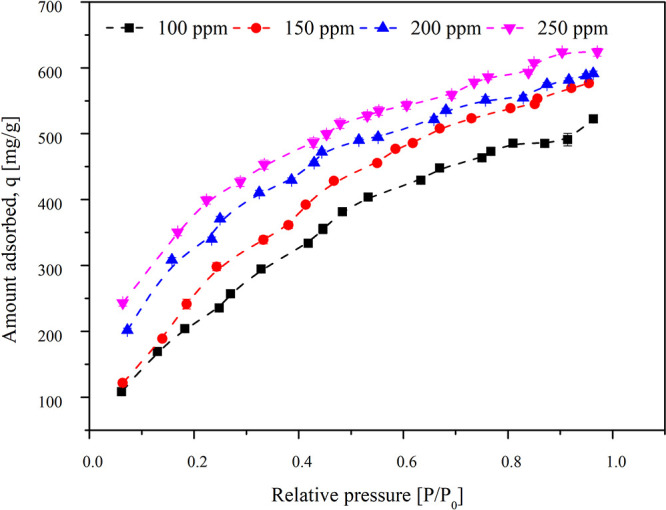
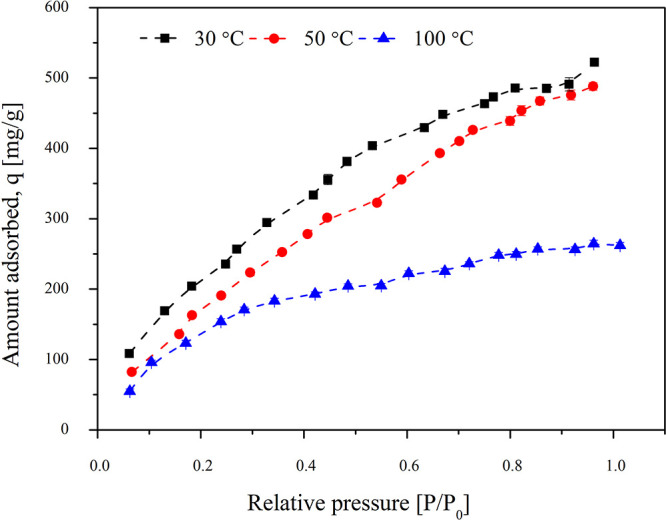
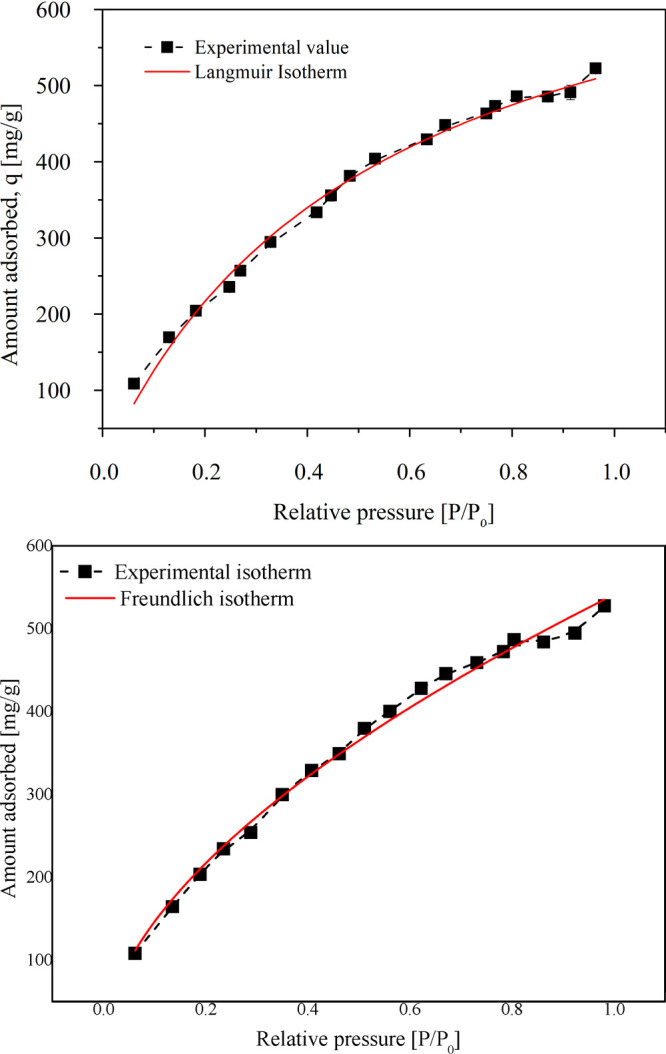
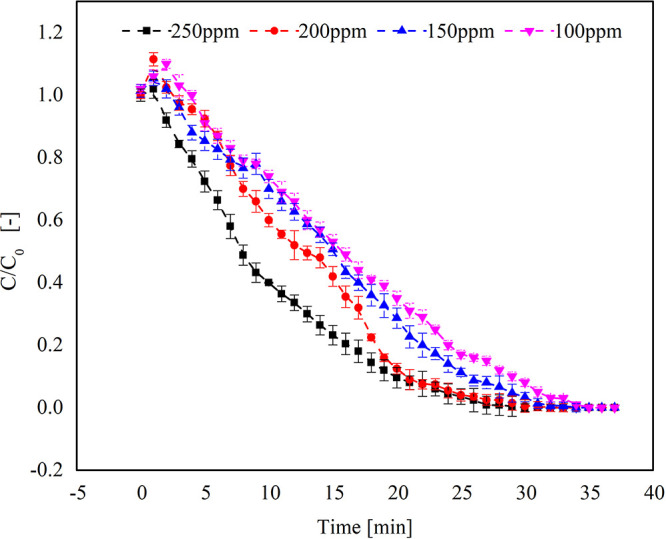
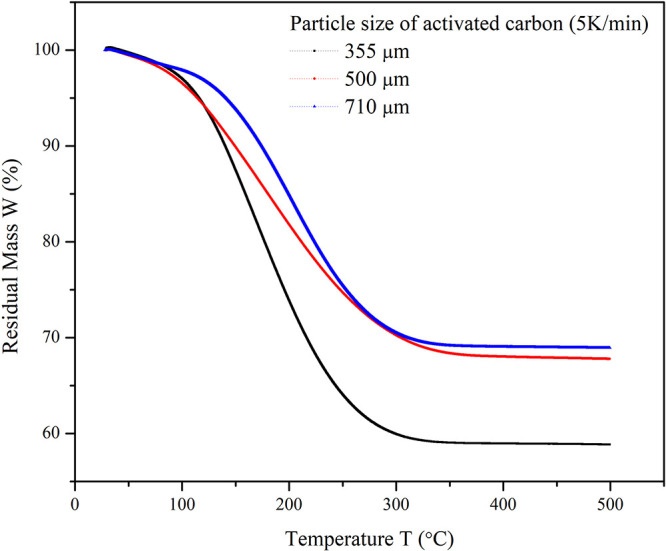
Trichloroethylene (TCE) is used as a solvent in various industrial processes. During its use, TCE vaporizes and its vapor pollutes the working atmosphere. Its recovery is very important and activated carbon may be used for this purpose. In the present study, experiments were conducted with activated carbon particles for adsorption and desorption of TCE vapor. The adsorption isotherms were measured over a temperature range of 30-100 °C. Also, the effects of particle sizes ( ; 355, 500, and 710 μm), initial concentration of TCE vapor (100, 150, 200, and 250 ppm), and temperature (30, 50, and 100 °C) on the adsorption isotherms of TCE on activated carbon with air as the carrier stream were investigated, which were not reported earlier. From the experimental results, it was found that as the particle size decreases the adsorption capacity increases because of the increase in surface area with decrease in size of particles. The effect of the initial concentration of TCE vapor showed proportionality with adsorption capacity. The increase in temperature showed increase in the adsorption capacity. The adsorption isotherms obtained from the experimental results were compared with model isotherms viz. Langmuir and Freundlich. The Langmuir and Freundlich isotherm models showed accurate fits with values of 0.99067 and 0.99142, respectively, suggesting a hybrid adsorption mechanism involving monolayer and multilayer adsorption. From the desorption study, it was found that the recovery of TCE-vapor from activated carbon is possible, and hence its reuse. This study confirms the suitability of activated carbon as an adsorbent for the removal of TCE vapors emitted from industrial and domestic sources. The details of the experiments and results are discussed in this article.
三氯乙烯(TCE)在各种工业过程中用作溶剂。在使用过程中,TCE会蒸发,其蒸汽会污染工作环境。TCE的回收非常重要,活性炭可用于此目的。在本研究中,使用活性炭颗粒进行了TCE蒸汽的吸附和解吸实验。在30-100°C的温度范围内测量了吸附等温线。此外,还研究了颗粒尺寸(355、500和710μm)、TCE蒸汽初始浓度(100、150、200和250ppm)以及温度(30、50和100°C)对以空气为载气时TCE在活性炭上吸附等温线的影响,这些影响此前未见报道。从实验结果发现,随着颗粒尺寸减小,吸附容量增加,这是因为颗粒尺寸减小导致表面积增加。TCE蒸汽初始浓度的影响与吸附容量成正比。温度升高,吸附容量增加。将实验结果得到的吸附等温线与Langmuir和Freundlich等模型等温线进行了比较。Langmuir和Freundlich等温线模型的拟合度分别为0.99067和0.99142,显示出准确的拟合,表明存在涉及单层和多层吸附的混合吸附机制。从解吸研究发现,从活性炭中回收TCE蒸汽是可能的,因此可以重复使用。本研究证实了活性炭作为吸附剂用于去除工业和家庭来源排放的TCE蒸汽的适用性。本文讨论了实验细节和结果。