Riganti Gianmario, Cadoni Ezio
DynaMat Laboratory, University of Applied Sciences and Arts of Southern Switzerland, 6952 Canobbio, Switzerland.
Materials (Basel). 2020 Nov 5;13(21):4976. doi: 10.3390/ma13214976.
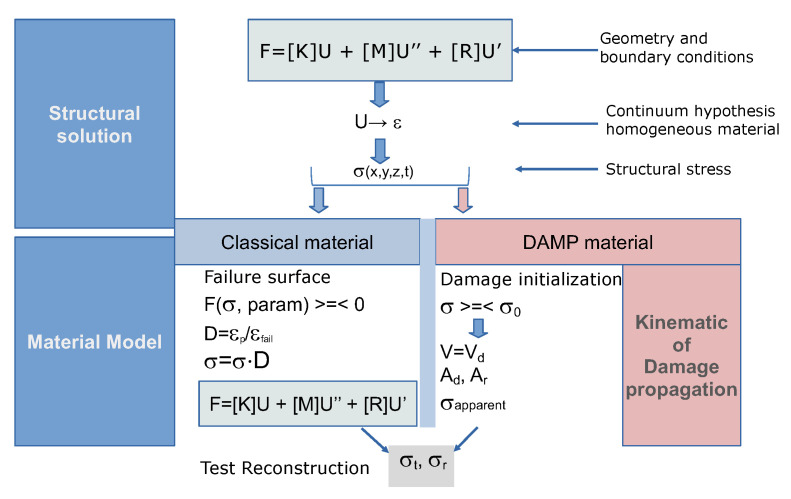
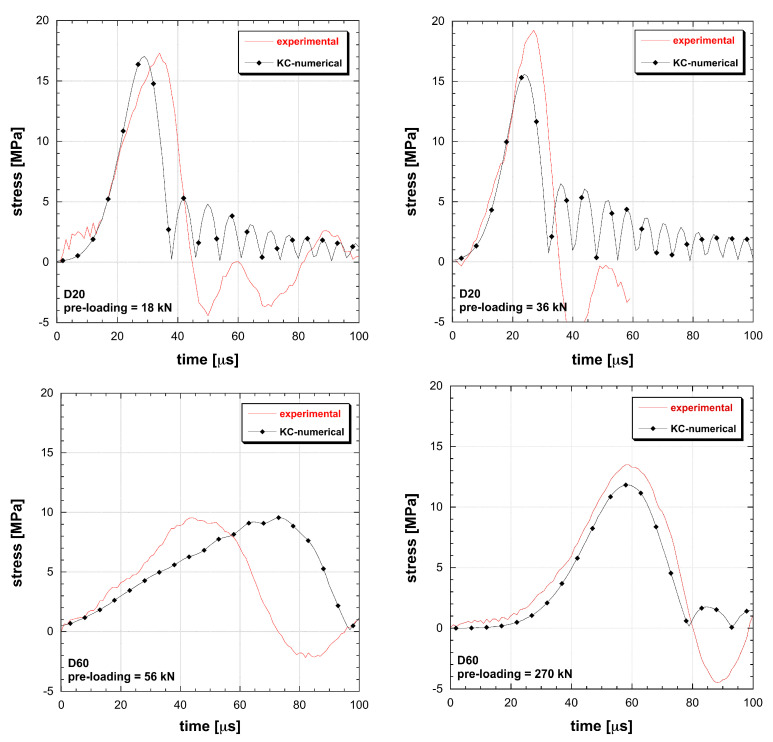
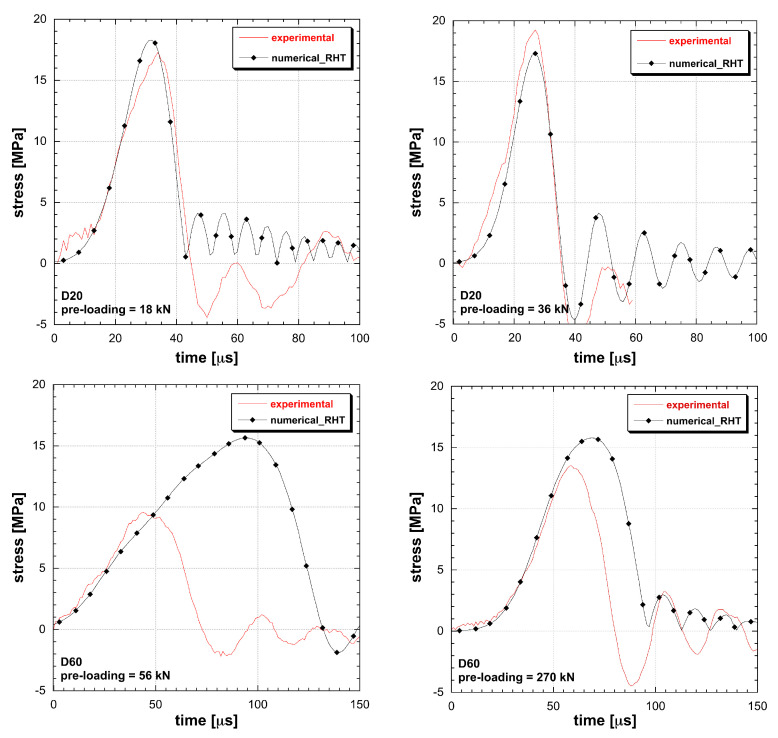
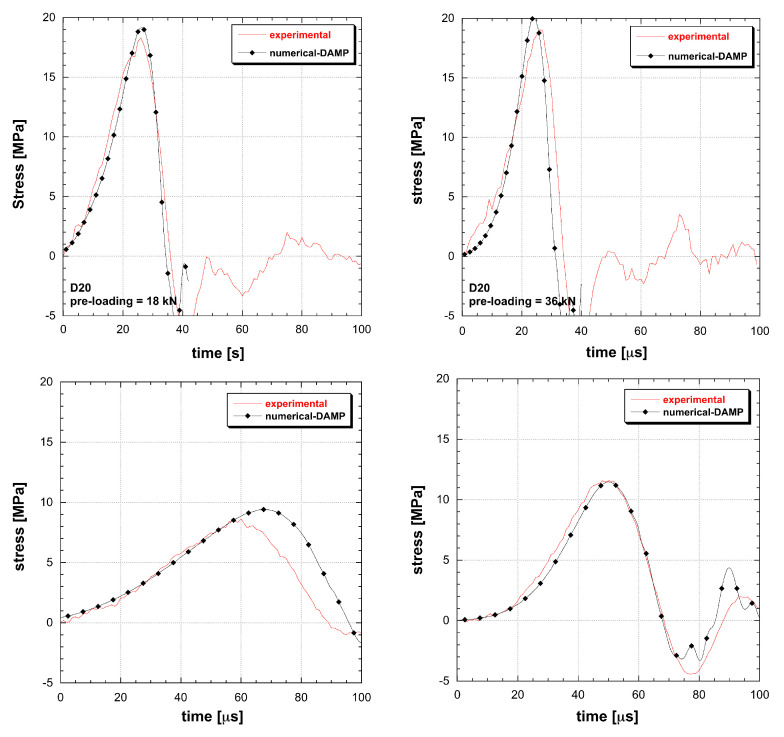
Understanding and simulating the dynamic response of quasi-brittle materials still remains as one of the most challenging issues in structural engineering. This paper presents the damage propagation material model (DAMP) developed in order to obtain reliable results for use in structural engineering practice. A brief overview focuses on the differences between fracture mechanics studies, and engineering material modelling is presented to highlight possible guideline improvements. An experimental dynamic test performed on ultra-high-performance concrete specimens was used to obtain evidence of the physical behaviour of brittle materials with respect to specimen size variations and, consequently, to verify the reliability of the material equations proposed. Two widely used material models (RHT and M72R3), as representatives of the classical brittle material models for structural purposes, and the proposed material model are compared. Here, we show how: (i) the multiple structural strength of brittle materials arises from the damage propagation process, (ii) there is no contradiction between fracture mechanics and the engineering approach once the velocity of damage propagation is chosen as fundamental material property and (iii) classical dynamic material models are intrinsically not objective with related loss of predictive capability. Finally, the original material model equation and the experimental strategy, dedicated to its extended verification, will be shown in order to increase the design predictiveness in the dynamic range considering structure and specimen size variations. The dynamic stress increasing factor (DIF), experimentally observed and widely recognised in literature as a fundamental concept for quasi-brittle material modelling, has been reviewed and decomposed in its geometrical and material dependencies. The new material model defines its DIF starting from the physical quantities of the damage propagation velocity applied to the test case boundary conditions. The resultant material model predictiveness results improved greatly, demonstrating its ability to model several dynamic events considering size and dynamic load variations with a unique material property set without showing contradictions between numerical and experimental approaches.
理解和模拟准脆性材料的动态响应仍然是结构工程中最具挑战性的问题之一。本文提出了损伤扩展材料模型(DAMP),旨在获得可用于结构工程实践的可靠结果。简要概述了断裂力学研究之间的差异,并介绍了工程材料建模,以突出可能的指导改进。对超高性能混凝土试件进行的实验动态测试,用于获取脆性材料在试件尺寸变化方面的物理行为证据,从而验证所提出的材料方程的可靠性。比较了两种广泛使用的材料模型(RHT和M72R3),作为结构用途经典脆性材料模型的代表,以及所提出的材料模型。在这里,我们展示了:(i)脆性材料的多重结构强度如何源于损伤扩展过程,(ii)一旦将损伤扩展速度选为基本材料属性,断裂力学与工程方法之间就不存在矛盾,以及(iii)经典动态材料模型本质上不客观且相关预测能力丧失。最后,将展示原始材料模型方程和专门用于其扩展验证的实验策略,以提高在考虑结构和试件尺寸变化的动态范围内的设计预测能力。动态应力增加系数(DIF),在实验中观察到并在文献中被广泛认可为准脆性材料建模的基本概念,已根据其几何和材料依赖性进行了回顾和分解。新的材料模型从应用于测试案例边界条件的损伤扩展速度的物理量出发定义其DIF。由此产生的材料模型预测结果有了很大改进,证明了它能够用一组独特的材料属性对考虑尺寸和动态载荷变化的多个动态事件进行建模,而在数值和实验方法之间没有显示出矛盾。