Milovanovic Bojana, Djekic Ilija, Miocinovic Jelena, Djordjevic Vesna, Lorenzo Jose M, Barba Francisco J, Mörlein Daniel, Tomasevic Igor
Faculty of Agriculture, University of Belgrade, Nemanjina 6, 11080 Belgrade, Serbia.
Institute of Meat Hygiene and Technology, Kaćanskog 13, 11000 Belgrade, Serbia.
Foods. 2020 Nov 8;9(11):1629. doi: 10.3390/foods9111629.
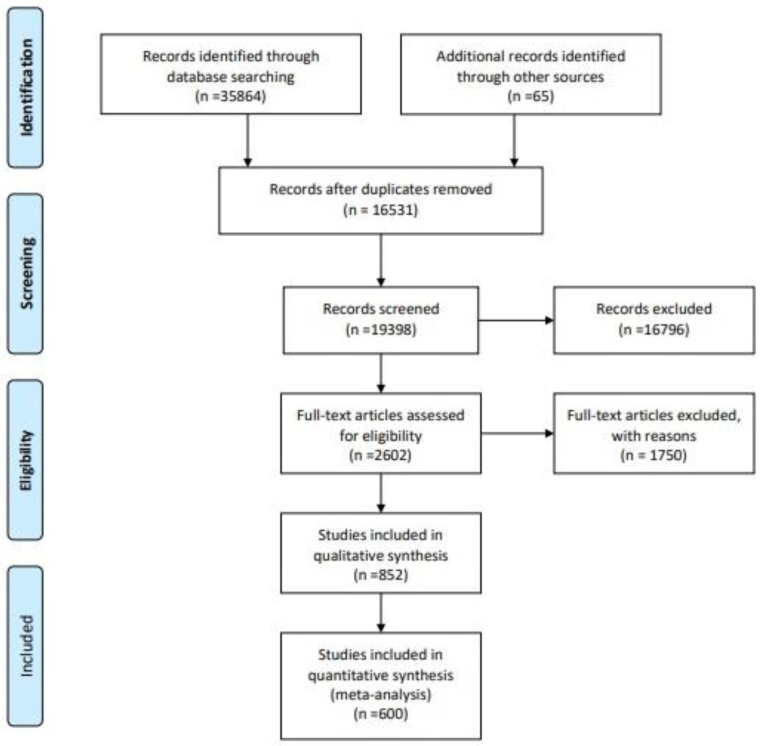
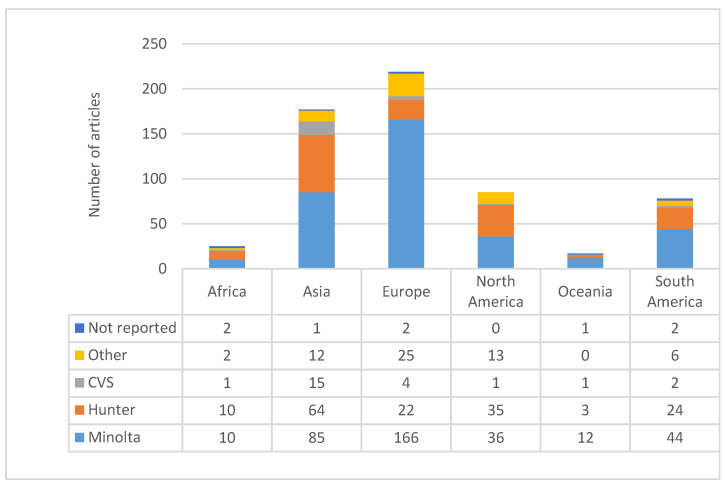
Exactly six-hundred (600) scientific articles that report milk and milk products' color results in scientific journals in the last couple of decades were reviewed. Thereof, the greatest part of the articles derived from Europe (36.3%) and Asia (29.5%). The greatest share of researchers used Minolta colorimeters (58.8%), while 26.3% of them used Hunter devices. Most reports were on cheese (31.0%) followed by fermented products (21.2%). Moreover, the highest number of papers reported color data of milk and milk products made from cow's milk (44.81%). As expected, goat's cheese was the brightest (L* = 87.1), while cow's cheese was the yellowest (b* = 17.4). Most importantly, it appeared that color research results reported were often impossible to replicate or to interpret properly because of incomplete description of the methodology. In some of the manuscripts reviewed, illuminant source (61.0%), aperture size (93.8%), observer angle, and number of readings (over 70% of all cases) were not reported. It is therefore critical to set rules regarding the description of the methodology for (milk) color research articles in order to ensure replicability and/or comparison of studies.
对过去几十年间发表在科学期刊上的、报告牛奶及奶制品颜色结果的整整600篇科学文章进行了综述。其中,大部分文章来自欧洲(36.3%)和亚洲(29.5%)。大部分研究人员使用美能达色度仪(58.8%),而26.3%的研究人员使用亨特仪器。大多数报告是关于奶酪(31.0%),其次是发酵产品(21.2%)。此外,报告牛奶及奶制品颜色数据最多的是牛奶制成的产品(44.81%)。不出所料,山羊奶酪最亮(L* = 87.1),而牛奶酪最黄(b* = 17.4)。最重要的是,由于方法描述不完整,所报告的颜色研究结果往往无法复制或正确解释。在所审查的一些手稿中,未报告光源(61.0%)、孔径大小(93.8%)、观测角度和读数数量(超过所有案例的70%)。因此,为确保研究的可重复性和/或可比性,为(牛奶)颜色研究文章的方法描述制定规则至关重要。