Division of Regenerative Medicine, Department of Medicine, University of California, San Diego, San Diego, CA, United States.
Department of Cancer Immunology, Institute for Cancer Research, Oslo University Hospital, Oslo, Norway.
Front Immunol. 2020 Oct 15;11:561553. doi: 10.3389/fimmu.2020.561553. eCollection 2020.
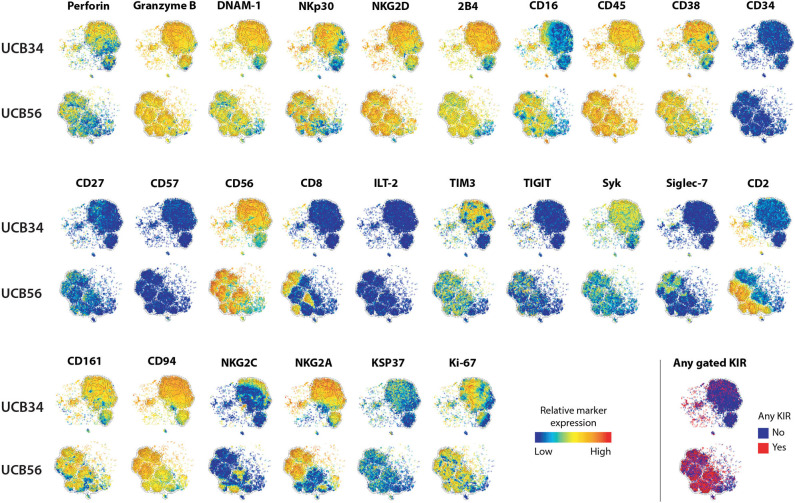
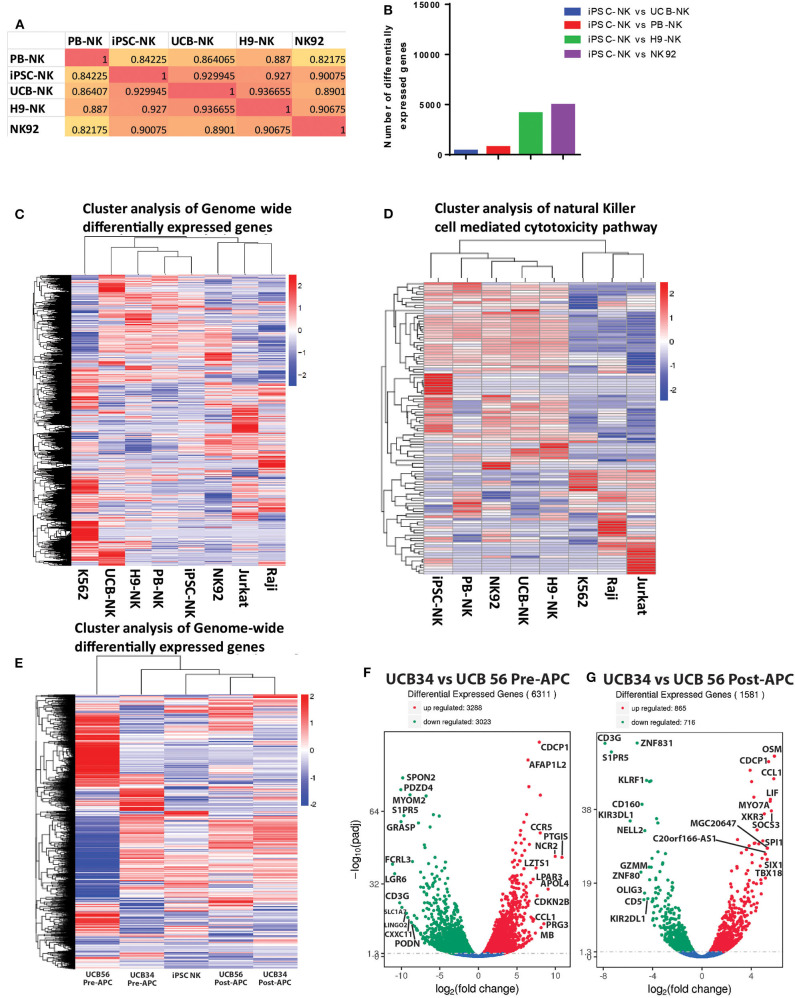
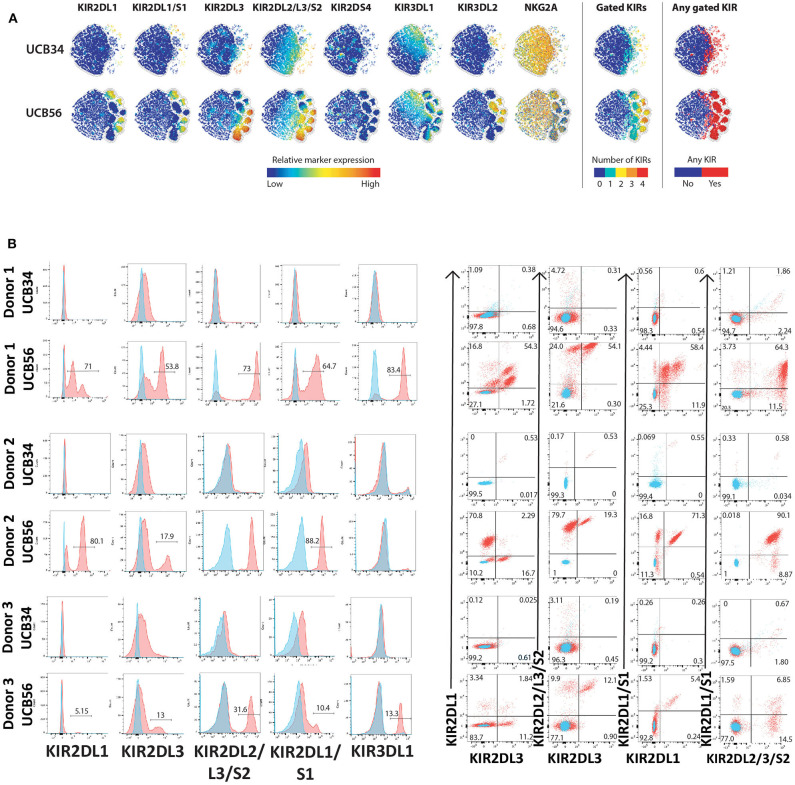
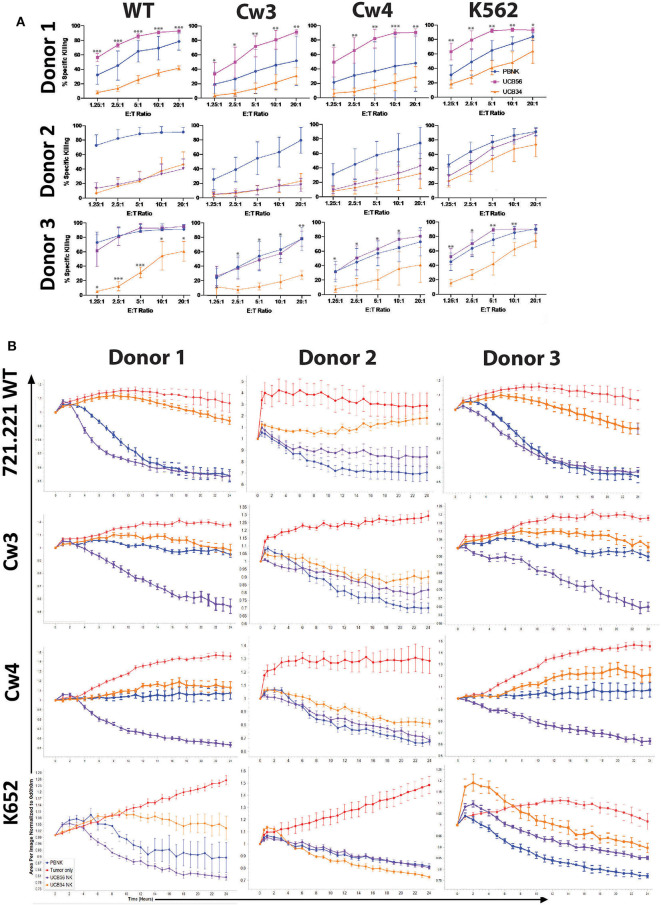
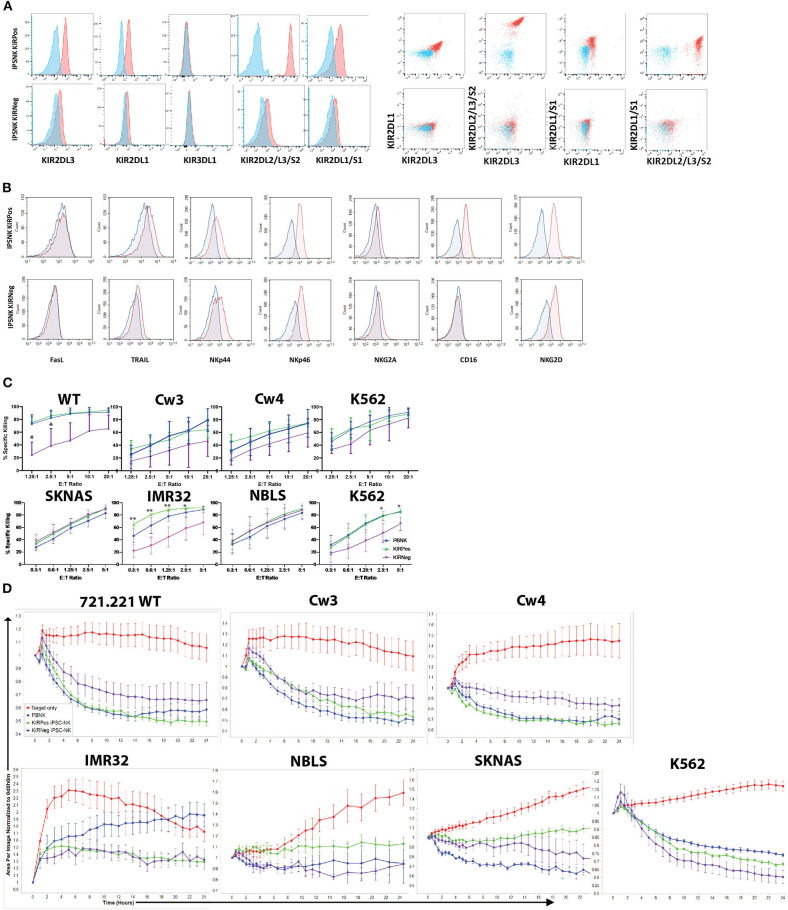
Natural killer (NK) cells derived or isolated from different sources have been gaining in importance for cancer therapies. In this study, we evaluate and compare key characteristics between NK cells derived or isolated from umbilical cord blood, umbilical cord blood hematopoietic stem/progenitor cells, peripheral blood, and induced pluripotent stem cells (iPSCs). Specifically, we find CD56 NK cells isolated and expanded directly from umbilical cord blood (UCB56) and NK cells derived from CD34 hematopoietic stem/progenitors in umbilical cord blood (UCB34) differ in their expression of markers associated with differentiation including CD16, CD2, and killer Ig-like receptors (KIRs). UCB56-NK cells also displayed a more potent cytotoxicity compared to UCB34-NK cells. NK cells derived from iPSCs (iPSC-NK cells) were found to have variable KIR expression, with certain iPSC-NK cell populations expressing high levels of KIRs and others not expressing KIRs. Notably, KIR expression on UCB56 and iPSC-NK cells had limited effect on cytotoxic activity when stimulated by tumor target cells that express high levels of cognate HLA class I, suggesting that differentiation and expansion may override the KIR-HLA class I mediated inhibition when used across HLA barriers. Together our results give a better understanding of the cell surface receptor, transcriptional, and functional differences between NK cells present in umbilical cord blood and hematopoietic progenitor-derived NK cells which may prove important in selecting the most active NK cell populations for treatment of cancer or other therapies.
自然杀伤 (NK) 细胞来源于或分离自不同的来源,对于癌症治疗越来越重要。在这项研究中,我们评估并比较了来源于脐带血、脐带血造血干/祖细胞、外周血和诱导多能干细胞 (iPSC) 的 NK 细胞的关键特征。具体来说,我们发现直接从脐带血中分离和扩增的 CD56 NK 细胞 (UCB56) 和来源于脐带血中 CD34 造血干/祖细胞的 NK 细胞 (UCB34) 在与分化相关的标志物表达上存在差异,包括 CD16、CD2 和杀伤免疫球蛋白样受体 (KIR)。与 UCB34-NK 细胞相比,UCB56-NK 细胞也表现出更强的细胞毒性。从 iPSC 中获得的 NK 细胞 (iPSC-NK 细胞) 的 KIR 表达存在差异,某些 iPSC-NK 细胞群表达高水平的 KIR,而其他细胞群则不表达 KIR。值得注意的是,当用表达高水平同源 HLA Ⅰ类的肿瘤靶细胞刺激时,UCB56 和 iPSC-NK 细胞上的 KIR 表达对细胞毒性活性的影响有限,这表明分化和扩增可能会在跨 HLA 障碍时克服 KIR-HLA Ⅰ类介导的抑制。我们的研究结果共同深入了解了脐带血和造血祖细胞衍生的 NK 细胞之间细胞表面受体、转录和功能差异,这对于选择最活跃的 NK 细胞群体用于癌症或其他治疗可能非常重要。