Kumar Deepak, Sodavarapu Praveen, Kumar Karmesh, Hooda Aman, Neradi Deepak, Bachchal Vikas
Orthopaedics, Postgraduate Institute of Medical Education and Research, Chandigarh, IND.
Cureus. 2020 Oct 10;12(10):e10883. doi: 10.7759/cureus.10883.
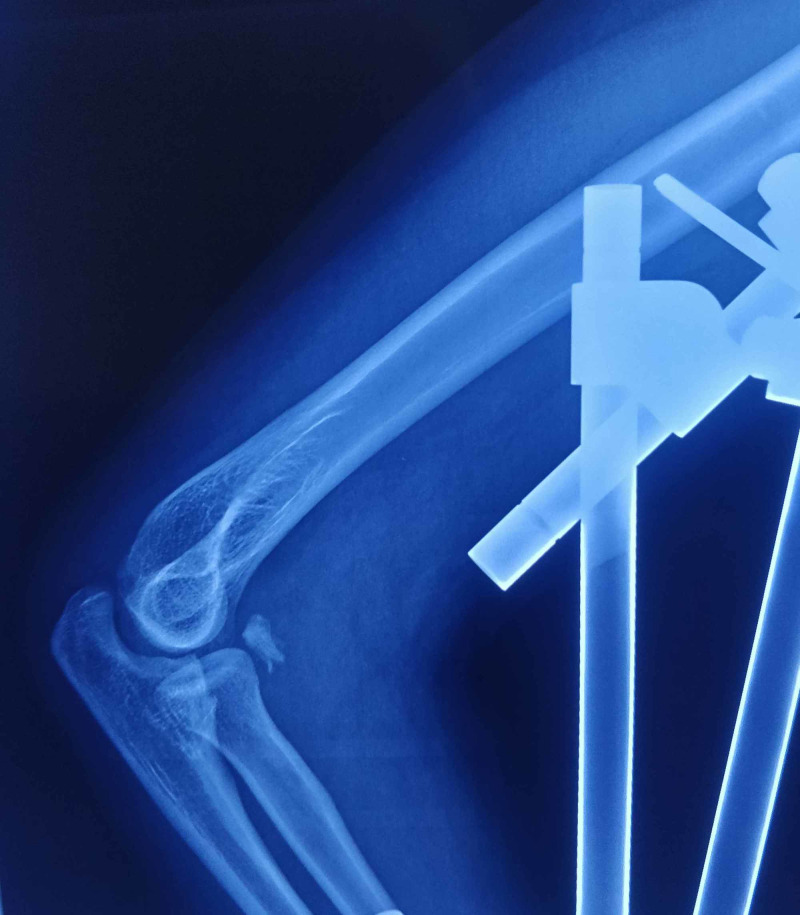
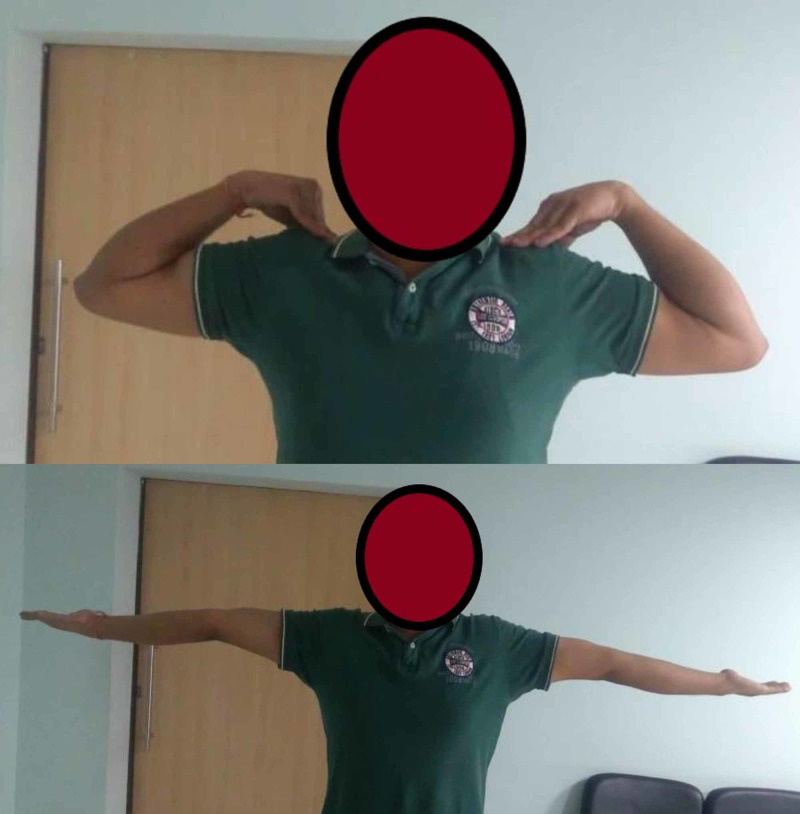
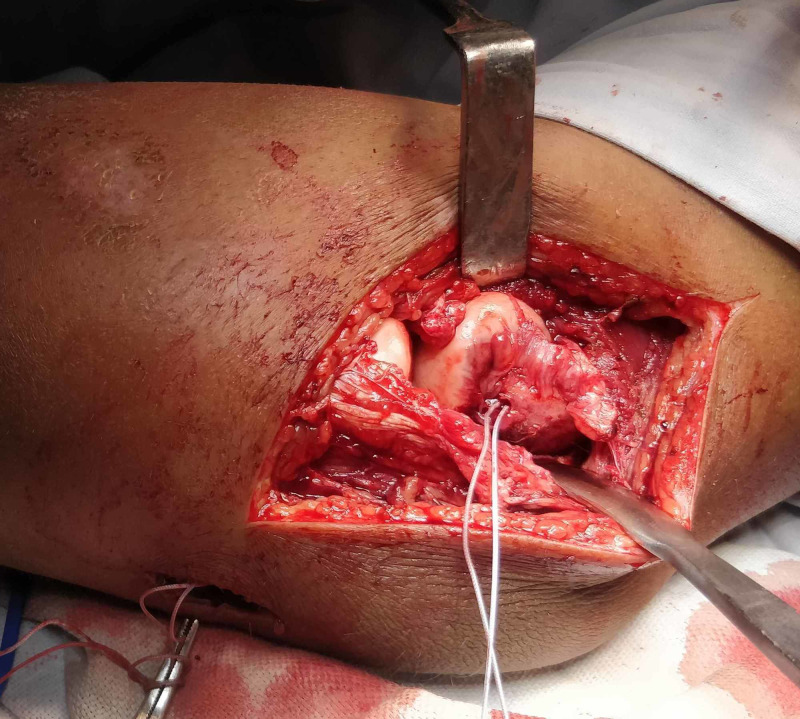
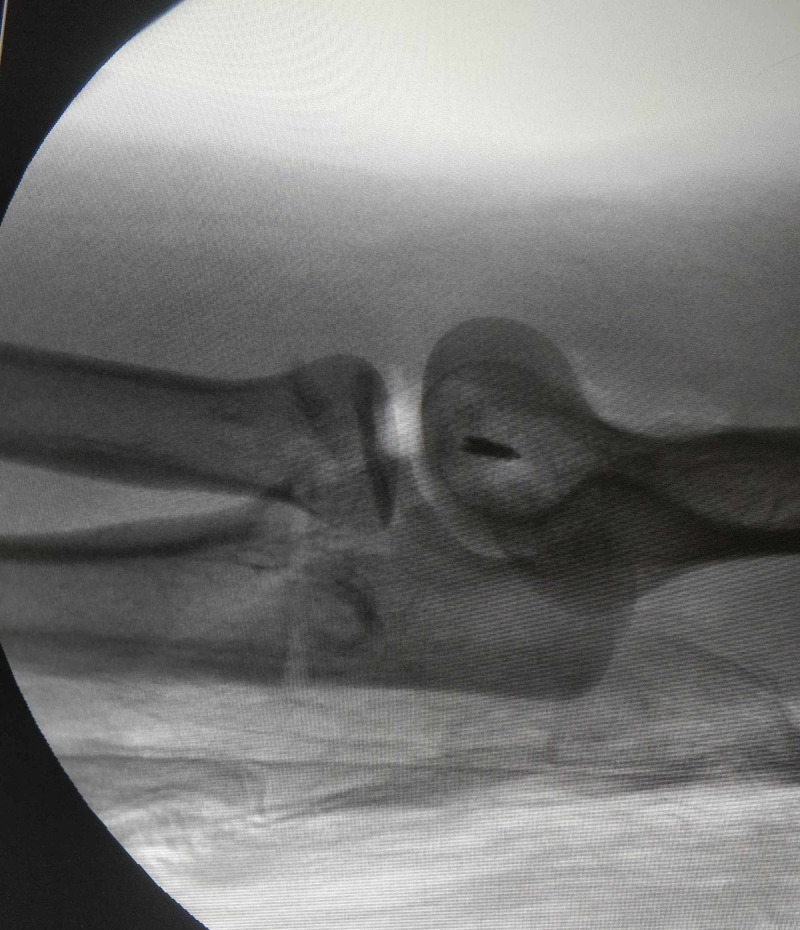
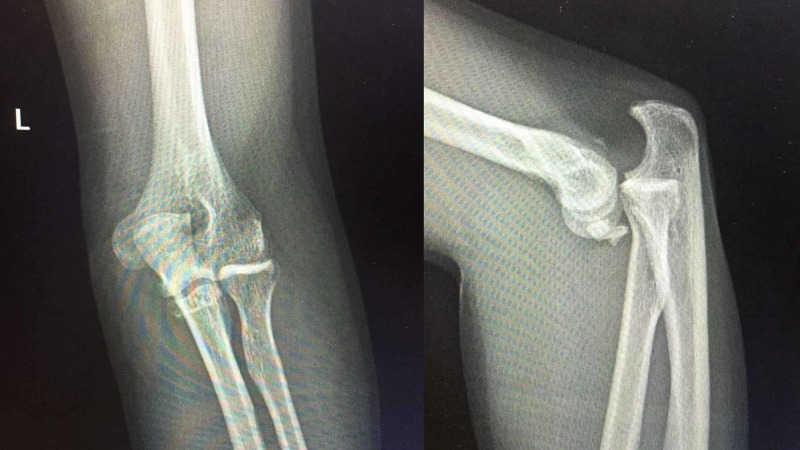
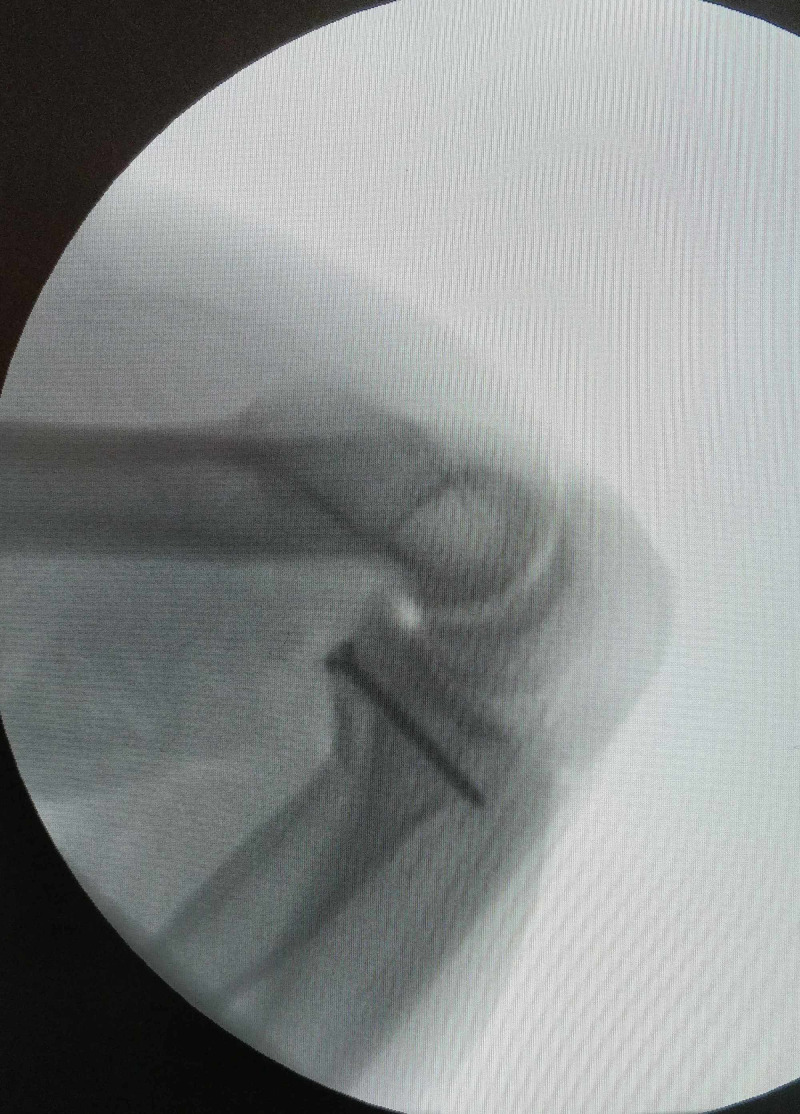
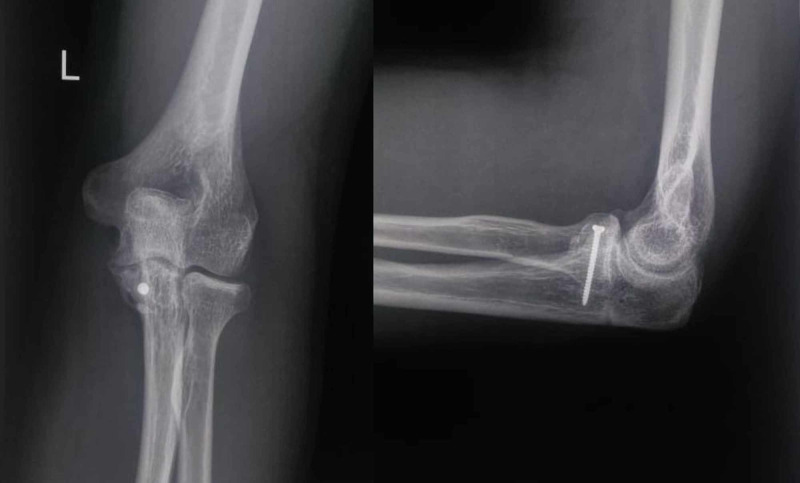
Coronoid fractures are less frequent injuries seen in around one-tenth of patients with elbow dislocation. Any injury to the coronoid process can be associated with elbow instability, in which injury to collateral ligaments co-exists, resulting in a loss of congruency of the elbow joint. However, there is a scarcity of evidence regarding patients' management with elbow dislocation and associated coronoid fractures. So, our aim is to assess the functional outcome of the elbow after operative fixation in patients with any type of coronoid fracture with associated elbow dislocation. A total of six patients with closed coronoid fracture of the elbow, with associated elbow dislocation, without any other associated trauma or previous surgery to the same limb, were included in our study. After closed reduction, patients with an incongruent reduction of the elbow joint were operated. The injured structures were repaired in an inside-out sequence: the coronoid fragment was first reduced by using a lasso-type suture. The larger fragments of the coronoid were fixed with either a screw or a plate when deemed necessary. Then, the lateral collateral ligament was repaired either using a suture anchor or transosseous (No. 2 Arthrex; Naples, Florida) sutures. After repair, the elbow was examined for stability radiologically using the hanging arm test; a concentric reduction of the elbow in lateral view during this test indicates a stable elbow. All patients showed a good to excellent outcome on the Mayo elbow performance score (MEPS) at the final follow-up (three patients had an excellent score while three had a good score). At the final follow-up, mean elbow flexion was 124º, loss of extension was 10º in only one patient, mean supination was 80º, and mean pronation was 72º. Isolated fractures of the coronoid associated with elbow dislocation require appropriate evaluation and management. Closed reduction and immobilization alone in young and active patients may not be sufficient, especially in patients with incongruent ulnohumeral joint. Surgical fixation of the coronoid fragment and repair of the collateral ligament, whenever indicated, can provide good functional outcomes.
冠状突骨折是肘部脱位患者中约十分之一会出现的较少见损伤。冠状突的任何损伤都可能与肘关节不稳定相关,此时侧副韧带也存在损伤,导致肘关节失去一致性。然而,关于肘关节脱位合并冠状突骨折患者的治疗,证据并不充分。因此,我们的目的是评估手术固定治疗各种类型冠状突骨折合并肘关节脱位患者后肘关节的功能结局。我们的研究纳入了6例闭合性肘关节冠状突骨折合并肘关节脱位的患者,这些患者同一肢体无任何其他相关创伤或既往手术史。闭合复位后,肘关节复位不一致的患者接受手术治疗。损伤结构按由内向外的顺序修复:首先使用套索型缝线复位冠状突碎片。必要时,较大的冠状突碎片用螺钉或钢板固定。然后,使用缝线锚钉或经骨(2号Arthrex;佛罗里达州那不勒斯)缝线修复外侧副韧带。修复后,通过垂臂试验对肘关节进行放射学稳定性检查;该试验中外侧位肘关节同心复位表明肘关节稳定。所有患者在末次随访时梅奥肘关节功能评分(MEPS)均为良好至优秀(3例为优秀,3例为良好)。末次随访时,平均肘关节屈曲为124°,仅1例患者伸展丧失10°,平均旋后为80°,平均旋前为72°。肘关节脱位相关的孤立冠状突骨折需要适当的评估和处理。对于年轻且活动量大的患者,单纯闭合复位和固定可能不够,尤其是尺肱关节复位不一致的患者。必要时,冠状突碎片的手术固定和侧副韧带的修复可提供良好的功能结局。