Laboratory of Experimental Intensive Care and Anaesthesiology, Amsterdam University Medical Centre, Location Academic Medical Centre, Amsterdam, The Netherlands.
Department of Intensive Care, OLVG Hospital, Amsterdam, The Netherlands.
Intensive Care Med. 2020 Dec;46(12):2450-2457. doi: 10.1007/s00134-020-06303-z. Epub 2020 Nov 12.
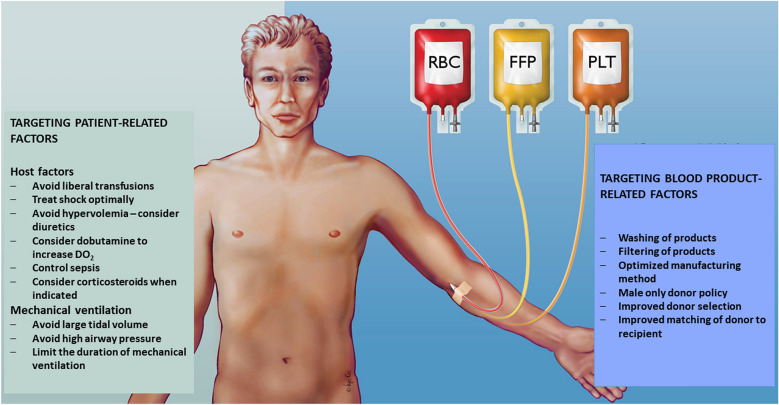
Red blood cell transfusions are a frequent intervention in critically ill patients, including in those who are receiving mechanical ventilation. Both these interventions can impact negatively on lung function with risks of transfusion-related acute lung injury (TRALI) and other forms of acute respiratory distress syndrome (ARDS). The interactions between transfusion, mechanical ventilation, TRALI and ARDS are complex and other patient-related (e.g., presence of sepsis or shock, disease severity, and hypervolemia) or blood product-related (e.g., presence of antibodies or biologically active mediators) factors also play a role. We propose several strategies targeted at these factors that may help limit the risks of associated lung injury in critically ill patients being considered for transfusion.
红细胞输注是危重症患者的常见干预措施,包括接受机械通气的患者。这两种干预措施都会对肺功能产生负面影响,导致输血相关急性肺损伤(TRALI)和其他形式的急性呼吸窘迫综合征(ARDS)。输血、机械通气、TRALI 和 ARDS 之间的相互作用很复杂,其他与患者相关的因素(如脓毒症或休克、疾病严重程度和血容量过多)或与血液制品相关的因素(如抗体或生物活性介质的存在)也起作用。我们提出了一些针对这些因素的策略,这些策略可能有助于限制考虑输血的危重症患者相关肺损伤的风险。