Li Ling, Guan Ziwan, Li Rui, Zhao Wei, Hao Guoxiang, Yan Yan, Xu Yuedong, Liao Lin, Wang Huanjun, Gao Li, Wu Kunrong, Gao Yuxia, Li Yan
School of Pharmaceutical Sciences, Shandong University.
Shandong Provincial Qianfoshan Hospital, the First Hospital Affiliated with Shandong First Medical University, Jinan.
Medicine (Baltimore). 2020 Nov 13;99(46):e23212. doi: 10.1097/MD.0000000000023212.
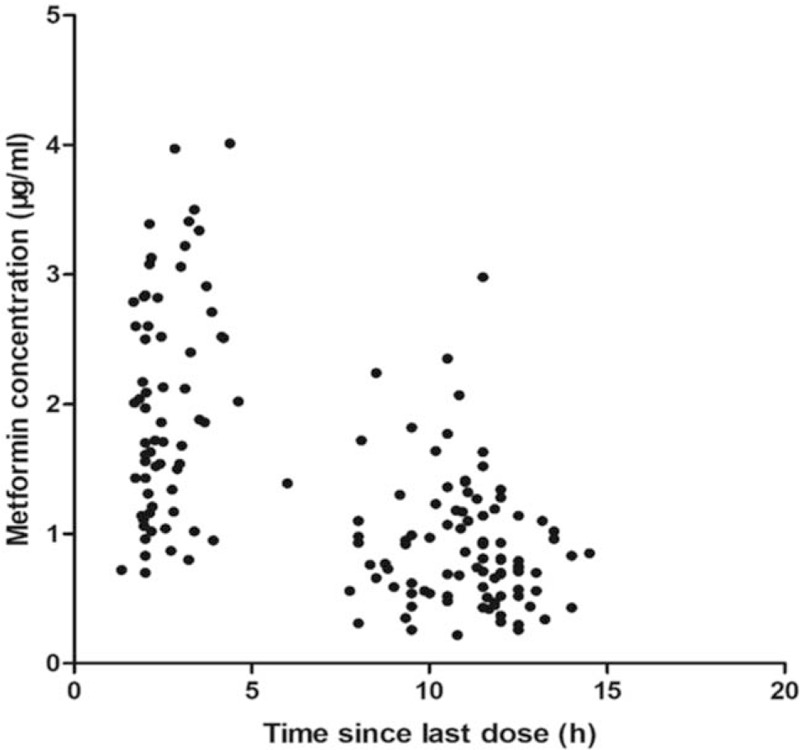
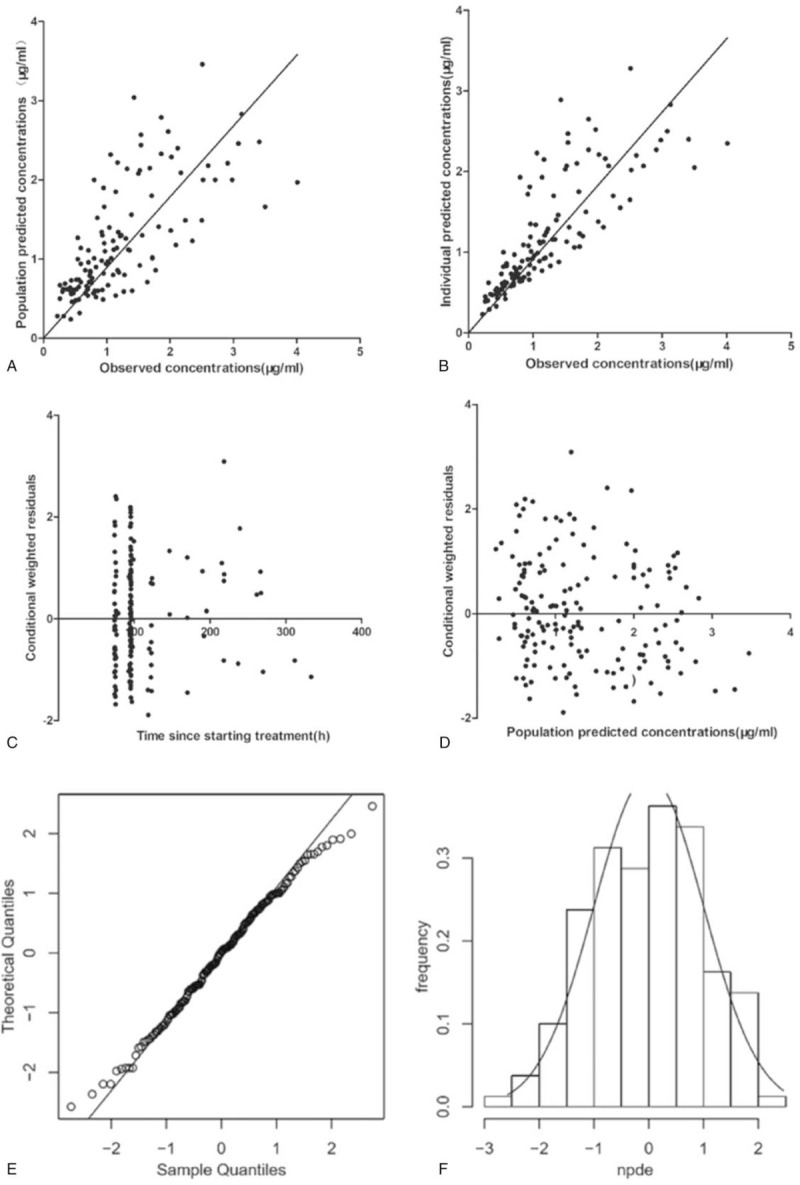
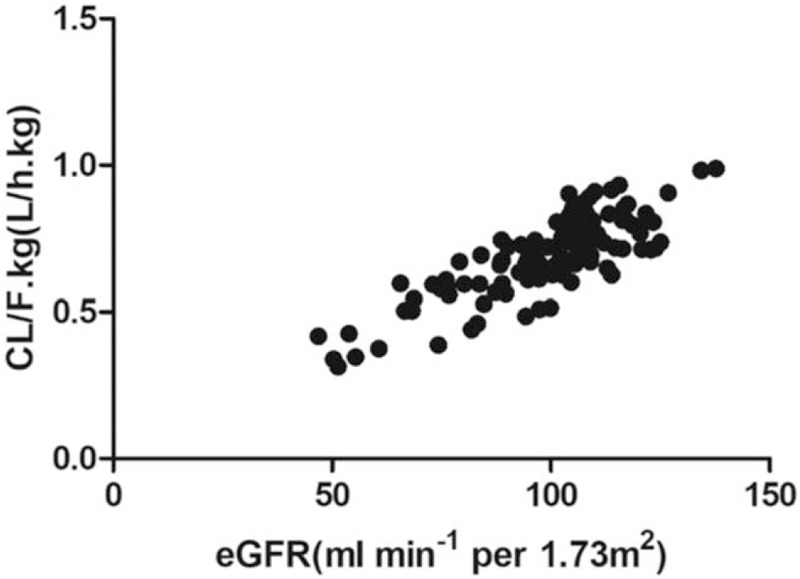
Approximately 35% of patients fail to attain ideal initial blood glucose control under metformin monotherapy. The objective of this observational study is to simulate the optimal protocol of metformin according to the different renal function.The population pharmacokinetics of metformin was performed in 125 subjects with type 2 diabetes mellitus. Plasma concentrations of metformin were quantified by high-performance liquid chromatography. A population pharmacokinetic model of metformin was developed using NONMEN (version 7.2, Icon Development Solutions, USA). Monte Carlo simulation was used to simulate the concentration-time profiles for doses of metformin for 1000 times at different stages of renal function.The mean population pharmacokinetic parameters were apparent clearance 53.0 L/h, apparent volume of distribution 438 L, absorption rate constant 1.4 hour and lag-time 0.91 hour. Covariate analyses revealed that estimated glomerular filtration rate (eGFR) and bodyweight as individual factors influencing the apparent oral clearance: CL/F = 53.0 × ( bodyweight/75) × (eGFR/102.5)EXP(0.1797). The results of the simulation showed that patients should be prescribed metformin 2550 mg/d (t.i.d.) vs 3000 mg/d (b.i.d.) as the minimum doses for patients with augmented renal clearance.eGFR had a significant impact on metformin pharmacokinetics. Patients administered metformin twice a day require higher total daily doses than those with a regimen of 3 times a day at each stage of kidney function.
在二甲双胍单药治疗下,约35%的患者未能实现理想的初始血糖控制。本观察性研究的目的是根据不同的肾功能模拟二甲双胍的最佳用药方案。对125例2型糖尿病患者进行了二甲双胍的群体药代动力学研究。采用高效液相色谱法定量测定血浆中二甲双胍的浓度。使用NONMEN(美国Icon Development Solutions公司版本7.2)建立了二甲双胍的群体药代动力学模型。采用蒙特卡罗模拟法,在肾功能的不同阶段对二甲双胍剂量的浓度-时间曲线进行了1000次模拟。群体药代动力学的平均参数为表观清除率53.0 L/h、表观分布容积438 L、吸收速率常数1.4小时和滞后时间0.91小时。协变量分析显示,估计肾小球滤过率(eGFR)和体重是影响表观口服清除率的个体因素:CL/F = 53.0×(体重/75)×(eGFR/102.5)EXP(0.1797)。模拟结果表明,对于肾清除率增加的患者,应给予二甲双胍2550 mg/d(每日三次)和3000 mg/d(每日两次)作为最小剂量。eGFR对二甲双胍的药代动力学有显著影响。在肾功能的每个阶段,每天服用两次二甲双胍的患者比每天服用三次的患者需要更高的每日总剂量。