Institute of Cell Biology and Neurobiology, Charité-Universitätsmedizin Berlin, Corporate Member of Freie Universität Berlin, Humboldt-Universität zu Berlin, and Berlin Institute of Health, Charitéplatz 1, 10117 Berlin, Germany.
The Integrative Research Institute for the Life Sciences, Institute of Biology, Humboldt-Universität zu Berlin, 10115 Berlin, Germany.
Cells. 2020 Nov 10;9(11):2455. doi: 10.3390/cells9112455.
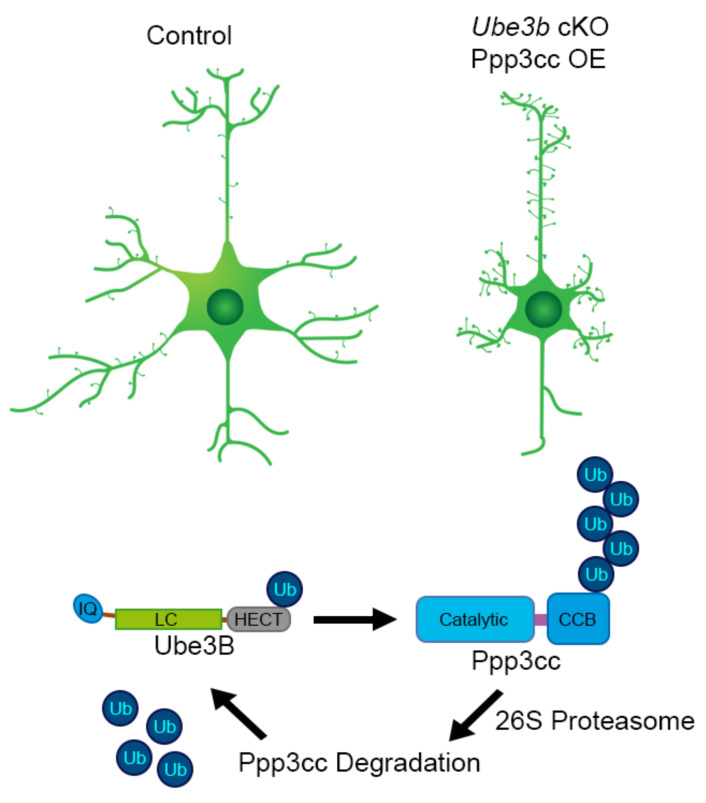
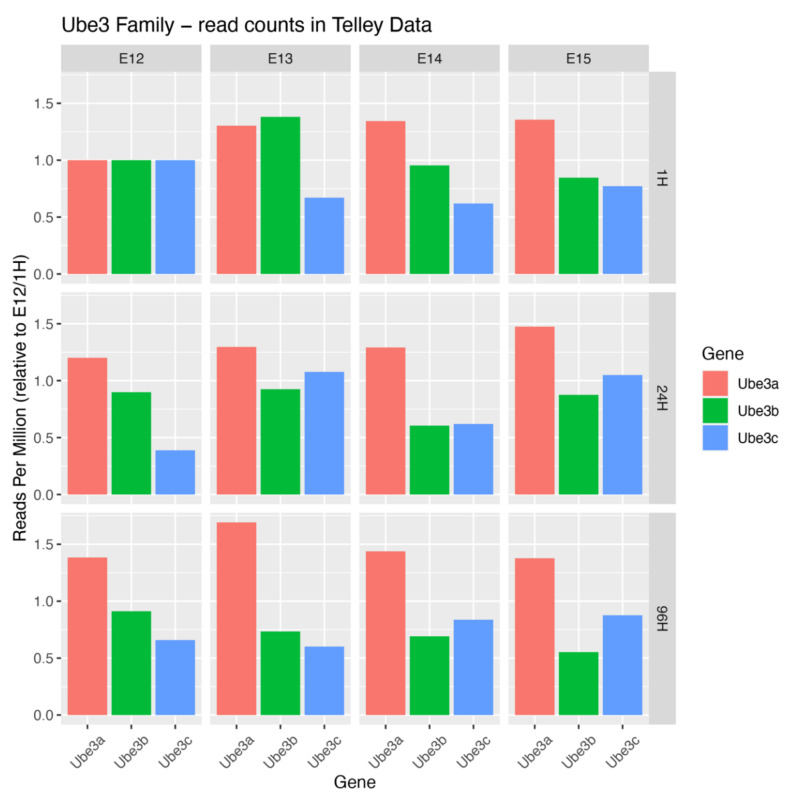
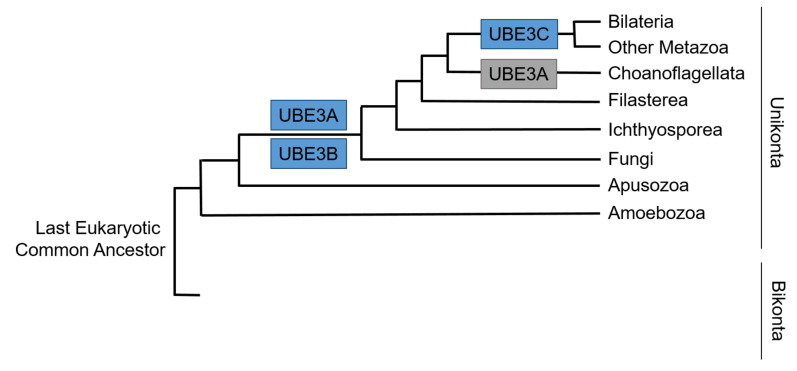
Protein ubiquitination belongs to the best characterized pathways of protein degradation in the cell; however, our current knowledge on its physiological consequences is just the tip of an iceberg. The divergence of enzymatic executors of ubiquitination led to some 600-700 E3 ubiquitin ligases embedded in the human genome. Notably, mutations in around 13% of these genes are causative of severe neurological diseases. Despite this, molecular and cellular context of ubiquitination remains poorly characterized, especially in the developing brain. In this review article, we summarize recent findings on brain-expressed HECT-type E3 UBE3 ligases and their murine orthologues, comprising Angelman syndrome UBE3A, Kaufman oculocerebrofacial syndrome UBE3B and autism spectrum disorder-associated UBE3C. We summarize evolutionary emergence of three genes, the biochemistry of UBE3 enzymes, their biology and clinical relevance in brain disorders. Particularly, we highlight that uninterrupted action of UBE3 ligases is a sine qua non for cortical circuit assembly and higher cognitive functions of the neocortex.
蛋白质泛素化属于细胞内蛋白质降解最典型的途径;然而,我们目前对其生理后果的了解只是冰山一角。泛素化的酶执行者的分化导致了大约 600-700 种 E3 泛素连接酶嵌入人类基因组中。值得注意的是,这些基因中约 13%的突变是导致严重神经疾病的原因。尽管如此,泛素化的分子和细胞背景仍未得到很好的描述,特别是在发育中的大脑中。在这篇综述文章中,我们总结了最近关于脑表达的 HECT 型 E3 UBE3 连接酶及其鼠类同源物的发现,包括 Angelman 综合征 UBE3A、Kaufman 眼脑面综合征 UBE3B 和自闭症谱系障碍相关的 UBE3C。我们总结了三个基因的进化出现,UBE3 酶的生物化学,它们在大脑疾病中的生物学和临床相关性。特别是,我们强调 UBE3 连接酶的不间断作用是皮质回路组装和新皮层更高认知功能的必要条件。