Neuroscience department, Janssen Pharmaceutical Companies of Johnson and Johnson, 2340, Beerse, Belgium.
Animal Physiology and Neurobiology, KU Leuven, Naamsestraat 59, 3000, Leuven, Belgium.
BMC Mol Cell Biol. 2020 Nov 12;21(1):81. doi: 10.1186/s12860-020-00320-y.
Although several studies demonstrate prion-like properties of Tau fibrils, the effect of size in the seeding capacity of these aggregates is not fully understood. The aim of this study is to characterize Tau seeds by their size and seeding capacity.
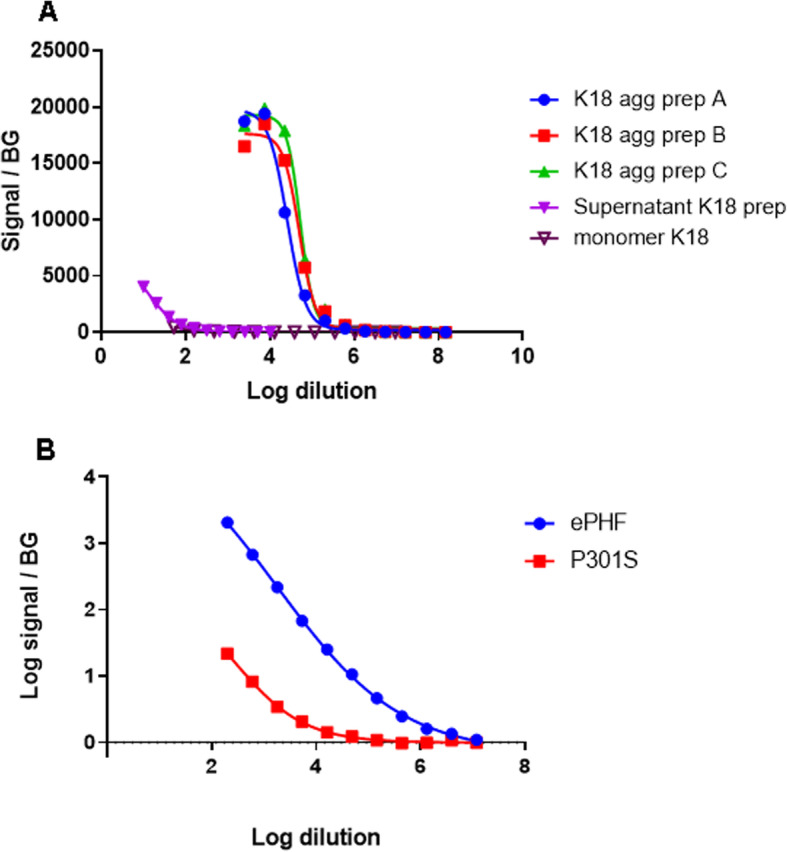
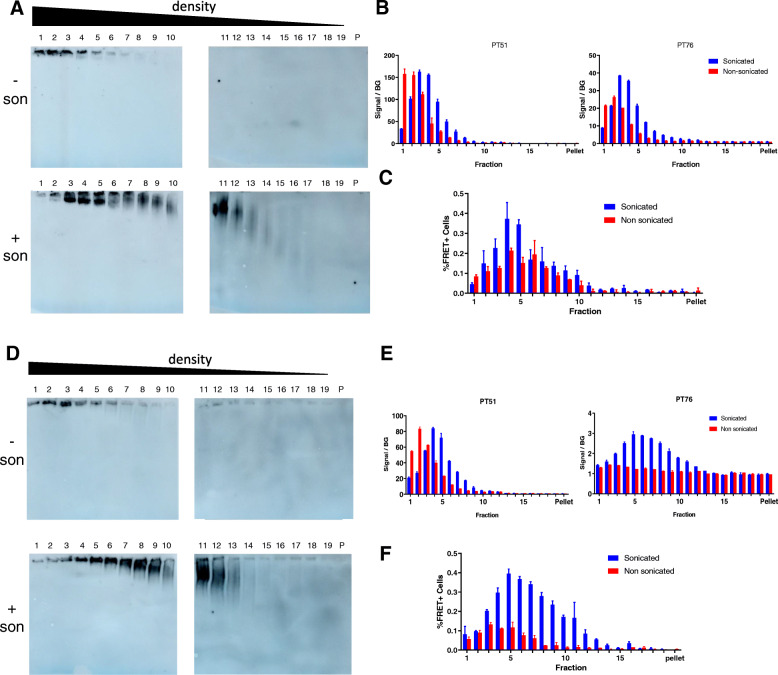
Tau aggregates were isolated from postmortem AD brain tissue and separated from low molecular weight species by sucrose gradient ultracentrifugation. Biochemical characterization of the different fractions was done by non-reducing Western blotting and aggregate-specific immuno-assays using in house developed anti-Tau monoclonal antibodies, including PT76 which binds to an epitope close to the microtubule-binding domain and, hence, also to K18. Seeding efficiency was then assessed in HEK293 cells expressing K18 FRET sensors.
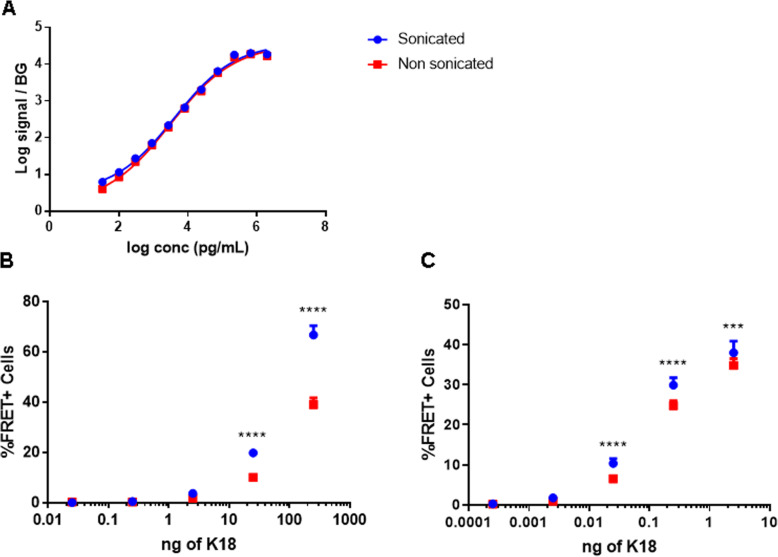
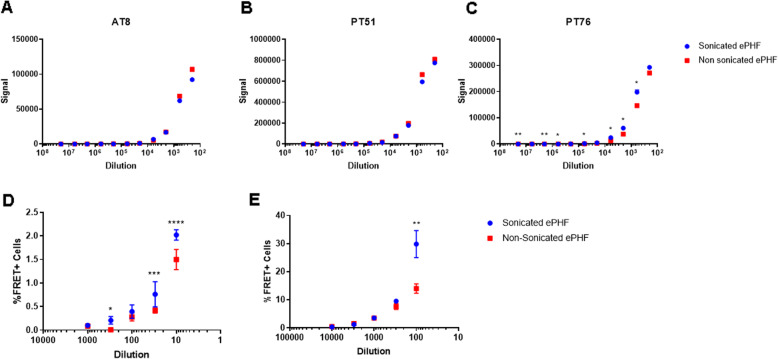
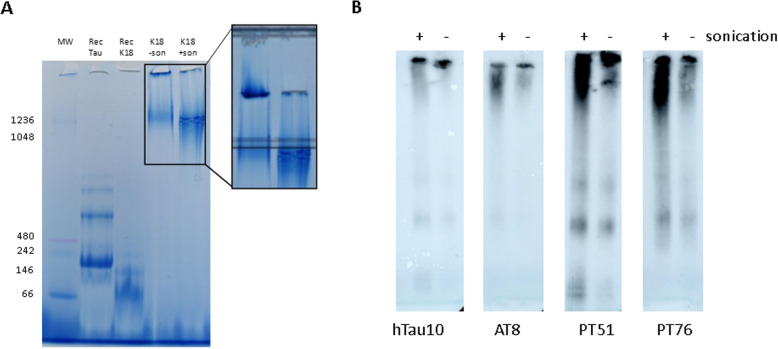
We observed that upon sonication of Tau aggregates different size-distributed tau aggregates are obtained. In biochemical assays, these forms show higher signals than the non-sonicated material in some aggregation-specific Tau assays. This could be explained by an increased epitope exposure of the smaller aggregates created by the sonication. By analyzing human brain derived and recombinant (K18) Tau aggregates in a cellular FRET assay, it was observed that, in the absence of transfection reagent, sonicated aggregates showed higher aggregation induction. Preparations also showed altered profiles on native PAGE upon sonication and we could further separate different aggregate species based on their molecular weight via sucrose gradients.
This study further elucidates the molecular properties regarding relative aggregate size and seeding efficiency of sonicated vs. non-sonicated high molecular weight Tau species. This information will provide a better knowledge on how sonication, a commonly used technique in the field of study of Tau aggregation, impacts the aggregates. In addition, the description of PT76-based aggregation specific assay is a valuable tool to quantify K18 and human AD Tau fibrils.
尽管有几项研究表明 Tau 纤维具有类朊病毒特性,但这些聚集物的大小对其接种能力的影响尚未完全阐明。本研究旨在通过其大小和接种能力来表征 Tau 种子。
从尸检 AD 脑组织中分离 Tau 聚集物,并通过蔗糖梯度超速离心将其与低分子量物质分离。使用内部开发的抗 Tau 单克隆抗体,包括与微管结合域附近的表位结合,因此也与 K18 结合的 PT76,通过非还原 Western blot 和聚集物特异性免疫测定对不同级分进行生化特性分析。然后在表达 K18 FRET 传感器的 HEK293 细胞中评估接种效率。
我们观察到,在 Tau 聚集物的超声处理后,会得到不同大小分布的 Tau 聚集物。在生化测定中,与非超声处理材料相比,这些形式在某些聚集物特异性 Tau 测定中显示出更高的信号。这可以通过超声处理产生的较小聚集物的表位暴露增加来解释。通过在细胞 FRET 测定中分析源自人脑中的和重组的(K18)Tau 聚集物,观察到在没有转染试剂的情况下,超声处理的聚集物显示出更高的聚集诱导。超声处理后,天然 PAGE 上的制备物也显示出改变的图谱,我们还可以通过蔗糖梯度根据分子量进一步分离不同的聚集物物种。
本研究进一步阐明了与超声处理的高分子量 Tau 物种的相对聚集物大小和接种效率相关的分子特性。这些信息将提供关于超声处理对聚集物的影响的更好的知识。此外,基于 PT76 的聚集特异性测定的描述是量化 K18 和人 AD Tau 纤维的有价值的工具。