Department of Defense, United States Army, Washington, USA; Benaroya Research Institute, Seattle, Washington, USA; Department of Immunology, University of Washington, Seattle, Washington, USA.
Center for Immunity and Immunotherapies, Seattle Children's Research Institute, Seattle, Washington, USA.
J Biol Chem. 2021 Jan-Jun;296:100076. doi: 10.1074/jbc.RA120.016196. Epub 2020 Nov 21.
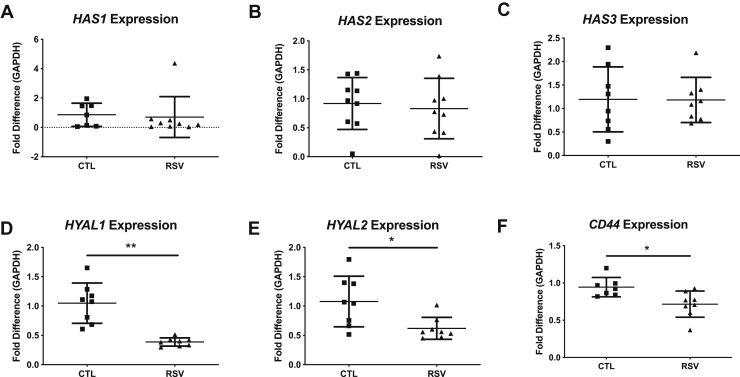
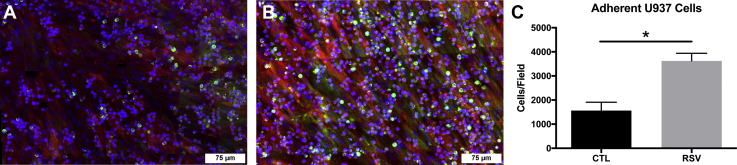
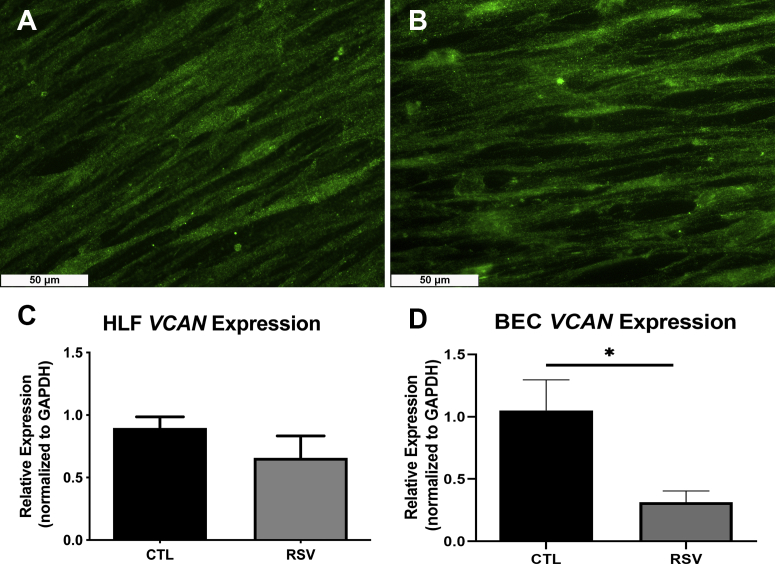
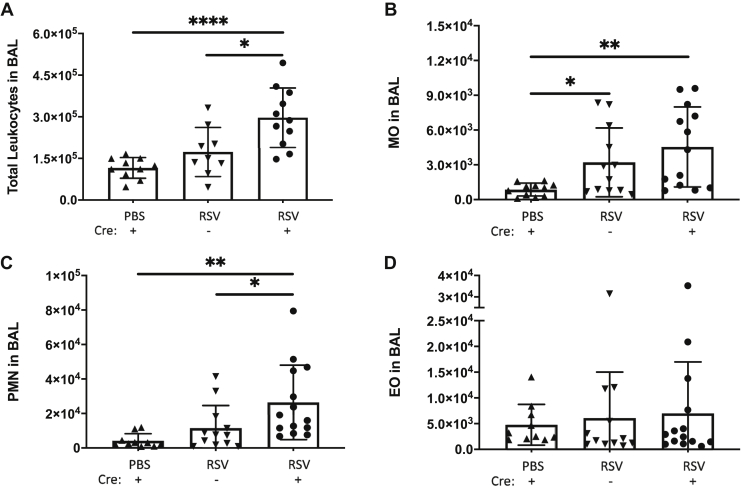
Airway inflammation is a critical feature of lower respiratory tract infections caused by viruses such as respiratory syncytial virus (RSV). A growing body of literature has demonstrated the importance of extracellular matrix changes such as the accumulation of hyaluronan (HA) and versican in the subepithelial space in promoting airway inflammation; however, whether these factors contribute to airway inflammation during RSV infection remains unknown. To test the hypothesis that RSV infection promotes inflammation via altered HA and versican production, we studied an ex vivo human bronchial epithelial cell (BEC)/human lung fibroblast (HLF) coculture model. RSV infection of BEC/HLF cocultures led to decreased hyaluronidase expression by HLFs, increased accumulation of HA, and enhanced adhesion of U937 cells as would be expected with increased HA. HLF production of versican was not altered following RSV infection; however, BEC production of versican was significantly downregulated following RSV infection. In vivo studies with epithelial-specific versican-deficient mice [SPC-Cre(+) Vcan] demonstrated that RSV infection led to increased HA accumulation compared with control mice, which also coincided with decreased hyaluronidase expression in the lung. SPC-Cre(+) Vcan mice demonstrated enhanced recruitment of monocytes and neutrophils in bronchoalveolar lavage fluid and increased neutrophils in the lung compared with SPC-Cre(-) RSV-infected littermates. Taken together, these data demonstrate that altered extracellular matrix accumulation of HA occurs following RSV infection and may contribute to airway inflammation. In addition, loss of epithelial expression of versican promotes airway inflammation during RSV infection further demonstrating that versican's role in inflammatory regulation is complex and dependent on the microenvironment.
气道炎症是病毒(如呼吸道合胞病毒[RSV])引起的下呼吸道感染的一个关键特征。越来越多的文献表明,细胞外基质(如透明质酸[HA]和 versican)在基底膜下空间的积累在促进气道炎症方面的重要性;然而,这些因素是否导致 RSV 感染期间的气道炎症仍不清楚。为了检验 RSV 感染通过改变 HA 和 versican 产生促进炎症的假说,我们研究了体外人支气管上皮细胞(BEC)/人肺成纤维细胞(HLF)共培养模型。RSV 感染 BEC/HLF 共培养物导致 HLFs 表达的透明质酸酶减少,HA 积累增加,以及 U937 细胞的黏附增强,这与 HA 增加相一致。RSV 感染后,HLF 产生的 versican 没有改变;然而,RSV 感染后 BEC 产生的 versican 显著下调。上皮细胞特异性 versican 缺陷型小鼠[SPC-Cre(+) Vcan]的体内研究表明,与对照小鼠相比,RSV 感染导致 HA 积累增加,这也与肺中的透明质酸酶表达减少相一致。SPC-Cre(+) Vcan 小鼠显示支气管肺泡灌洗液中单核细胞和中性粒细胞的募集增加,与 SPC-Cre(-) RSV 感染的同窝小鼠相比,肺中的中性粒细胞也增加。总之,这些数据表明,RSV 感染后细胞外基质 HA 的积累发生改变,可能导致气道炎症。此外,上皮细胞 versican 的表达缺失促进 RSV 感染期间的气道炎症,进一步证明 versican 在炎症调节中的作用是复杂的,并依赖于微环境。