Beg Shaham, Bareja Rohan, Ohara Kentaro, Eng Kenneth Wha, Wilkes David C, Pisapia David J, Zoughbi Wael Al, Kudman Sarah, Zhang Wei, Rao Rema, Manohar Jyothi, Kane Troy, Sigouros Michael, Xiang Jenny Zhaoying, Khani Francesca, Robinson Brian D, Faltas Bishoy M, Sternberg Cora N, Sboner Andrea, Beltran Himisha, Elemento Olivier, Mosquera Juan Miguel
Department of Pathology and Laboratory Medicine, Weill Cornell Medicine, New York, NY, United States; Caryl and Israel Englander Institute for Precision Medicine, Weill Cornell Medicine and NewYork Presbyterian, New York, NY, United States.
Caryl and Israel Englander Institute for Precision Medicine, Weill Cornell Medicine and NewYork Presbyterian, New York, NY, United States; Department of Physiology and Biophysics, Weill Cornell Medicine, New York, NY, United States; Institute for Computational Biomedicine, Weill Cornell Medicine, New York, NY, United States.
Transl Oncol. 2021 Jan;14(1):100944. doi: 10.1016/j.tranon.2020.100944. Epub 2020 Nov 12.
Frequency of clinically relevant mutations in solid tumors by targeted and whole-exome sequencing is ∼30%. Transcriptome analysis complements detection of actionable gene fusions in advanced cancer patients. Goal of this study was to determine the added value of anchored multiplex PCR (AMP)-based next-generation sequencing (NGS) assay to identify further potential drug targets, when coupled with whole-exome sequencing (WES).
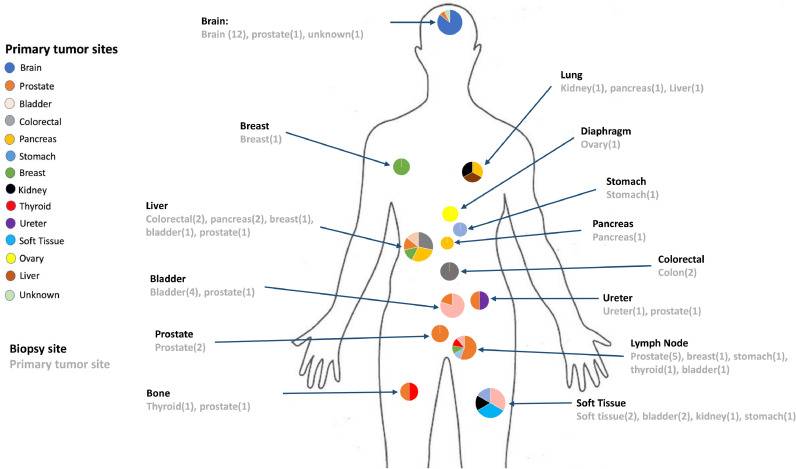
Selected series of fifty-six samples from 55 patients enrolled in our precision medicine study were interrogated by WES and AMP-based NGS. RNA-seq was performed in 19 cases. Clinically relevant and actionable alterations detected by three methods were integrated and analyzed.
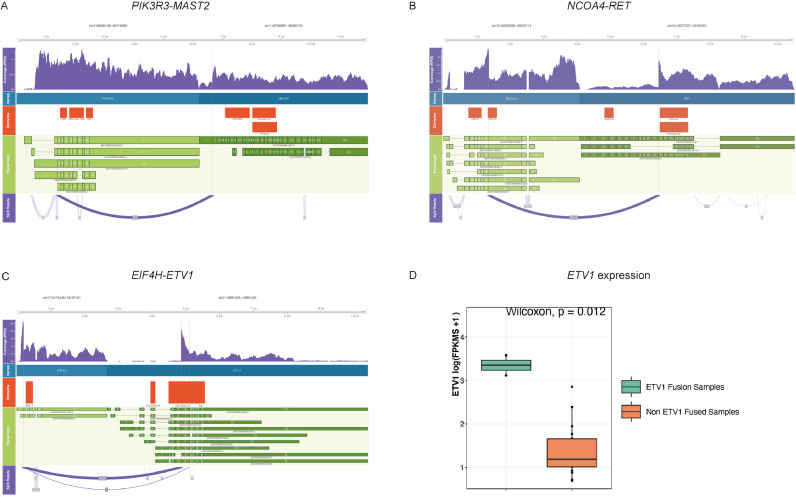
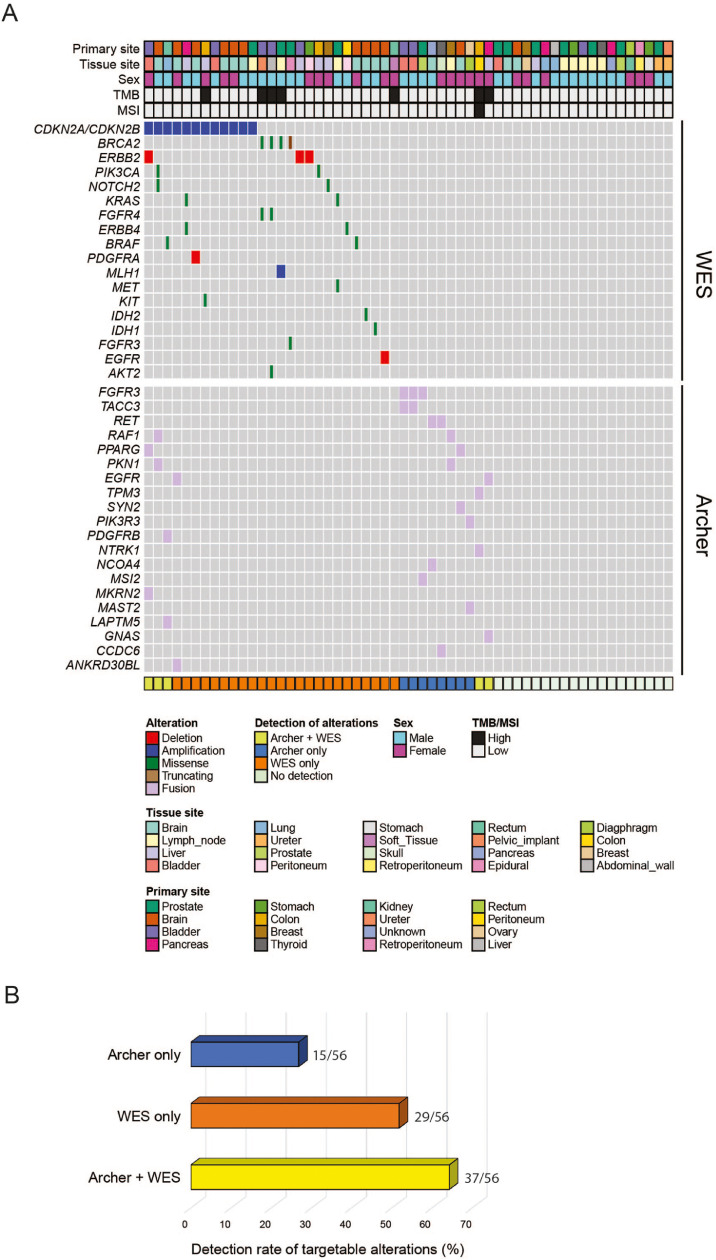
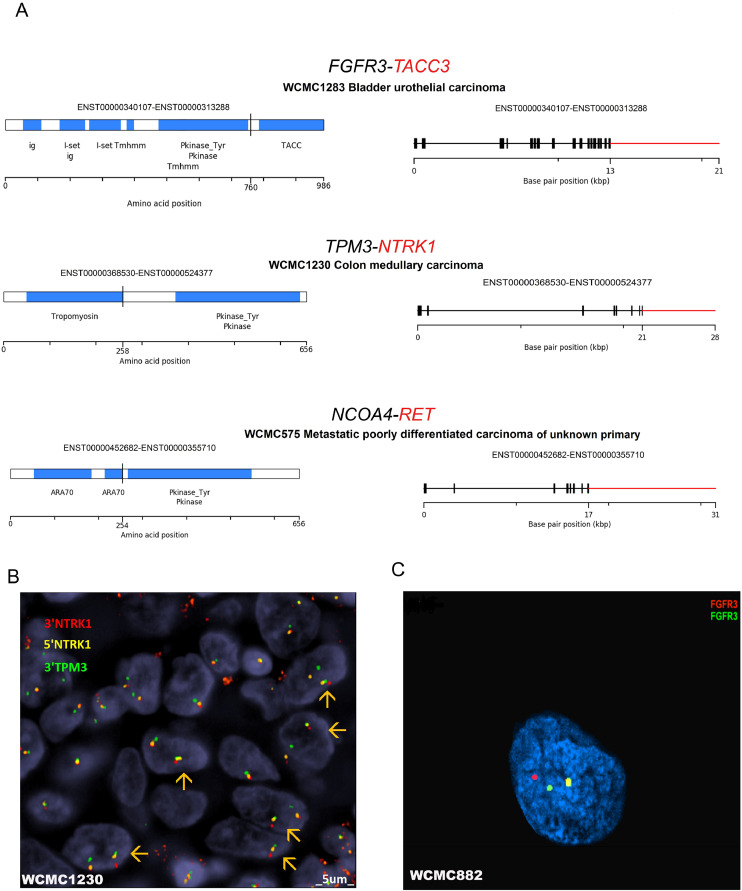
AMP-based NGS detected 48 fusions in 31 samples (55.4%); 31.25% (15/48) were classified as targetable based on published literature. WES revealed 29 samples (51.8%) harbored targetable alterations. TMB-high and MSI-high status were observed in 12.7% and 1.8% of cases. RNA-seq from 19 samples identified 8 targetable fusions (42.1%), also captured by AMP-based NGS. When number of actionable fusions detected by AMP-based NGS were added to WES targetable alterations, 66.1% of samples had potential drug targets. When both WES and RNA-seq were analyzed, 57.8% of samples had targetable alterations.
This study highlights importance of an integrative genomic approach for precision oncology, including use of different NGS platforms with complementary features. Integrating RNA data (whole transcriptome or AMP-based NGS) significantly enhances detection of potential targets in cancer patients. In absence of fresh frozen tissue, AMP-based NGS is a robust method to detect actionable fusions using low-input RNA from archival tissue.
通过靶向测序和全外显子组测序检测实体瘤中具有临床相关性的突变频率约为30%。转录组分析可补充晚期癌症患者中可操作基因融合的检测。本研究的目的是确定基于锚定多重PCR(AMP)的下一代测序(NGS)检测在与全外显子组测序(WES)结合时,用于识别更多潜在药物靶点的附加价值。
对参与我们精准医学研究的55例患者的56个样本进行了WES和基于AMP的NGS检测。对19例样本进行了RNA测序。整合并分析通过三种方法检测到的具有临床相关性和可操作性的改变。
基于AMP的NGS在31个样本(55.4%)中检测到48种融合;根据已发表文献,31.25%(15/48)被归类为可靶向的。WES显示29个样本(51.8%)存在可靶向的改变。12.7%和1.8%的病例观察到高肿瘤突变负荷(TMB)和高度微卫星不稳定(MSI)状态。来自19个样本的RNA测序鉴定出8种可靶向的融合(42.1%),也被基于AMP的NGS检测到。当将基于AMP的NGS检测到的可操作融合数量添加到WES可靶向改变中时,66.1%的样本具有潜在药物靶点。当同时分析WES和RNA测序时,57.8%的样本具有可靶向的改变。
本研究强调了综合基因组方法在精准肿瘤学中的重要性,包括使用具有互补特征的不同NGS平台。整合RNA数据(全转录组或基于AMP的NGS)可显著提高癌症患者潜在靶点的检测。在没有新鲜冷冻组织的情况下,基于AMP的NGS是一种使用存档组织的低输入RNA检测可操作融合的可靠方法。