Pathology Department, Medical School, University of Valencia-INCLIVA, Valencia, Spain.
Pathology Department, Medical School, University of Valencia-INCLIVA, Valencia, Spain; CIBERONC, Madrid, Spain.
Neoplasia. 2021 Jan;23(1):12-20. doi: 10.1016/j.neo.2020.11.001. Epub 2020 Nov 13.
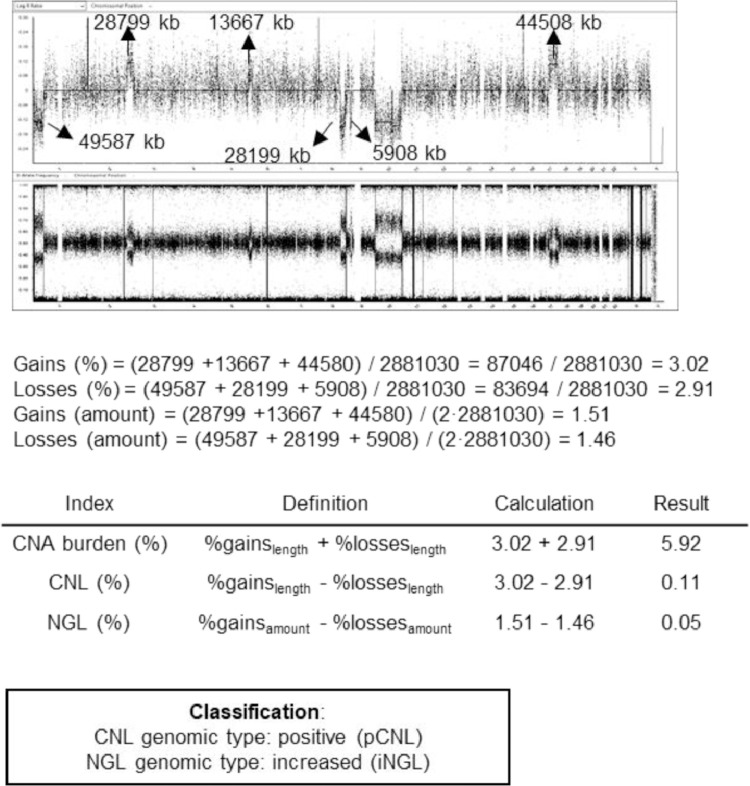
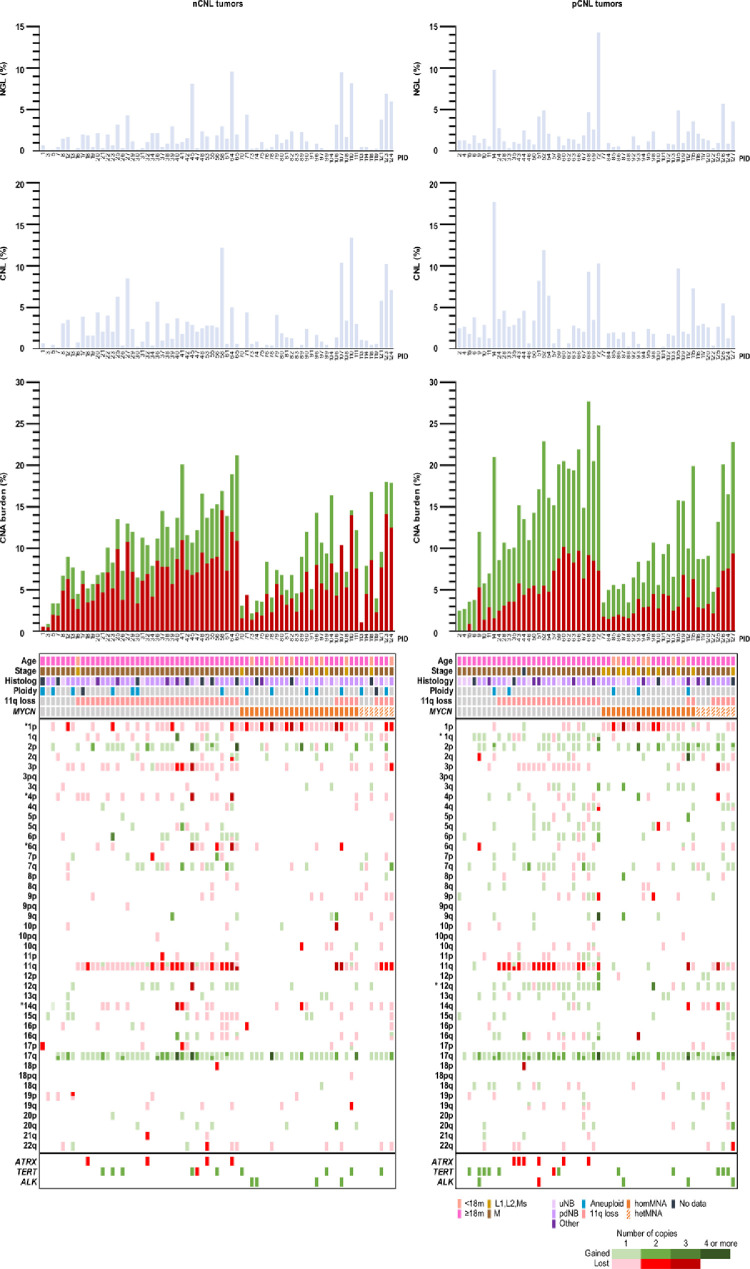
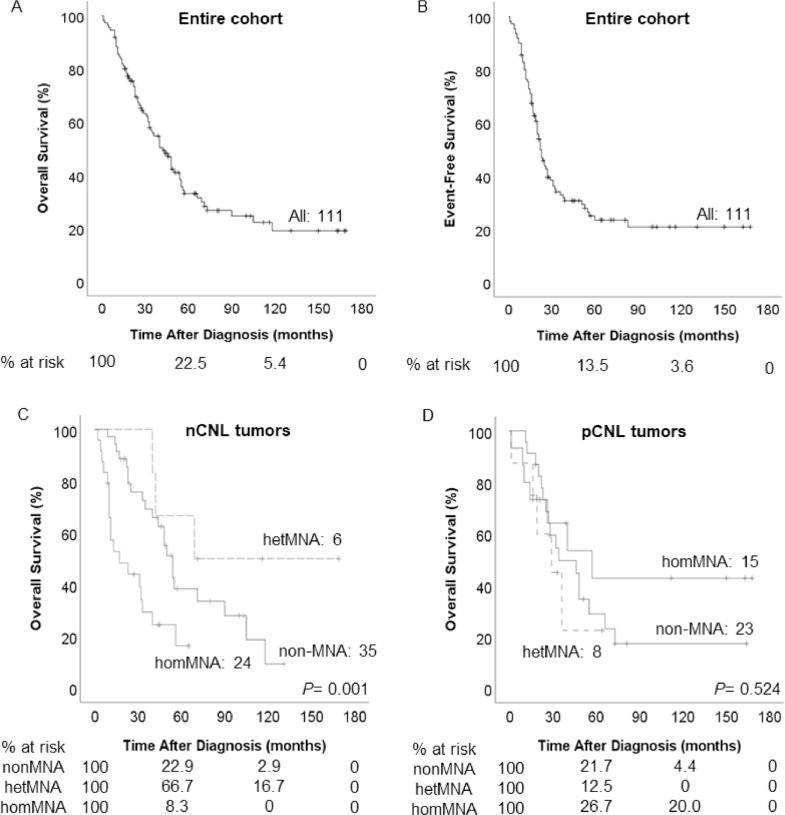
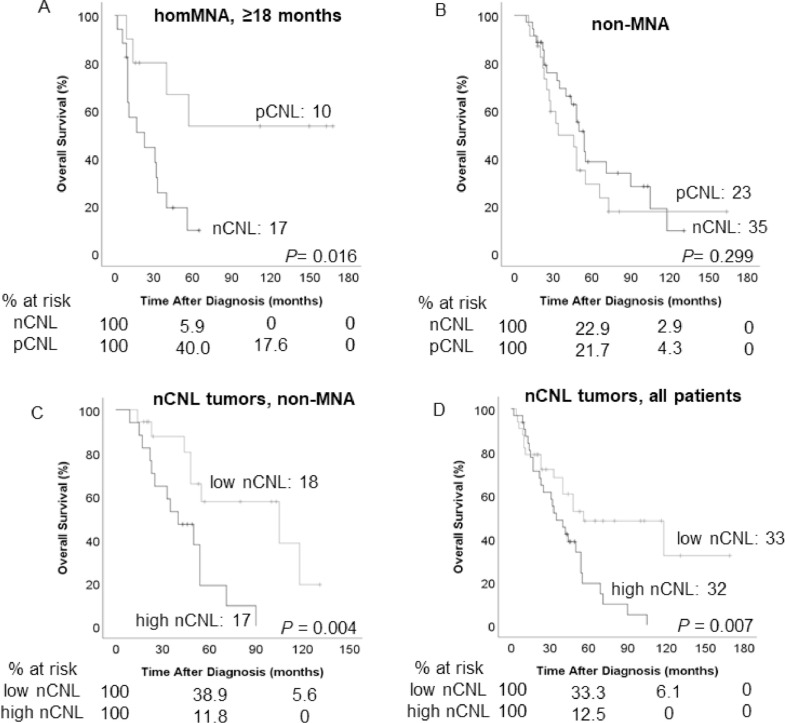
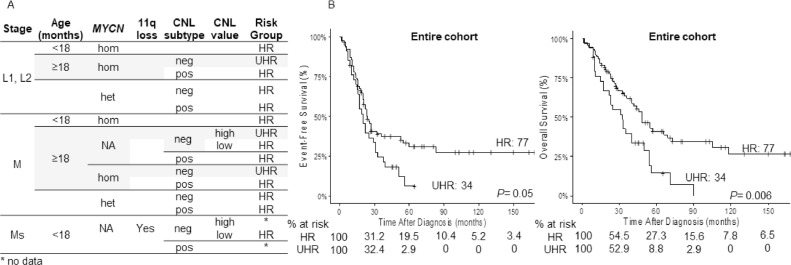
Survival in high-risk neuroblastoma (HR-NB) patients remains poor despite multimodal treatment. We aimed to identify HR-NB patients with worse outcomes by analyzing the genomic instability derived from segmental chromosomal aberrations. We calculated 3 genomic instability indexes for primary tumor SNP array profiles from 127 HR-NB patients: (1) Copy number aberration burden (%gains+%losses), (2) copy number load (CNL) (%gains-%losses) and (3) net genomic load (NGL) (%gains-%losses). Tumors were classified according to positive or negative CNL and NGL genomic subtypes. The impact of the genomic instability indexes on overall survival (OS) was assessed with Cox regression. We identified 38% of HR-NB patients with poor 5-year OS. A negative CNL genomic background was related to poor prognosis in patients ≥18 months showing tumors with homogeneous MYCN amplification (9.5% survival probability, P < 0.05) and patients with non-MYCN amplified NB (18.8% survival probability related to >2.4% CNL, P < 0.01). A positive CNL genomic background was associated with worse outcome in patients with heterogeneous MYCN amplification (22.5% survival probability, P < 0.05). We conclude that characterizing a tumor genomic background according to predominance of genome gained or lost contributes toward improved outcome prediction and brings greater insight into the tumor biology of HR-NB patients.
尽管采用了多模式治疗,但高危神经母细胞瘤(HR-NB)患者的生存率仍然很差。我们旨在通过分析源自片段染色体异常的基因组不稳定性,来确定预后较差的 HR-NB 患者。我们根据 127 例 HR-NB 患者的原发肿瘤 SNP 阵列谱计算了 3 个基因组不稳定性指数:(1)拷贝数畸变负担(%增益+%丢失),(2)拷贝数负荷(CNL)(%增益-%丢失)和(3)净基因组负荷(NGL)(%增益-%丢失)。根据 CNL 和 NGL 基因组亚型的阳性或阴性,对肿瘤进行分类。使用 Cox 回归评估基因组不稳定性指数对总生存期(OS)的影响。我们确定了 38%的 HR-NB 患者的 5 年 OS 较差。在年龄≥18 个月的患者中,阴性 CNL 基因组背景与预后不良相关,这些患者的肿瘤具有均匀的 MYCN 扩增(9.5%的生存率,P<0.05)和非 MYCN 扩增的 NB(与>2.4%的 CNL 相关的 18.8%的生存率,P<0.01)。在异质性 MYCN 扩增的患者中,阳性 CNL 基因组背景与较差的预后相关(22.5%的生存率,P<0.05)。我们得出结论,根据基因组增益或丢失的优势来描述肿瘤基因组背景有助于改善预后预测,并深入了解 HR-NB 患者的肿瘤生物学。