Eiber Nane, Fröb Franziska, Schowalter Mirjam, Thiel Christian, Clemen Christoph S, Schröder Rolf, Hashemolhosseini Said
Institute of Biochemistry, Friedrich-Alexander-University of Erlangen-Nürnberg, Erlangen, Germany.
Institute of Neuropathology, University Hospital Erlangen, Friedrich-Alexander-University of Erlangen-Nürnberg, Erlangen, Germany.
Front Mol Neurosci. 2020 Oct 26;13:567084. doi: 10.3389/fnmol.2020.567084. eCollection 2020.
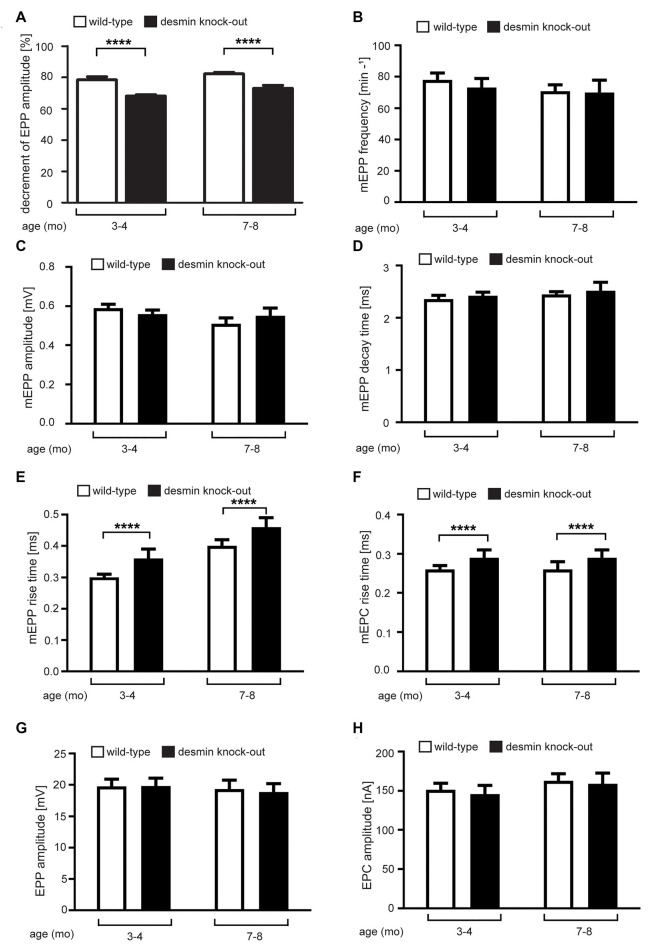
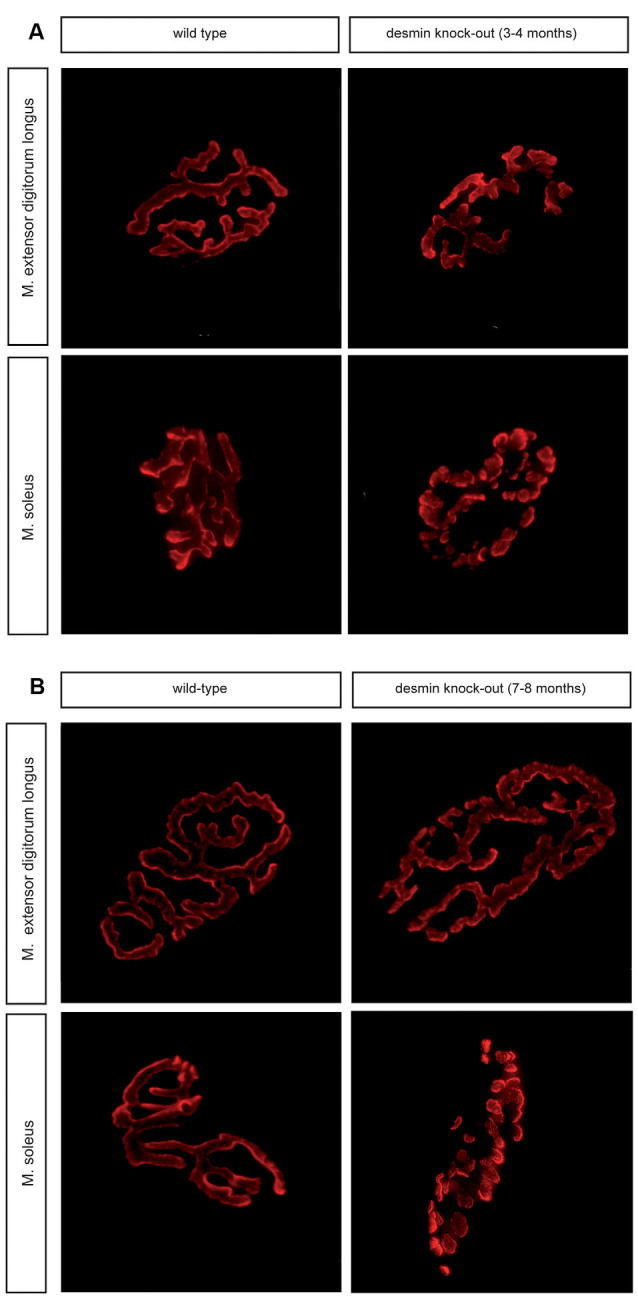
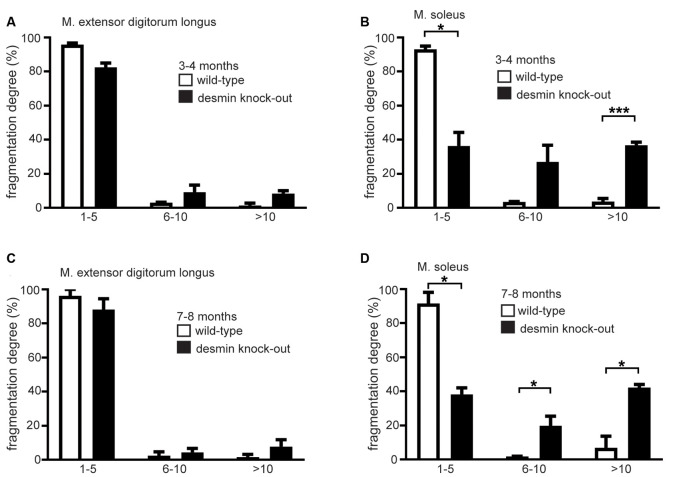
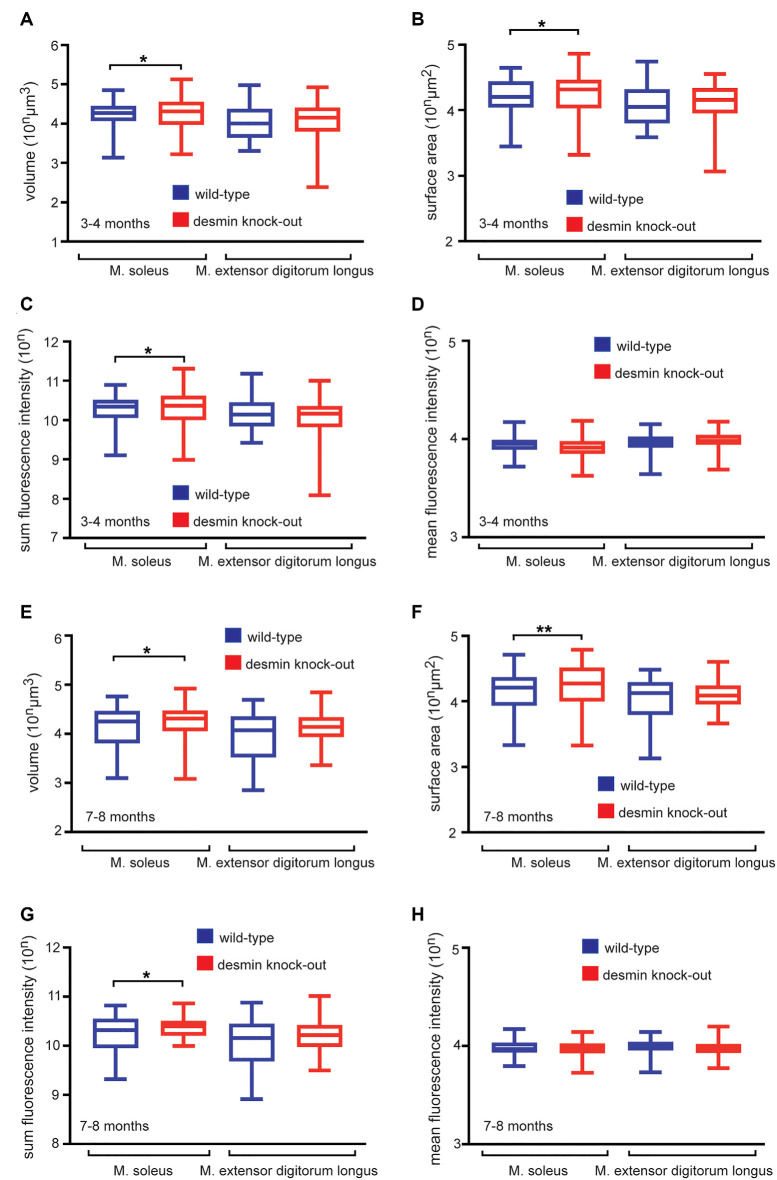
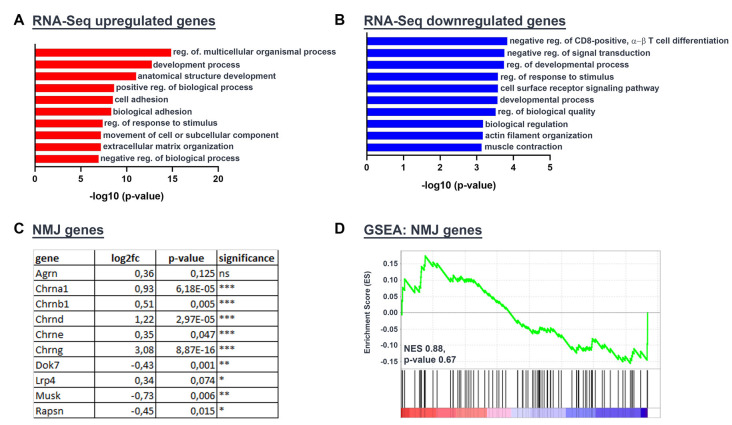
Desmin, the major intermediate filament (IF) protein in muscle cells, interlinks neighboring myofibrils and connects the whole myofibrillar apparatus to myonuclei, mitochondria, and the sarcolemma. However, desmin is also known to be enriched at postsynaptic membranes of neuromuscular junctions (NMJs). The pivotal role of the desmin IF cytoskeletal network is underscored by the fact that over 120 mutations of the human gene cause hereditary and sporadic myopathies and cardiomyopathies. A subgroup of human desminopathies comprises autosomal recessive cases resulting in the complete abolition of desmin protein. In these patients, who display a more severe phenotype than the autosomal dominant cases, it has been reported that some individuals also suffer from a myasthenic syndrome in addition to the classical occurrence of myopathy and cardiomyopathy. Since further studies on the NMJ pathology are hampered by the lack of available human striated muscle biopsy specimens, we exploited homozygous desmin knock-out mice which closely mirror the striated muscle pathology of human patients lacking desmin protein. Here, we report on the impact of the lack of desmin on the structure and function of NMJs and the transcription of genes coding for postsynaptic proteins. Desmin knock-out mice display a fragmentation of NMJs in soleus, but not in the extensor digitorum longus muscle. Moreover, soleus muscle fibers show larger NMJs. Further, transcription levels of acetylcholine receptor (AChR) genes are increased in muscles from desmin knock-out mice, especially of the AChRγ subunit, which is known as a marker of muscle fiber regeneration. Electrophysiological recordings depicted a pathological decrement of nerve-dependent endplate potentials and an increased rise time of the nerve-independent miniature endplate potentials. The latter appears related to the fragmentation of NMJs in desmin knockout mice. Our study highlights the essential role of desmin for the structural and functional integrity of mammalian NMJs.
结蛋白是肌肉细胞中的主要中间丝(IF)蛋白,它将相邻的肌原纤维相互连接,并将整个肌原纤维装置与肌细胞核、线粒体和肌膜相连。然而,结蛋白在神经肌肉接头(NMJ)的突触后膜中也有富集。超过120种人类基因的突变会导致遗传性和散发性肌病和心肌病,这一事实凸显了结蛋白IF细胞骨架网络的关键作用。人类结蛋白病的一个亚组包括常染色体隐性病例,这些病例会导致结蛋白完全缺失。据报道,在这些患者中,有些人除了出现经典的肌病和心肌病外,还患有重症肌无力综合征,他们的表型比常染色体显性病例更严重。由于缺乏可用的人类横纹肌活检标本阻碍了对NMJ病理学的进一步研究,我们利用了纯合结蛋白敲除小鼠,这些小鼠与缺乏结蛋白的人类患者的横纹肌病理学非常相似。在此,我们报告了结蛋白缺失对NMJ结构和功能以及突触后蛋白编码基因转录的影响。结蛋白敲除小鼠的比目鱼肌中NMJ出现碎片化,但在趾长伸肌中没有。此外,比目鱼肌纤维显示出更大的NMJ。此外,结蛋白敲除小鼠肌肉中乙酰胆碱受体(AChR)基因的转录水平升高,尤其是AChRγ亚基,它是肌肉纤维再生的标志物。电生理记录显示神经依赖性终板电位出现病理性衰减,而神经非依赖性微小终板电位的上升时间增加。后者似乎与结蛋白敲除小鼠中NMJ的碎片化有关。我们的研究强调了结蛋白对哺乳动物NMJ结构和功能完整性的重要作用。