Manohar Subrajaa, Camacho-Magallanes Alberto, Echeverria Camilo, Rogers Crystal D
Department of Biology, School of Math and Science, California State University Northridge, Northridge, CA, United States.
Department of Anatomy, Physiology, and Cell Biology, UC Davis School of Veterinary Medicine, Davis, CA, United States.
Front Physiol. 2020 Oct 30;11:563372. doi: 10.3389/fphys.2020.563372. eCollection 2020.
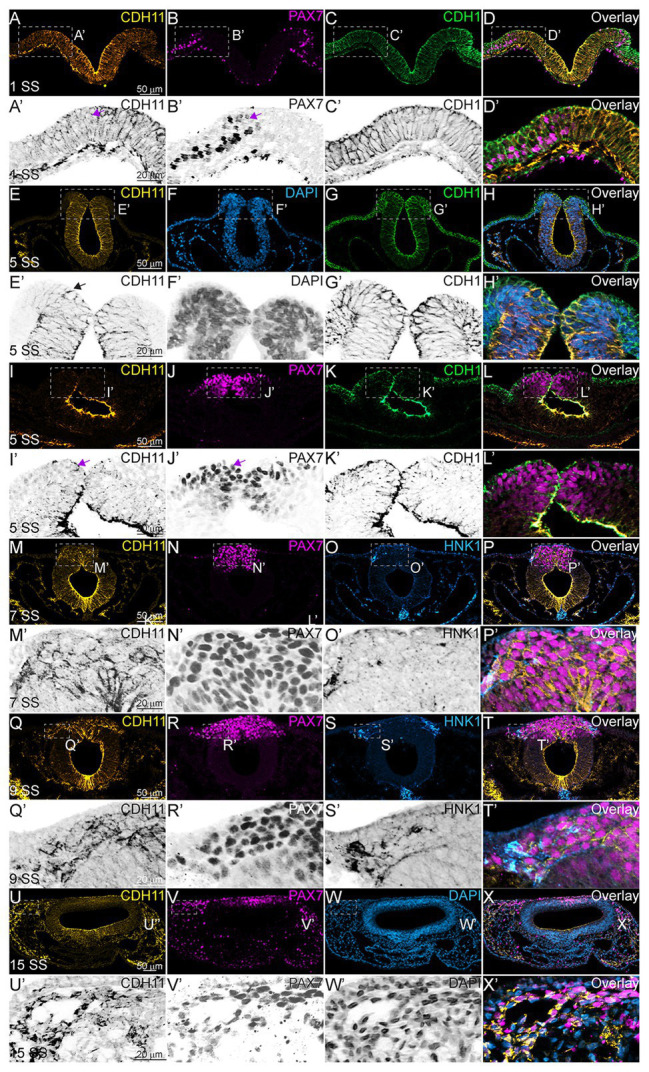
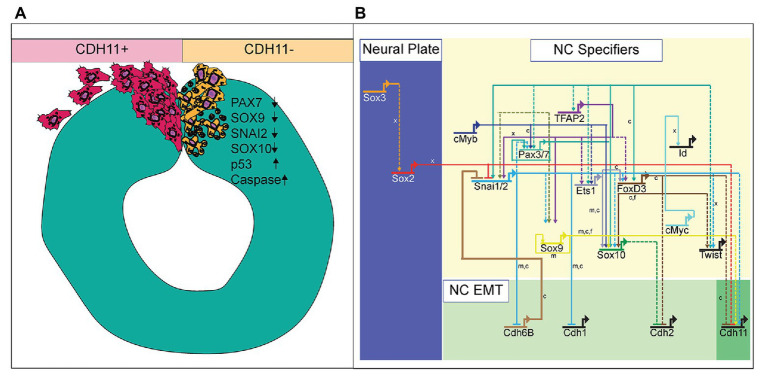
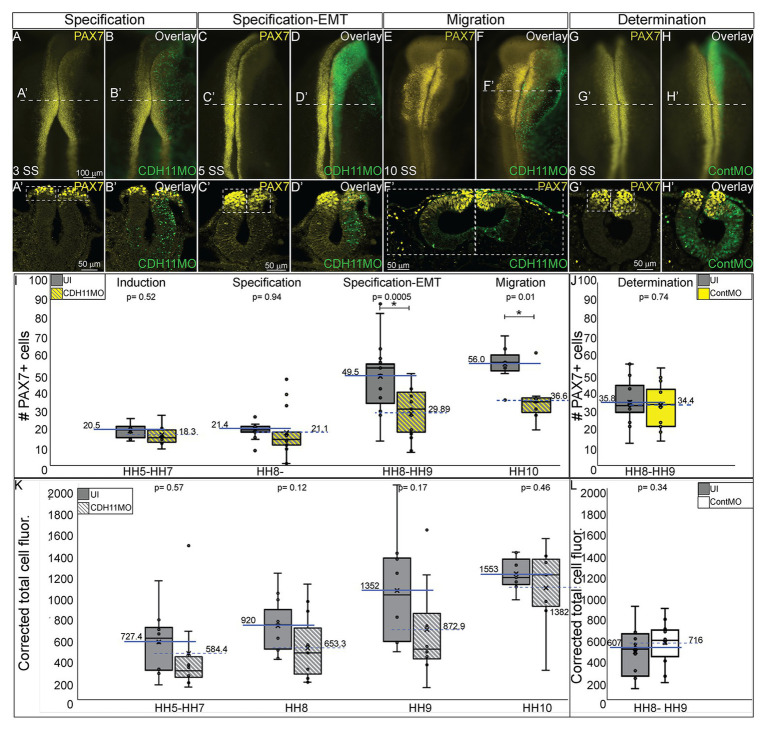
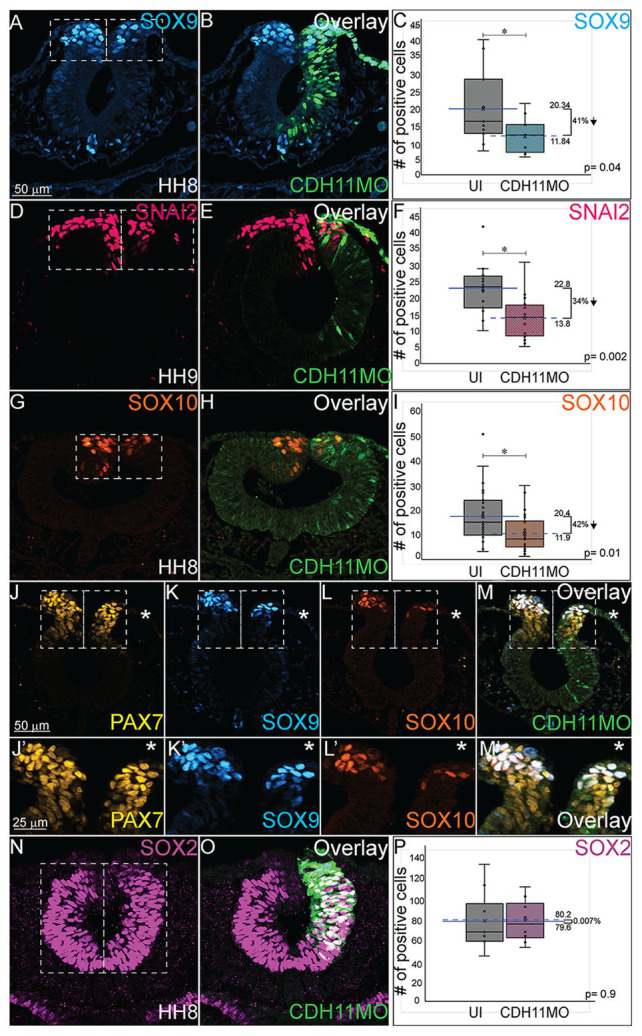
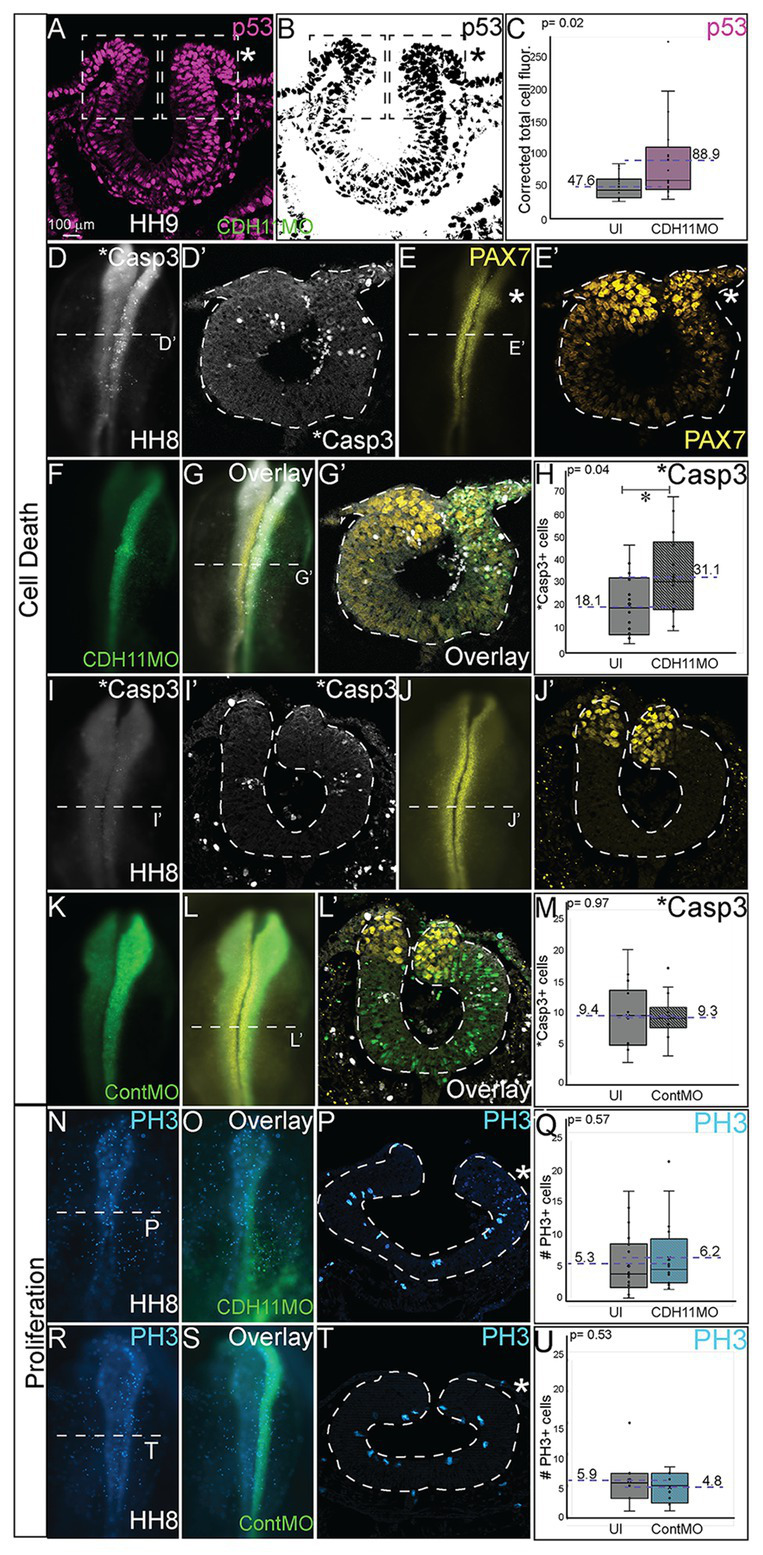
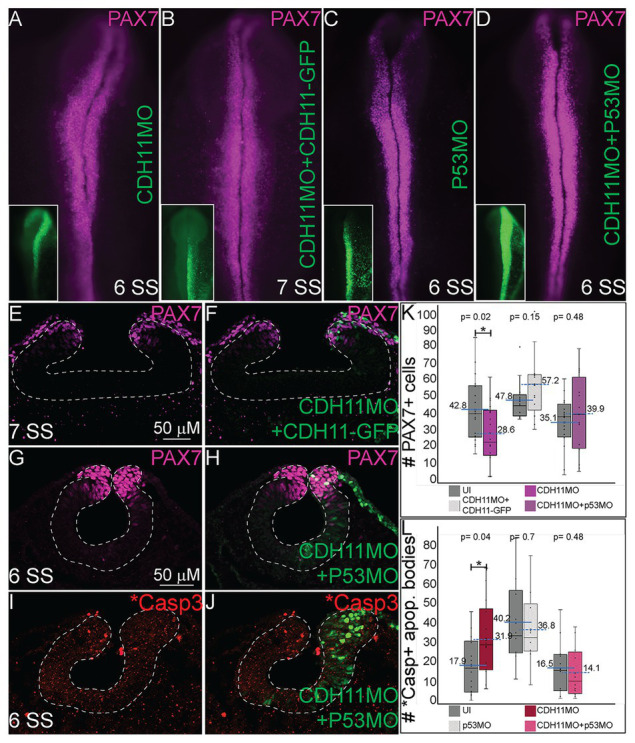
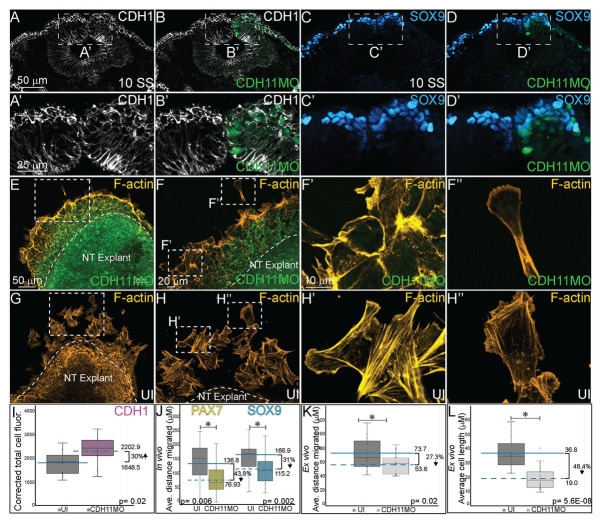
Neural crest (NC) cells are multipotent embryonic cells that form melanocytes, craniofacial bone and cartilage, and the peripheral nervous system in vertebrates. NC cells express many cadherin proteins, which control their specification, epithelial to mesenchymal transition (EMT), migration, and mesenchymal to epithelial transition. Abnormal NC development leads to congenital defects including craniofacial clefts as well as NC-derived cancers. Here, we identify the role of the type II cadherin protein, Cadherin-11 (CDH11), in early chicken NC development. CDH11 is known to play a role in NC cell migration in amphibian embryos as well as cell survival, proliferation, and migration in cancer cells. It has also been linked to the complex neurocristopathy disorder, Elsahy-Waters Syndrome, in humans. In this study, we knocked down CDH11 translation at the onset of its expression in the NC domain during NC induction. Loss of CDH11 led to a reduction of NC cells in the dorsal neural tube combined with defects in cell survival and migration. Loss of CDH11 increased p53-mediated programmed-cell death, and blocking the p53 pathway rescued the NC phenotype. Our findings reveal an early requirement for CDH11 in NC development and demonstrated the complexity of the mechanisms that regulate NC development, where a single cell-cell adhesion protein simultaneous controls multiple essential cellular functions to ensure proper specification, survival, and transition to a migratory phase in the dorsal neural tube. Our findings may also increase our understanding of early cadherin-related NC developmental defects.
神经嵴(NC)细胞是多能胚胎细胞,在脊椎动物中形成黑素细胞、颅面骨和软骨以及周围神经系统。NC细胞表达多种钙黏蛋白,这些蛋白控制其特化、上皮-间充质转化(EMT)、迁移以及间充质-上皮转化。NC发育异常会导致先天性缺陷,包括颅面裂以及源自NC的癌症。在此,我们确定了II型钙黏蛋白Cadherin-11(CDH11)在鸡早期NC发育中的作用。已知CDH11在两栖动物胚胎的NC细胞迁移以及癌细胞的细胞存活、增殖和迁移中发挥作用。它还与人类复杂的神经嵴病疾病埃尔萨希-沃特斯综合征有关。在本研究中,我们在NC诱导过程中NC结构域开始表达时敲低CDH11的翻译。CDH11的缺失导致背侧神经管中NC细胞减少,并伴有细胞存活和迁移缺陷。CDH11的缺失增加了p53介导的程序性细胞死亡,而阻断p53途径可挽救NC表型。我们的研究结果揭示了NC发育早期对CDH11的需求,并证明了调节NC发育机制的复杂性,即单个细胞-细胞黏附蛋白同时控制多种基本细胞功能,以确保在背侧神经管中正确特化、存活并过渡到迁移阶段。我们的研究结果也可能增进我们对早期钙黏蛋白相关NC发育缺陷的理解。