• 文献检索
  • 文档翻译
  • 深度研究
  • 学术资讯
  • Suppr Zotero 插件Zotero 插件
  • 邀请有礼
  • 套餐&价格
  • 历史记录
应用&插件
Suppr Zotero 插件Zotero 插件浏览器插件Mac 客户端Windows 客户端微信小程序
定价
高级版会员购买积分包购买API积分包
服务
文献检索文档翻译深度研究API 文档MCP 服务
关于我们
关于 Suppr公司介绍联系我们用户协议隐私条款
关注我们

Suppr 超能文献

核心技术专利:CN118964589B侵权必究
粤ICP备2023148730 号-1Suppr @ 2026

文献检索

告别复杂PubMed语法,用中文像聊天一样搜索,搜遍4000万医学文献。AI智能推荐,让科研检索更轻松。

立即免费搜索

文件翻译

保留排版,准确专业,支持PDF/Word/PPT等文件格式,支持 12+语言互译。

免费翻译文档

深度研究

AI帮你快速写综述,25分钟生成高质量综述,智能提取关键信息,辅助科研写作。

立即免费体验

趋化因子在 1 型糖尿病自身免疫破坏中的作用:考虑到最佳治疗方案,为治疗干预提供机会。

Chemokines as Drivers of the Autoimmune Destruction in Type 1 Diabetes: Opportunity for Therapeutic Intervention in Consideration of an Optimal Treatment Schedule.

机构信息

Pharmazentrum Frankfurt/Zentrum für Arzneimittelforschung, Entwicklung und Sicherheit (ZAFES), Goethe University Hospital, Frankfurt am Main, Germany.

出版信息

Front Endocrinol (Lausanne). 2020 Oct 19;11:591083. doi: 10.3389/fendo.2020.591083. eCollection 2020.

DOI:10.3389/fendo.2020.591083
PMID:33193102
原文链接:https://pmc.ncbi.nlm.nih.gov/articles/PMC7604482/
Abstract

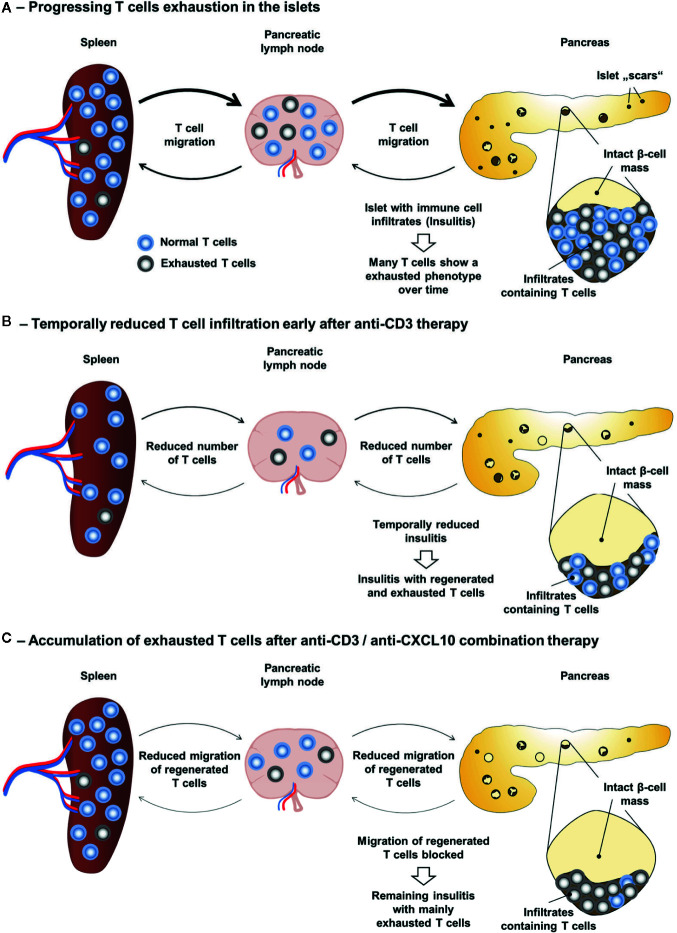
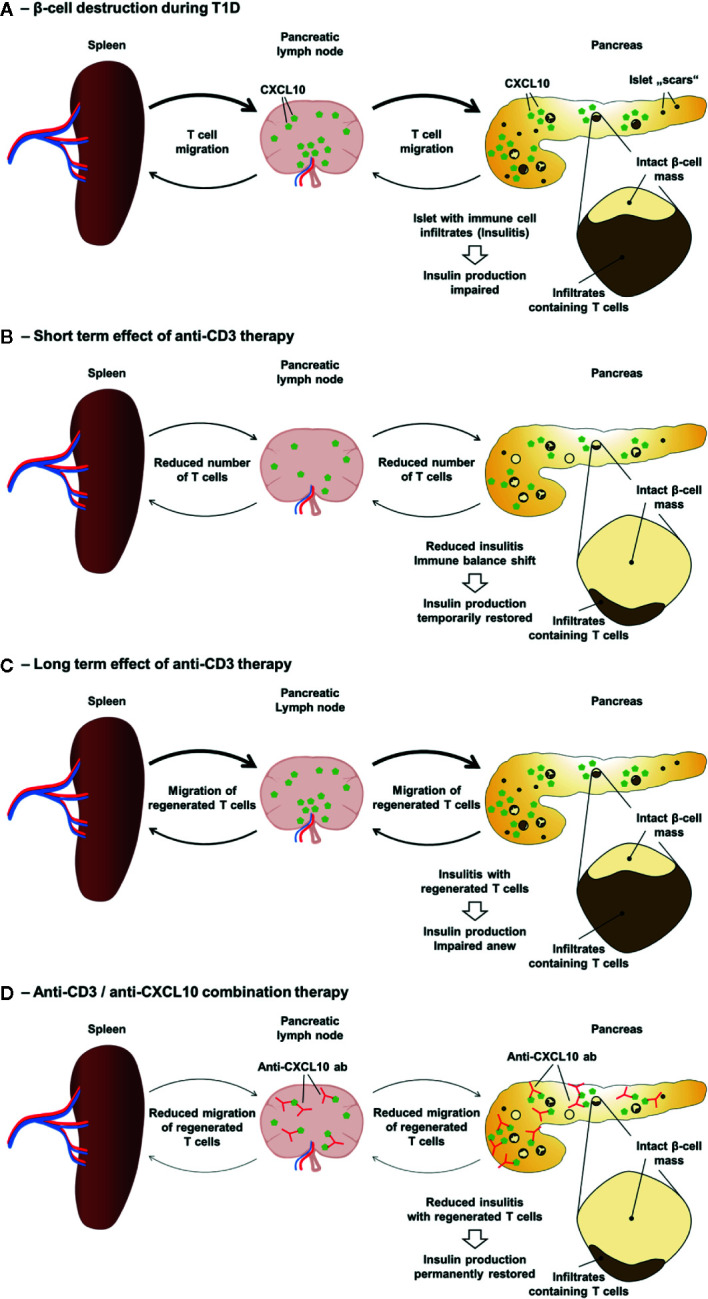
Type 1 diabetes (T1D) is mainly precipitated by the destruction of insulin-producing β-cells in the pancreatic islets of Langerhans by autoaggressive T cells. The etiology of the disease is still not clear, but besides genetic predisposition the exposure to environmental triggers seems to play a major role. Virus infection of islets has been demonstrated in biopsies of T1D patients, but there is still no firm proof that such an infection indeed results in islet-specific autoimmunity. However, virus infection results in a local inflammation with expression of inflammatory factors, such as cytokines and chemokines that attract and activate immune cells, including potential autoreactive T cells. Many chemokines have been found to be elevated in the serum and expressed by islet cells of T1D patients. In mouse models, it has been demonstrated that β-cells express chemokines involved in the initial recruitment of immune cells to the islets. The bulk load of chemokines is however released by the infiltrating immune cells that also express multiple chemokine receptors. The result is a mutual attraction of antigen-presenting cells and effector immune cells in the local islet microenvironment. Although there is a considerable redundancy within the chemokine ligand-receptor network, a few chemokines, such as CXCL10, seem to play a key role in the T1D pathogenesis. Studies with neutralizing antibodies and investigations in chemokine-deficient mice demonstrated that interfering with certain chemokine ligand-receptor axes might also ameliorate human T1D. However, one important aspect of such a treatment is the time of administration. Blockade of the recruitment of immune cells to the site of autoimmune destruction might not be effective when the disease process is already ongoing. By that time, autoaggressive cells have already arrived in the islet microenvironment and a blockade of migration might even hold them in place leading to accelerated destruction. Thus, an anti-chemokine therapy makes most sense in situations where the cells have not yet migrated to the islets. Such situations include treatment of patients at risk already carrying islet-antigen autoantibodies but are not yet diabetic, islet transplantation recipients, and patients that have undergone a T cell reset as occurring after anti-CD3 antibody treatment.

摘要

1 型糖尿病(T1D)主要是由胰岛自身反应性 T 细胞破坏胰岛中的胰岛素分泌β细胞引起的。该疾病的病因尚不清楚,但除了遗传易感性外,暴露于环境触发因素似乎也起着重要作用。胰岛病毒感染已在 T1D 患者的活检中得到证实,但尚无确凿证据表明这种感染确实会导致胰岛特异性自身免疫。然而,病毒感染会导致局部炎症,炎症会表达细胞因子和趋化因子等炎症因子,这些因子会吸引和激活免疫细胞,包括潜在的自身反应性 T 细胞。许多趋化因子已被发现存在于 T1D 患者的血清和胰岛细胞中表达。在小鼠模型中,已经证明β细胞表达参与最初将免疫细胞募集到胰岛的趋化因子。然而,大量趋化因子是由浸润的免疫细胞释放的,这些免疫细胞也表达多种趋化因子受体。结果是抗原呈递细胞和效应免疫细胞在局部胰岛微环境中相互吸引。尽管趋化因子配体-受体网络中有相当大的冗余,但少数趋化因子,如 CXCL10,似乎在 T1D 发病机制中发挥关键作用。用中和抗体进行的研究和趋化因子缺陷小鼠的研究表明,干扰某些趋化因子配体-受体轴也可能改善人类 T1D。然而,这种治疗的一个重要方面是给药时间。当疾病过程已经发生时,阻止免疫细胞向自身免疫破坏部位募集可能无效。此时,自身反应性细胞已经到达胰岛微环境,而迁移的阻断甚至可能使它们停留在原位,导致更快的破坏。因此,抗趋化因子疗法在细胞尚未迁移到胰岛的情况下最有意义。这种情况包括治疗已经携带胰岛抗原自身抗体但尚未患糖尿病的患者、胰岛移植受者,以及接受抗 CD3 抗体治疗后发生 T 细胞重置的患者。
https://cdn.ncbi.nlm.nih.gov/pmc/blobs/d473/7604482/fabc97b8d7af/fendo-11-591083-g002.jpg
https://cdn.ncbi.nlm.nih.gov/pmc/blobs/d473/7604482/19ea714d9d0a/fendo-11-591083-g001.jpg
https://cdn.ncbi.nlm.nih.gov/pmc/blobs/d473/7604482/fabc97b8d7af/fendo-11-591083-g002.jpg
https://cdn.ncbi.nlm.nih.gov/pmc/blobs/d473/7604482/19ea714d9d0a/fendo-11-591083-g001.jpg
https://cdn.ncbi.nlm.nih.gov/pmc/blobs/d473/7604482/fabc97b8d7af/fendo-11-591083-g002.jpg

相似文献

1
Chemokines as Drivers of the Autoimmune Destruction in Type 1 Diabetes: Opportunity for Therapeutic Intervention in Consideration of an Optimal Treatment Schedule.趋化因子在 1 型糖尿病自身免疫破坏中的作用:考虑到最佳治疗方案,为治疗干预提供机会。
Front Endocrinol (Lausanne). 2020 Oct 19;11:591083. doi: 10.3389/fendo.2020.591083. eCollection 2020.
2
Selective destruction of mouse islet beta cells by human T lymphocytes in a newly-established humanized type 1 diabetic model.在新建立的人源化 1 型糖尿病模型中,人 T 淋巴细胞对小鼠胰岛β细胞的选择性破坏。
Biochem Biophys Res Commun. 2010 Sep 3;399(4):629-36. doi: 10.1016/j.bbrc.2010.07.128. Epub 2010 Aug 4.
3
Islet inflammation and CXCL10 in recent-onset type 1 diabetes.胰岛炎症与初发 1 型糖尿病中的 CXCL10。
Clin Exp Immunol. 2010 Mar;159(3):338-43. doi: 10.1111/j.1365-2249.2009.04087.x. Epub 2010 Jan 5.
4
Th1-Like ICOS+ Foxp3+ Treg Cells Preferentially Express CXCR3 and Home to β-Islets during Pre-Diabetes in BDC2.5 NOD Mice.在BDC2.5 NOD小鼠糖尿病前期,类似Th1的ICOS⁺ Foxp3⁺调节性T细胞优先表达CXCR3并归巢至β胰岛。
PLoS One. 2015 May 6;10(5):e0126311. doi: 10.1371/journal.pone.0126311. eCollection 2015.
5
Insulin and type 1 diabetes: immune connections.胰岛素与 1 型糖尿病:免疫联系。
Eur J Endocrinol. 2013 Jan 17;168(2):R19-31. doi: 10.1530/EJE-12-0693. Print 2013 Feb.
6
Pancreatic Alpha-Cells Contribute Together With Beta-Cells to CXCL10 Expression in Type 1 Diabetes.胰腺α细胞与β细胞共同促进1型糖尿病中CXCL10的表达。
Front Endocrinol (Lausanne). 2020 Sep 15;11:630. doi: 10.3389/fendo.2020.00630. eCollection 2020.
7
Gut dysbiosis promotes islet-autoimmunity by increasing T-cell attraction in islets via CXCL10 chemokine.肠道菌群失调通过增加胰岛内趋化因子 CXCL10 促进 T 细胞对胰岛的趋化作用,从而促进胰岛自身免疫。
J Autoimmun. 2023 Nov;140:103090. doi: 10.1016/j.jaut.2023.103090. Epub 2023 Aug 10.
8
Pancreatic islet autoimmunity.胰岛自身免疫
Presse Med. 2012 Dec;41(12 P 2):e636-50. doi: 10.1016/j.lpm.2012.10.003. Epub 2012 Nov 22.
9
Islet-Expressed CXCL10 Promotes Autoimmune Destruction of Islet Isografts in Mice With Type 1 Diabetes.胰岛表达的CXCL10促进1型糖尿病小鼠胰岛同种异体移植的自身免疫性破坏。
Diabetes. 2017 Jan;66(1):113-126. doi: 10.2337/db16-0547. Epub 2016 Oct 26.
10
Customized cell-based treatment options to combat autoimmunity and restore beta-cell function in type 1 diabetes mellitus: current protocols and future perspectives.针对 1 型糖尿病的自身免疫及胰岛β细胞功能障碍的个体化细胞治疗选择:现有方案及未来展望。
Adv Exp Med Biol. 2010;654:641-65. doi: 10.1007/978-90-481-3271-3_28.

引用本文的文献

1
Serum IL-1ra Is Associated with but Has No Genetic Link to Type 1 Diabetes.血清白细胞介素-1受体拮抗剂与1型糖尿病相关,但无遗传关联。
Endocrines. 2022 Sep;3(3):570-577. doi: 10.3390/endocrines3030048. Epub 2022 Sep 13.
2
Development of chemokine network inhibitors using combinatorial saturation mutagenesis.利用组合饱和诱变技术开发趋化因子网络抑制剂
Commun Biol. 2025 Apr 3;8(1):549. doi: 10.1038/s42003-025-07778-6.
3
Dysfunctional β-cell autophagy induces β-cell stress and enhances islet immunogenicity.功能失调的β细胞自噬会引发β细胞应激并增强胰岛免疫原性。

本文引用的文献

1
The healthy exocrine pancreas contains preproinsulin-specific CD8 T cells that attack islets in type 1 diabetes.健康的外分泌胰腺含有针对胰岛素前体的 CD8 T 细胞,这些细胞会攻击 1 型糖尿病中的胰岛。
Sci Adv. 2020 Oct 16;6(42). doi: 10.1126/sciadv.abc5586. Print 2020 Oct.
2
Exhausted CD8 T cells exhibit low and strongly inhibited TCR signaling during chronic LCMV infection.在慢性 LCMV 感染过程中,耗尽的 CD8 T 细胞表现出低水平且强烈受抑制的 TCR 信号。
Nat Commun. 2020 Sep 8;11(1):4454. doi: 10.1038/s41467-020-18256-4.
3
Targeting Chemokine-Glycosaminoglycan Interactions to Inhibit Inflammation.
Front Immunol. 2025 Jan 29;16:1504583. doi: 10.3389/fimmu.2025.1504583. eCollection 2025.
4
Distinct association patterns of chemokine profile and cardiometabolic status in children and adolescents with type 1 diabetes and obesity.1 型糖尿病肥胖患儿趋化因子谱与心脏代谢状态的关联模式不同。
Front Endocrinol (Lausanne). 2024 Jul 23;15:1335371. doi: 10.3389/fendo.2024.1335371. eCollection 2024.
5
Exploring CCR5 + T regulatory cell subset dysfunction in type 1 diabetes patients: implications for immune regulation.探索 1 型糖尿病患者中 CCR5+T 调节性细胞亚群功能障碍:对免疫调节的影响。
Immunol Res. 2024 Oct;72(5):1061-1070. doi: 10.1007/s12026-024-09508-2. Epub 2024 Jun 27.
6
Clinical value of lymphocyte count in autoimmune diabetic nephropathy.淋巴细胞计数在自身免疫性糖尿病肾病中的临床价值
Zhong Nan Da Xue Xue Bao Yi Xue Ban. 2023 Nov 28;48(11):1639-1649. doi: 10.11817/j.issn.1672-7347.2023.230110.
7
Interferons are key cytokines acting on pancreatic islets in type 1 diabetes.干扰素是作用于 1 型糖尿病胰岛细胞的关键细胞因子。
Diabetologia. 2024 May;67(5):908-927. doi: 10.1007/s00125-024-06106-7. Epub 2024 Feb 26.
8
Insulitis in human type 1 diabetes: lessons from an enigmatic lesion.人类1型糖尿病中的胰岛炎:源于一个神秘病变的启示
Eur J Endocrinol. 2024 Jan 17;190(1):R1-9. doi: 10.1093/ejendo/lvae002.
9
Effects of multiple stressors on pancreatic human islets proteome reveal new insights into the pathways involved.多种应激源对人胰岛蛋白质组的影响揭示了相关通路的新见解。
Proteomics. 2023 Oct;23(19):e2300022. doi: 10.1002/pmic.202300022. Epub 2023 Jul 24.
10
The pathogenic "symphony" in type 1 diabetes: A disorder of the immune system, β cells, and exocrine pancreas.1 型糖尿病中的致病“交响乐”:免疫系统、β 细胞和外分泌胰腺的紊乱。
Cell Metab. 2023 Sep 5;35(9):1500-1518. doi: 10.1016/j.cmet.2023.06.018. Epub 2023 Jul 20.
靶向趋化因子-糖胺聚糖相互作用抑制炎症。
Front Immunol. 2020 Mar 31;11:483. doi: 10.3389/fimmu.2020.00483. eCollection 2020.
4
Re-defining T-Cell Exhaustion: Subset, Function, and Regulation.重新定义T细胞耗竭:亚群、功能与调控
Immune Netw. 2020 Feb 20;20(1):e2. doi: 10.4110/in.2020.20.e2. eCollection 2020 Feb.
5
The Many Roles of Cell Adhesion Molecules in Hepatic Fibrosis.细胞黏附分子在肝纤维化中的多种作用。
Cells. 2019 Nov 24;8(12):1503. doi: 10.3390/cells8121503.
6
Chemokines in rheumatic diseases: pathogenic role and therapeutic implications.趋化因子在风湿性疾病中的作用:致病作用及治疗意义。
Nat Rev Rheumatol. 2019 Dec;15(12):731-746. doi: 10.1038/s41584-019-0323-6. Epub 2019 Nov 8.
7
Immune cell trafficking to the islets during type 1 diabetes.免疫细胞在 1 型糖尿病发生过程中向胰岛的迁移。
Clin Exp Immunol. 2019 Dec;198(3):314-325. doi: 10.1111/cei.13353. Epub 2019 Aug 30.
8
L-selectin: A Major Regulator of Leukocyte Adhesion, Migration and Signaling.L-选择素:白细胞黏附、迁移和信号转导的主要调节因子。
Front Immunol. 2019 May 14;10:1068. doi: 10.3389/fimmu.2019.01068. eCollection 2019.
9
Unique Inflammatory Changes in Exocrine and Endocrine Pancreas in Enterovirus-Induced Fulminant Type 1 Diabetes.肠病毒诱发暴发性 1 型糖尿病中外分泌和内分泌胰腺的独特炎症变化。
J Clin Endocrinol Metab. 2019 Oct 1;104(10):4282-4294. doi: 10.1210/jc.2018-02672.
10
Pathogen infection and autoimmune disease.病原体感染与自身免疫性疾病。
Clin Exp Immunol. 2019 Jan;195(1):10-14. doi: 10.1111/cei.13239.