Busi Susheel Bhanu, Pramateftaki Paraskevi, Brandani Jade, Fodelianakis Stilianos, Peter Hannes, Halder Rashi, Wilmes Paul, Battin Tom J
Systems Ecology Research Group, Luxembourg Centre for Systems Biomedicine, University of Luxembourg, Esch-sur-Alzette, Luxembourg.
Stream Biofilm and Ecosystems Research group, École Polytechnique Federale de Lausanne, Lausanne, Switzerland.
PeerJ. 2020 Oct 27;8:e9973. doi: 10.7717/peerj.9973. eCollection 2020.
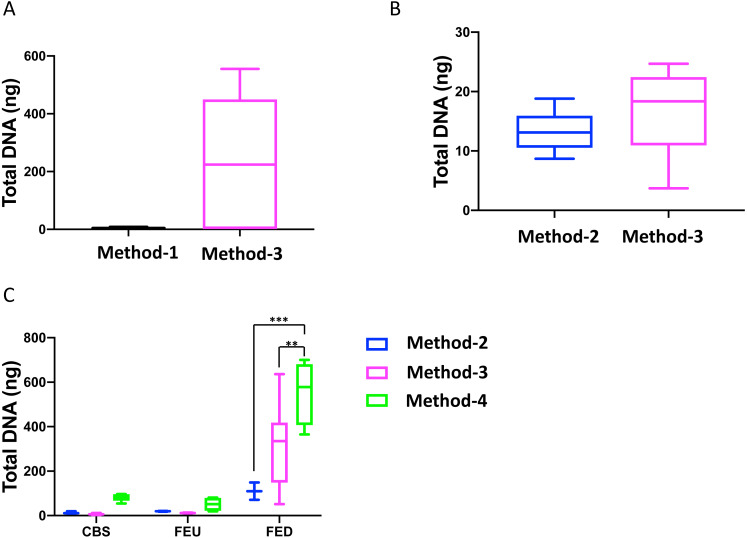
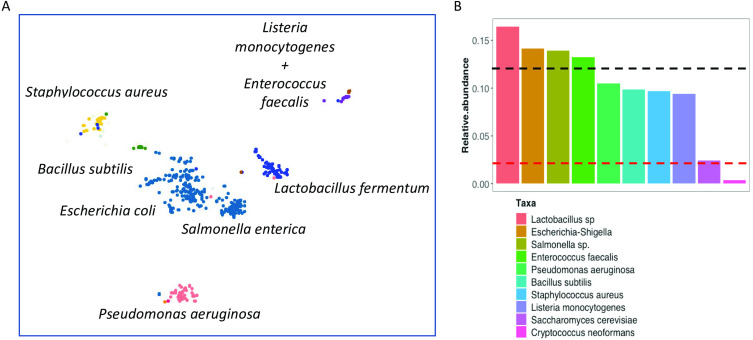
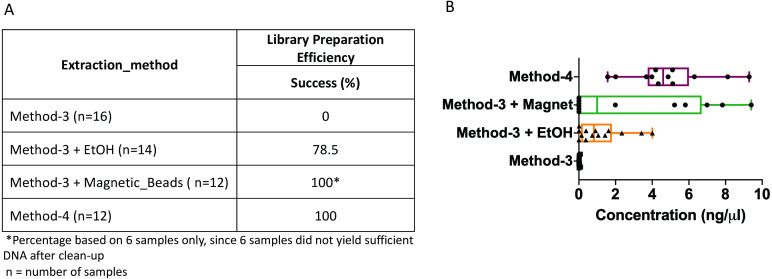
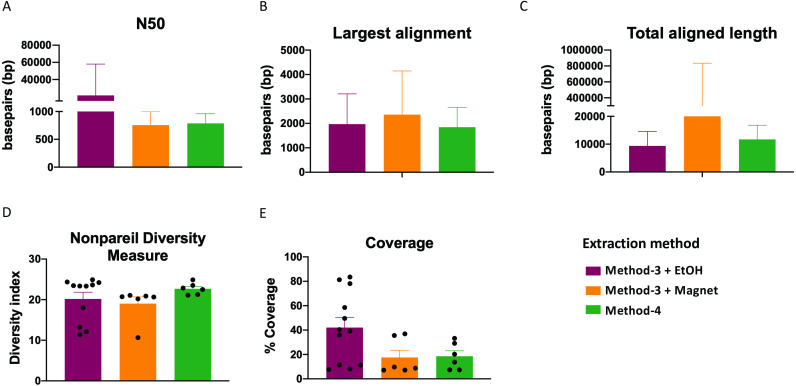
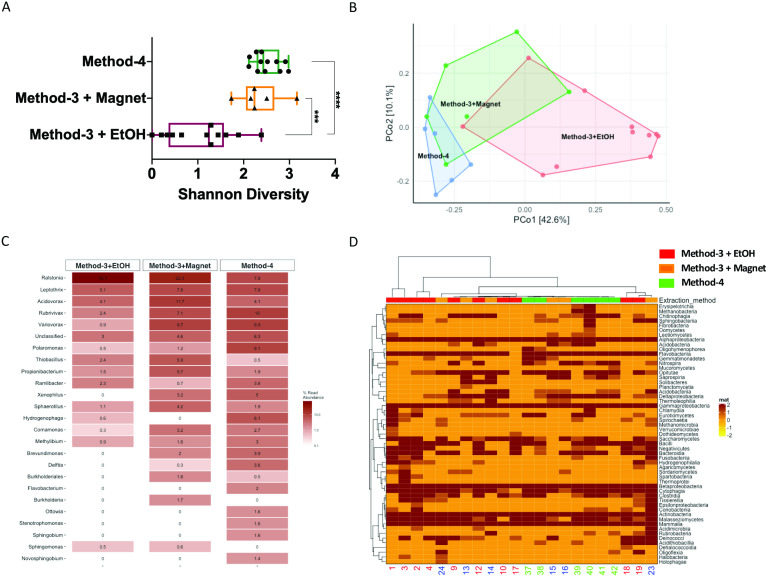
Glacier-fed streams (GFS) are harsh ecosystems dominated by microbial life organized in benthic biofilms, yet the biodiversity and ecosystem functions provided by these communities remain under-appreciated. To better understand the microbial processes and communities contributing to GFS ecosystems, it is necessary to leverage high throughput sequencing. Low biomass and high inorganic particle load in GFS sediment samples may affect nucleic acid extraction efficiency using extraction methods tailored to other extreme environments such as deep-sea sediments. Here, we benchmarked the utility and efficacy of four extraction protocols, including an up-scaled phenol-chloroform protocol. We found that established protocols for comparable sample types consistently failed to yield sufficient high-quality DNA, delineating the extreme character of GFS. The methods differed in the success of downstream applications such as library preparation and sequencing. An adapted phenol-chloroform-based extraction method resulted in higher yields and better recovered the expected taxonomic profile and abundance of reconstructed genomes when compared to commercially-available methods. Affordable and straight-forward, this method consistently recapitulated the abundance and genomes of a mock community, including eukaryotes. Moreover, by increasing the amount of input sediment, the protocol is readily adjustable to the microbial load of the processed samples without compromising protocol efficiency. Our study provides a first systematic and extensive analysis of the different options for extraction of nucleic acids from glacier-fed streams for high-throughput sequencing applications, which may be applied to other extreme environments.
冰川补给溪流(GFS)是由底栖生物膜中组织的微生物生命主导的恶劣生态系统,但这些群落提供的生物多样性和生态系统功能仍未得到充分重视。为了更好地了解对GFS生态系统有贡献的微生物过程和群落,有必要利用高通量测序技术。GFS沉积物样本中的低生物量和高无机颗粒负荷可能会影响使用针对其他极端环境(如深海沉积物)量身定制的提取方法进行核酸提取的效率。在此,我们对四种提取方案的实用性和有效性进行了基准测试,包括一种放大的酚氯仿方案。我们发现,针对类似样本类型的既定方案始终无法产生足够的高质量DNA,这凸显了GFS的极端特性。这些方法在文库制备和测序等下游应用的成功率上存在差异。与市售方法相比,一种基于酚氯仿的改良提取方法产量更高,能更好地恢复预期的分类学图谱和重建基因组的丰度。这种方法经济实惠且操作简单,始终能重现模拟群落(包括真核生物)的丰度和基因组。此外,通过增加输入沉积物的量,该方案可以很容易地根据处理样本的微生物负荷进行调整,而不会影响方案效率。我们的研究首次对从冰川补给溪流中提取核酸用于高通量测序应用的不同选项进行了系统而广泛的分析,该分析可能适用于其他极端环境。