Department of Pharmacology, Center for Molecular and Cellular Signaling in the Cardiovascular System, Reno School of Medicine, University of Nevada, Reno, NV 89557-0318.
Department of Physiology and Cell Biology, Reno School of Medicine, University of Nevada, Reno, NV 89557-0318.
Proc Natl Acad Sci U S A. 2020 Dec 1;117(48):30775-30786. doi: 10.1073/pnas.2016959117. Epub 2020 Nov 16.
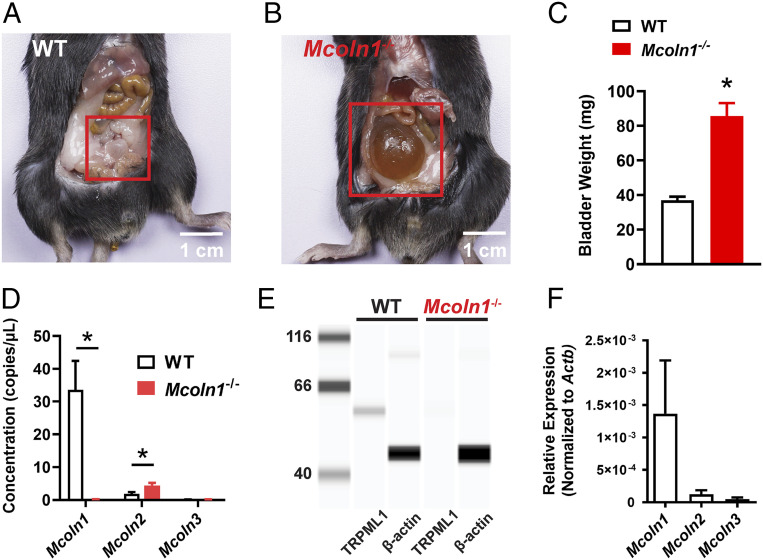
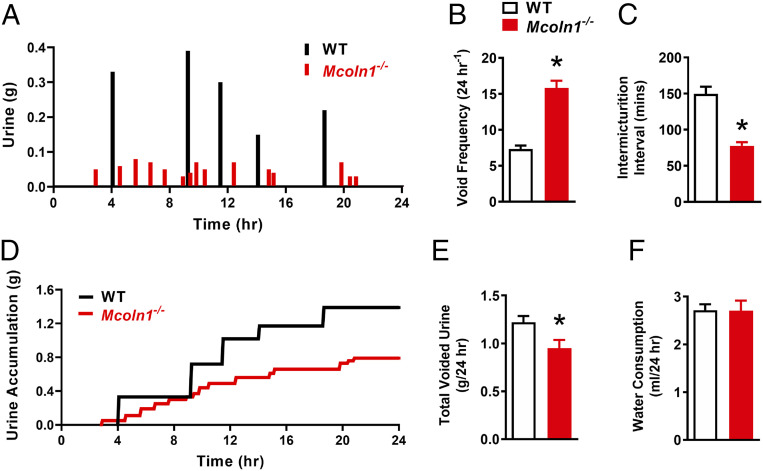
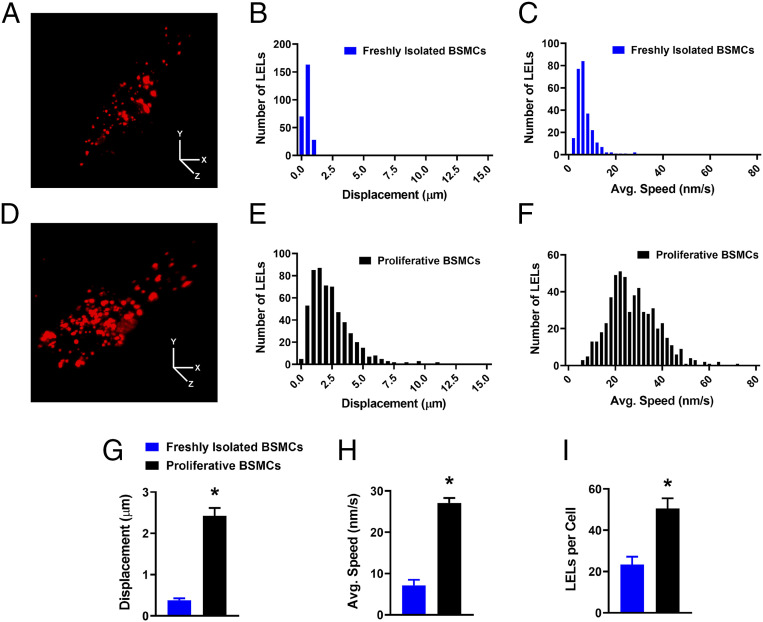
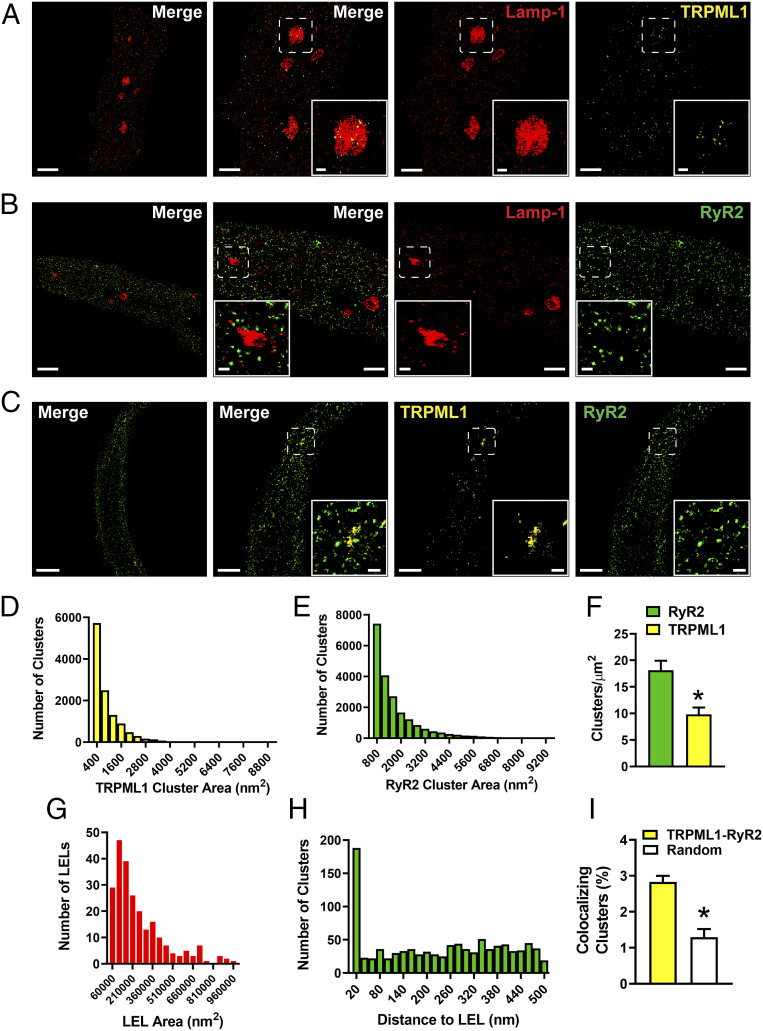
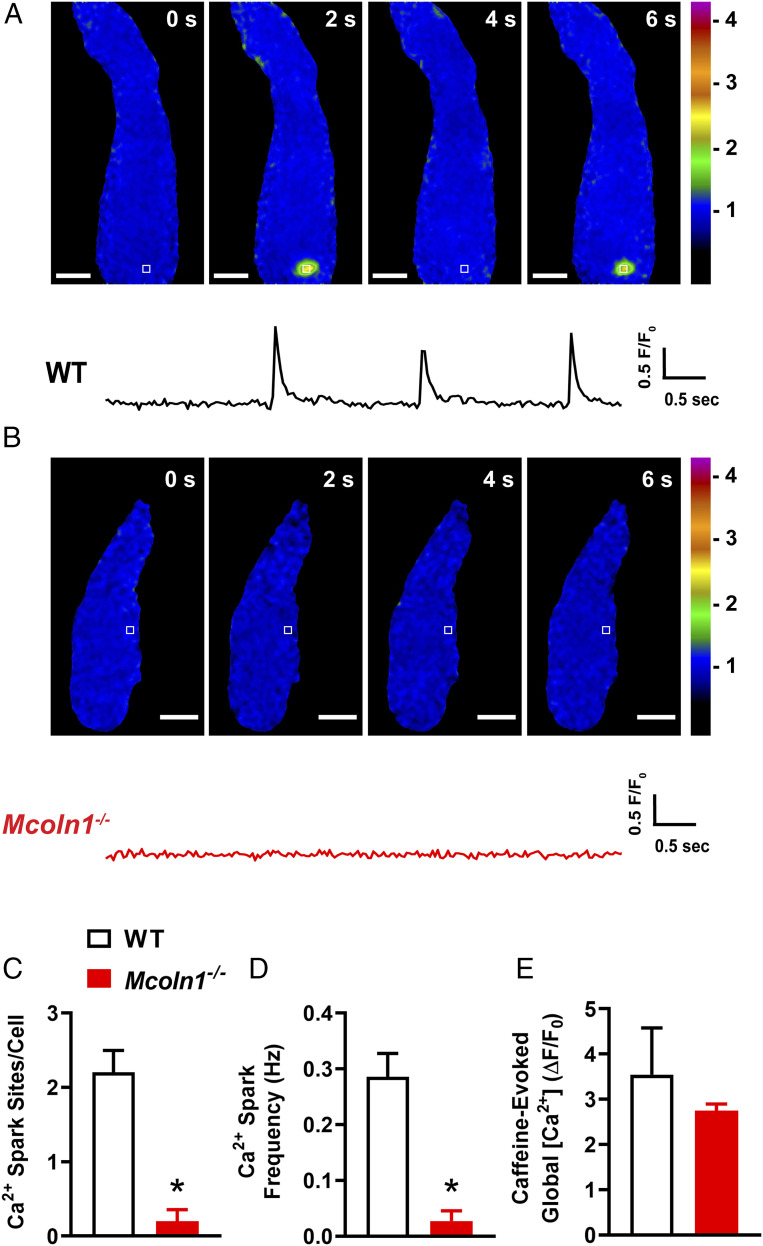
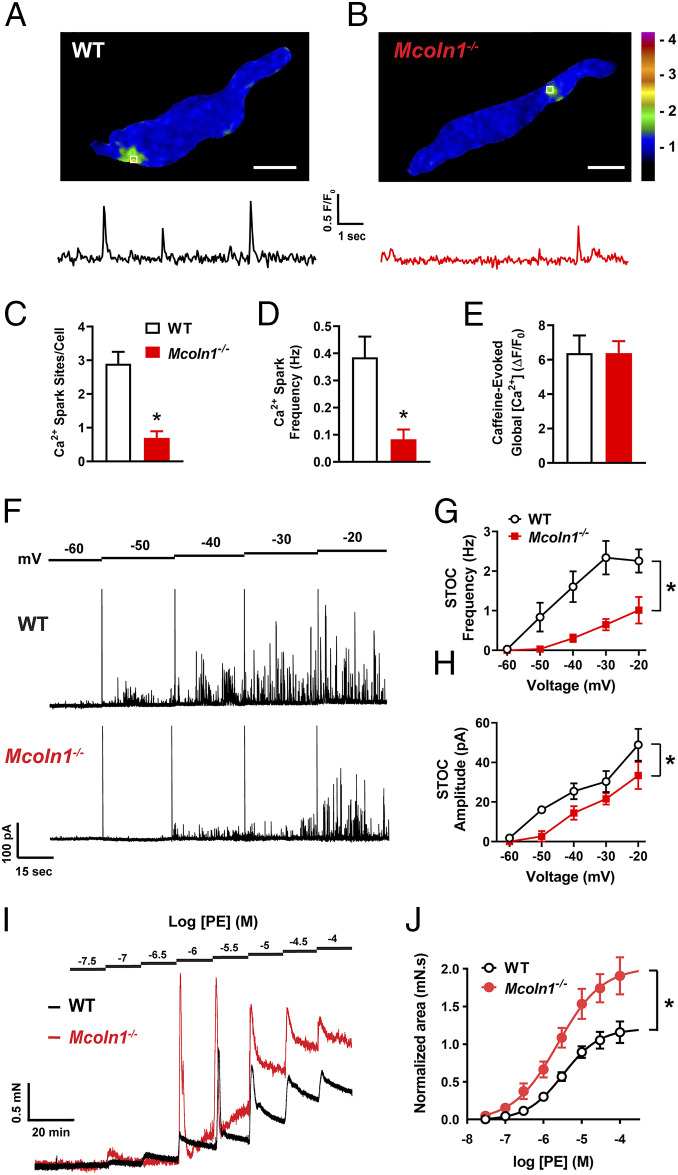
TRPML1 (transient receptor potential mucolipin 1) is a Ca-permeable, nonselective cation channel that is predominantly localized to the membranes of late endosomes and lysosomes (LELs). Intracellular release of Ca through TRPML1 is thought to be pivotal for maintenance of intravesicular acidic pH as well as the maturation, fusion, and trafficking of LELs. Interestingly, genetic ablation of TRPML1 in mice ( ) induces a hyperdistended/hypertrophic bladder phenotype. Here, we investigated this phenomenon further by exploring an unconventional role for TRPML1 channels in the regulation of Ca-signaling activity and contractility in bladder and urethral smooth muscle cells (SMCs). Four-dimensional (4D) lattice light-sheet live-cell imaging showed that the majority of LELs in freshly isolated bladder SMCs were essentially immobile. Superresolution microscopy revealed distinct nanoscale colocalization of LEL-expressing TRPML1 channels with ryanodine type 2 receptors (RyR2) in bladder SMCs. Spontaneous intracellular release of Ca from the sarcoplasmic reticulum (SR) through RyR2 generates localized elevations of Ca ("Ca sparks") that activate plasmalemmal large-conductance Ca-activated K (BK) channels, a critical negative feedback mechanism that regulates smooth muscle contractility. This mechanism was impaired in mice, which showed diminished spontaneous Ca sparks and BK channel activity in bladder and urethra SMCs. Additionally, ex vivo contractility experiments showed that loss of Ca spark-BK channel signaling in mice rendered both bladder and urethra smooth muscle hypercontractile. Voiding activity analyses revealed bladder overactivity in mice. We conclude that TRPML1 is critically important for Ca spark signaling, and thus regulation of contractility and function, in lower urinary tract SMCs.
TRPML1(瞬时受体电位 mucolipin 1)是一种钙通透性、非选择性阳离子通道,主要定位于晚期内体和溶酶体(LEL)的膜上。通过 TRPML1 从细胞内释放 Ca 被认为对维持囊泡内酸性 pH 以及 LEL 的成熟、融合和运输至关重要。有趣的是,在小鼠中敲除 TRPML1()会引起膀胱过度扩张/肥大表型。在这里,我们通过探索 TRPML1 通道在调节膀胱和尿道平滑肌细胞(SMCs)中的 Ca 信号活性和收缩性方面的非常规作用,进一步研究了这一现象。四维(4D)晶格光片活细胞成像显示,在新鲜分离的膀胱 SMC 中,大多数 LEL 基本上是不动的。超分辨率显微镜显示,在膀胱 SMC 中,表达 TRPML1 通道的 LEL 与肌质网型 2 型受体(RyR2)存在明显的纳米级共定位。通过 RyR2 从肌质网(SR)中自发释放 Ca 会产生局部 Ca 升高(“Ca 火花”),从而激活质膜大电导 Ca 激活的 K(BK)通道,这是一种调节平滑肌收缩性的关键负反馈机制。在 小鼠中,这种机制受损,其膀胱和尿道 SMC 中的自发 Ca 火花和 BK 通道活性减少。此外,离体收缩性实验表明,在 小鼠中,Ca 火花-BK 通道信号的丧失使膀胱和尿道平滑肌均呈现高收缩性。排尿活动分析显示 小鼠膀胱过度活动。我们得出结论,TRPML1 对于 Ca 火花信号传递以及因此对下尿路 SMC 中的收缩性和功能调节至关重要。