• 文献检索
  • 文档翻译
  • 深度研究
  • 学术资讯
  • Suppr Zotero 插件Zotero 插件
  • 邀请有礼
  • 套餐&价格
  • 历史记录
应用&插件
Suppr Zotero 插件Zotero 插件浏览器插件Mac 客户端Windows 客户端微信小程序
定价
高级版会员购买积分包购买API积分包
服务
文献检索文档翻译深度研究API 文档MCP 服务
关于我们
关于 Suppr公司介绍联系我们用户协议隐私条款
关注我们

Suppr 超能文献

核心技术专利:CN118964589B侵权必究
粤ICP备2023148730 号-1Suppr @ 2026

文献检索

告别复杂PubMed语法,用中文像聊天一样搜索,搜遍4000万医学文献。AI智能推荐,让科研检索更轻松。

立即免费搜索

文件翻译

保留排版,准确专业,支持PDF/Word/PPT等文件格式,支持 12+语言互译。

免费翻译文档

深度研究

AI帮你快速写综述,25分钟生成高质量综述,智能提取关键信息,辅助科研写作。

立即免费体验

教师是技术乐观主义者还是技术悲观主义者?在玻利维亚、巴西、多米尼加共和国、厄瓜多尔、芬兰、波兰、土耳其和乌拉圭的教师中进行的一项初步比较。

Are teachers techno-optimists or techno-pessimists? A pilot comparative among teachers in Bolivia, Brazil, the Dominican Republic, Ecuador, Finland, Poland, Turkey, and Uruguay.

作者信息

Tomczyk Łukasz, Jáuregui Vladimir Costas, de La Higuera Amato Cibelle Albuquerque, Muñoz Darwin, Arteaga Magali, Oyelere Solomon Sunday, Akyar Özgür Yaşar, Porta Mariana

机构信息

Pedagogical University of Cracow, Kraków, Poland.

Universidad Mayor de San Simón, Cochabamba, Bolivia.

出版信息

Educ Inf Technol (Dordr). 2021;26(3):2715-2741. doi: 10.1007/s10639-020-10380-4. Epub 2020 Nov 11.

DOI:10.1007/s10639-020-10380-4
PMID:33199972
原文链接:https://pmc.ncbi.nlm.nih.gov/articles/PMC7657064/
Abstract

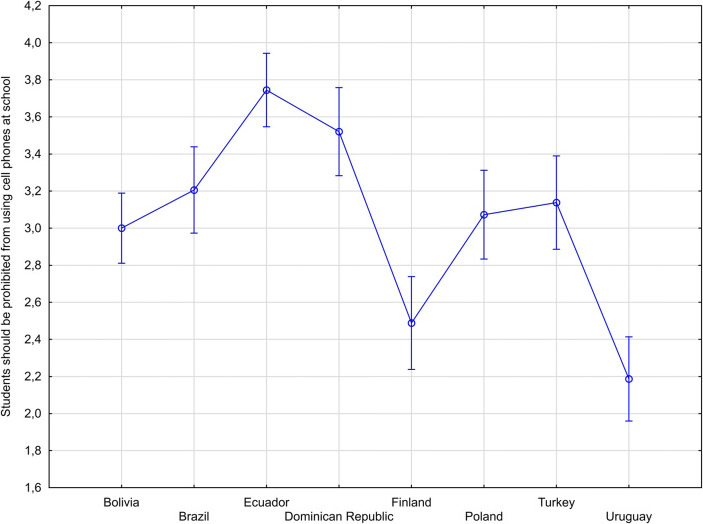
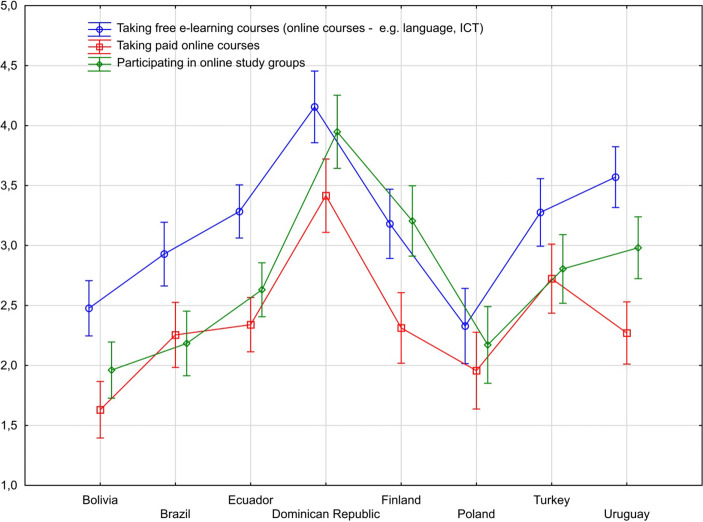
The aim of the article is to highlight the key elements related to the implementation of new technologies in education from the perspective of the opinions and experiences of educators in the field in Bolivia, Brazil, the Dominican Republic, Ecuador, Finland, Poland, Turkey, and Uruguay. The text compares issues related to attitudes towards the use of new media in education, experiences with different forms of e-learning, and the level of restrictions on the use of smartphones in school. These variables are juxtaposed with the self-assessment of digital competence and how cyberspace is used. The survey was conducted using a standardised survey questionnaire translated into the relevant national languages in the first half of 2019, and involved a sample of 873 teachers representing eight countries. On the basis of the pilot studies it was noted that: 1) Teachers from LAC and EU like to use digital media - this is a constant trend independent of geographical location; 2) Teachers note that new technologies are not always better than analogue didactic aids; 3) Teachers from selected countries (the Dominican Republic, Brazil, Turkey, and Uruguay) have much greater techno-optimism in themselves than teachers from Bolivia, Poland, Finland and Turkey in terms of the impact of ICT on student motivation and engagement; 4) In all countries teachers prefer free online courses (the different forms of e-learning are used most often by those in the Dominican Republic, and the least often in Bolivia and Poland); 5) In each country teachers who highly value their own digital competences and have a positive attitude towards new media use ICT much more actively; 6) There is also a global trend in that the extensive use of cyberspace (typical e-services) appears in combination with the extensive use of various forms of e-learning; 7) Teachers from Ecuador are most likely to want to ban the use of smartphones in schools. The most liberal approach in this respect is taken by the Uruguayans; 8) The knowledge of the conditions related to restricting the use of smartphones goes beyond the analyses related to the style of use and attitude towards new media. This article is the result of pilot studies conducted within the framework of the SMART ECOSYSTEM FOR LEARNING AND INCLUSION project carried out in selected Latin American, Caribbean (LAC) and European (EU) countries.

摘要

本文旨在从玻利维亚、巴西、多米尼加共和国、厄瓜多尔、芬兰、波兰、土耳其和乌拉圭等国教育工作者的观点和经验出发,突出与教育领域新技术实施相关的关键要素。文本比较了与教育中使用新媒体的态度、不同形式电子学习的经验以及学校中智能手机使用限制水平相关的问题。这些变量与数字能力的自我评估以及网络空间的使用方式并列。该调查于2019年上半年使用翻译成相关国家语言的标准化调查问卷进行,涉及来自八个国家的873名教师样本。基于试点研究发现:1)拉丁美洲和欧洲的教师喜欢使用数字媒体——这是一个与地理位置无关的持续趋势;2)教师指出新技术并不总是比传统教学辅助工具更好;3)就信息通信技术对学生动机和参与度的影响而言,来自选定国家(多米尼加共和国、巴西、土耳其和乌拉圭)的教师比来自玻利维亚、波兰、芬兰和土耳其的教师对技术更乐观;4)在所有国家,教师都更喜欢免费在线课程(多米尼加共和国的教师最常使用不同形式的电子学习,而玻利维亚和波兰的教师使用最少);5)在每个国家,高度重视自身数字能力且对新媒体持积极态度的教师更积极地使用信息通信技术;6)还有一个全球趋势是,网络空间(典型的电子服务)的广泛使用与各种形式电子学习的广泛使用相结合;7)厄瓜多尔的教师最有可能希望在学校禁止使用智能手机。乌拉圭人在这方面采取了最宽松的态度;8)与限制智能手机使用条件相关的知识超出了与使用方式和对新媒体态度相关的分析。本文是在选定的拉丁美洲、加勒比地区(LAC)和欧洲(EU)国家开展的“学习与包容智能生态系统”项目框架内进行的试点研究成果。
https://cdn.ncbi.nlm.nih.gov/pmc/blobs/61ec/7657064/5ca83da3bd34/10639_2020_10380_Fig2_HTML.jpg
https://cdn.ncbi.nlm.nih.gov/pmc/blobs/61ec/7657064/23d7fe785add/10639_2020_10380_Fig1_HTML.jpg
https://cdn.ncbi.nlm.nih.gov/pmc/blobs/61ec/7657064/5ca83da3bd34/10639_2020_10380_Fig2_HTML.jpg
https://cdn.ncbi.nlm.nih.gov/pmc/blobs/61ec/7657064/23d7fe785add/10639_2020_10380_Fig1_HTML.jpg
https://cdn.ncbi.nlm.nih.gov/pmc/blobs/61ec/7657064/5ca83da3bd34/10639_2020_10380_Fig2_HTML.jpg

相似文献

1
Are teachers techno-optimists or techno-pessimists? A pilot comparative among teachers in Bolivia, Brazil, the Dominican Republic, Ecuador, Finland, Poland, Turkey, and Uruguay.教师是技术乐观主义者还是技术悲观主义者?在玻利维亚、巴西、多米尼加共和国、厄瓜多尔、芬兰、波兰、土耳其和乌拉圭的教师中进行的一项初步比较。
Educ Inf Technol (Dordr). 2021;26(3):2715-2741. doi: 10.1007/s10639-020-10380-4. Epub 2020 Nov 11.
2
[Prenatal care in Latin America].[拉丁美洲的产前护理]
Salud Publica Mex. 1990 Nov-Dec;32(6):673-84.
3
Study and analysis of information technology in dentistry in Latin American countries.拉丁美洲国家牙科信息技术的研究与分析
Acta Odontol Latinoam. 2016 Apr;29(1):14-22.
4
Infant and child mortality in Latin America.拉丁美洲的婴幼儿死亡率
Notas Poblacion. 1978 Apr;6(16):23-44.
5
Digital health and the promise of equity in maternity care: A mixed methods multi-country assessment on the use of information and communication technologies in healthcare facilities in Latin America and the Caribbean.数字健康与母婴保健公平的承诺:对拉丁美洲和加勒比地区医疗机构使用信息和通信技术的混合方法多国评估。
PLoS One. 2024 Feb 27;19(2):e0298902. doi: 10.1371/journal.pone.0298902. eCollection 2024.
6
Self-assessments, attitudes, and motivational orientations towards the use of digital media in teaching a comparison between student teachers of different subject clusters.在不同学科组的实习教师中,关于在教学中使用数字媒体的自我评估、态度和动机取向比较
Heliyon. 2023 Aug 29;9(9):e19516. doi: 10.1016/j.heliyon.2023.e19516. eCollection 2023 Sep.
7
[Attitudes of Costa Rican students and teachers on sex and population education].[哥斯达黎加学生和教师对性与人口教育的态度]
Perspect Int Planif Fam. 1987(Spec No):1-6.
8
Community interventions and strategies for caries control in Latin American and Caribbean countries.拉丁美洲和加勒比国家的龋齿控制社区干预措施和策略。
Braz Oral Res. 2021 May 28;35(suppl 01):e054. doi: 10.1590/1807-3107bor-2021.vol35.0054. eCollection 2021.
9
Digital inclusion from the perspective of teachers of older adults - expectations, experiences, challenges and supporting measures.老年人教育工作者视角下的数字包容——期望、经历、挑战与支持措施
Gerontol Geriatr Educ. 2022 Jan-Mar;43(1):132-147. doi: 10.1080/02701960.2020.1824913. Epub 2020 Sep 24.
10
The emergency (crisis) e-learning as a challenge for teachers in Poland.波兰教师面临的挑战:应急(危机)电子学习
Educ Inf Technol (Dordr). 2021;26(6):6847-6877. doi: 10.1007/s10639-021-10539-7. Epub 2021 Apr 17.

引用本文的文献

1
Factors That Support Technology Integration Practices in the Math Education of Children with Intellectual Disabilities.支持智障儿童数学教育中技术整合实践的因素。
Children (Basel). 2023 May 23;10(6):918. doi: 10.3390/children10060918.
2
Urban Itineraries with Smartphones to Promote an Improvement in Environmental Awareness among Secondary School Students.利用智能手机规划城市出行路线,以提高中学生的环境意识。
Int J Environ Res Public Health. 2023 Jan 21;20(3):2009. doi: 10.3390/ijerph20032009.
3
The Role of Digital Competence in CME Uptake: A Short Communication.
数字能力在继续医学教育参与中的作用:一篇简短通讯
J Eur CME. 2021 Dec 23;11(1):2019436. doi: 10.1080/21614083.2021.2019436. eCollection 2022.
4
Transprofessional competences of school teachers in the digital environment: education employers' perspective.数字环境下学校教师的跨专业能力:教育雇主视角
Educ Inf Technol (Dordr). 2022;27(2):1841-1863. doi: 10.1007/s10639-021-10687-w. Epub 2021 Aug 4.
5
Head teachers' opinions on the future of school education conditioned by emergency remote teaching.校长们对由应急远程教学所决定的学校教育未来的看法。
Educ Inf Technol (Dordr). 2021;26(6):7451-7475. doi: 10.1007/s10639-021-10600-5. Epub 2021 Jun 5.
6
The emergency (crisis) e-learning as a challenge for teachers in Poland.波兰教师面临的挑战:应急(危机)电子学习
Educ Inf Technol (Dordr). 2021;26(6):6847-6877. doi: 10.1007/s10639-021-10539-7. Epub 2021 Apr 17.