National Time Service Center, Chinese Academy of Sciences, Xi'an 710600, China.
Physics Department, University of the Chinese Academy of Sciences, Beijing 100049, China.
Sensors (Basel). 2020 Nov 14;20(22):6518. doi: 10.3390/s20226518.
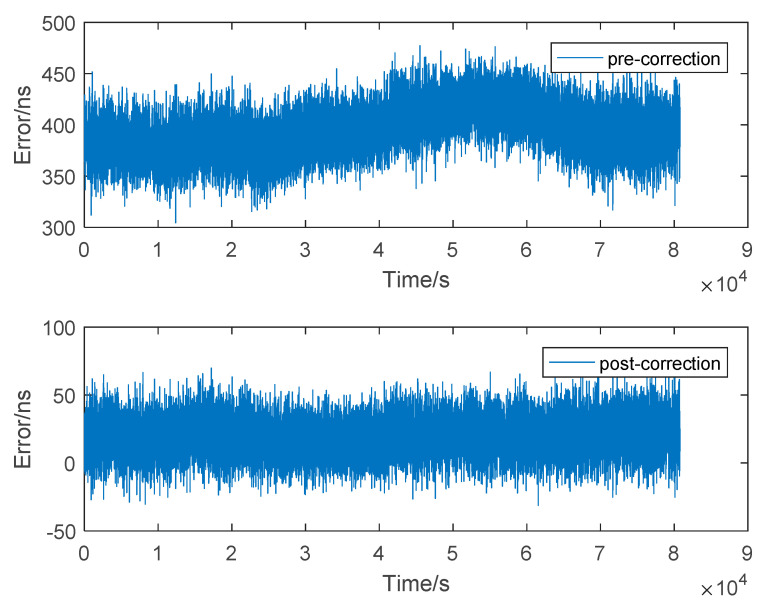
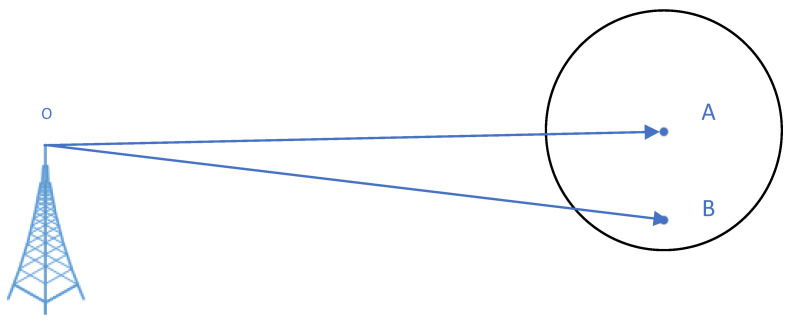
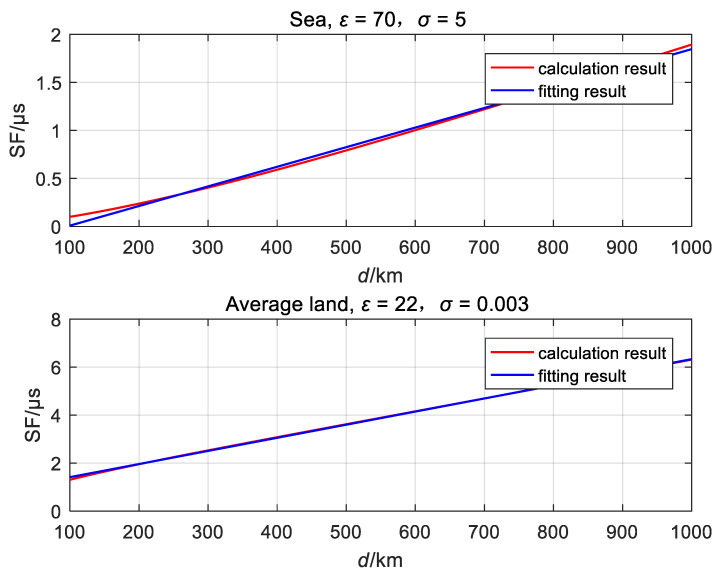
An enhanced long-range navigation (eLoran) system was selected as the backup of Global Navigation Satellite Systems (GNSS), and experts and scholars are committed to improving the accuracy of the eLoran system such that its accuracy is close to the GNSS system. A differential method called eLoran differential timing technology is applied to the eLoran system, which has been used in maritime applications of eLoran. In this study, an application of eLoran differential timing technology in a terrestrial medium is carried out. Based on the eLoran timing service error, the correlation of the timing service error is analyzed in theory quantitatively to obtain the range of the difference station in the ground. The results show that to satisfy the timing accuracy of 100 ns, the action range of eLoran difference station on the land needs to be less than 55 km. Therefore, the eLoran differential method is proposed, and in the difference station, the theoretical calculation is combined with the measurement of the signal delay to obtain the difference information, which is sent to the users to adjust the prediction delay and improve the eLoran timing precision. The experiment was carried out in the Guan Zhong Plain, and the timing error of the user decreased from 394.7287 ns (pre-difference) to 19.5890 ns (post-difference). The proposed method is found to effectively enhance the timing precision of the eLoran system within the scope of action.
选择增强型远程导航 (eLoran) 系统作为全球导航卫星系统 (GNSS) 的备份,专家和学者致力于提高 eLoran 系统的精度,使其接近 GNSS 系统。将一种称为 eLoran 差分定时技术的差分方法应用于 eLoran 系统,该方法已应用于 eLoran 的海上应用。本研究在地面中应用 eLoran 差分定时技术。基于 eLoran 定时服务误差,从理论上定量分析定时服务误差的相关性,以获得地面差分站的范围。结果表明,为满足 100ns 的定时精度,eLoran 差分站在陆地上的作用范围需要小于 55km。因此,提出了 eLoran 差分方法,并在差分站中,结合信号延迟的测量对理论计算进行了组合,以获得差分信息,并将其发送给用户,以调整预测延迟并提高 eLoran 定时精度。在关中平原进行了实验,用户的定时误差从 394.7287ns(预差分)降低到 19.5890ns(后差分)。发现该方法在作用范围内有效提高了 eLoran 系统的定时精度。