Trabattoni Daniela, Gili Sebastiano, Teruzzi Giovanni, Tamborini Gloria
Centro Cardiologico Monzino, IRCCS, Via Carlo Parea 4, Milan, Italy.
Eur Heart J Case Rep. 2020 Aug 23;4(5):1-4. doi: 10.1093/ehjcr/ytaa162. eCollection 2020 Oct.
Transcatheter closure of patent foramen ovale (PFO) has been demonstrated to be superior to medical therapy in stroke prevention in selected patients. Beyond traditional permanent metallic devices, NobleStitch EL, a suture-based system, has been developed as a potential alternative.
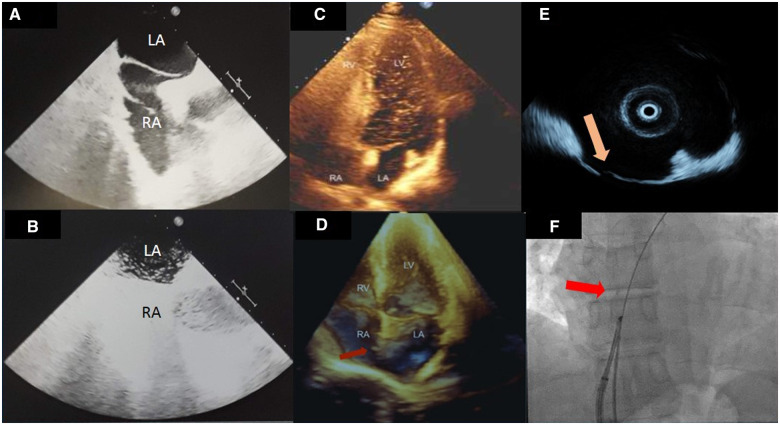
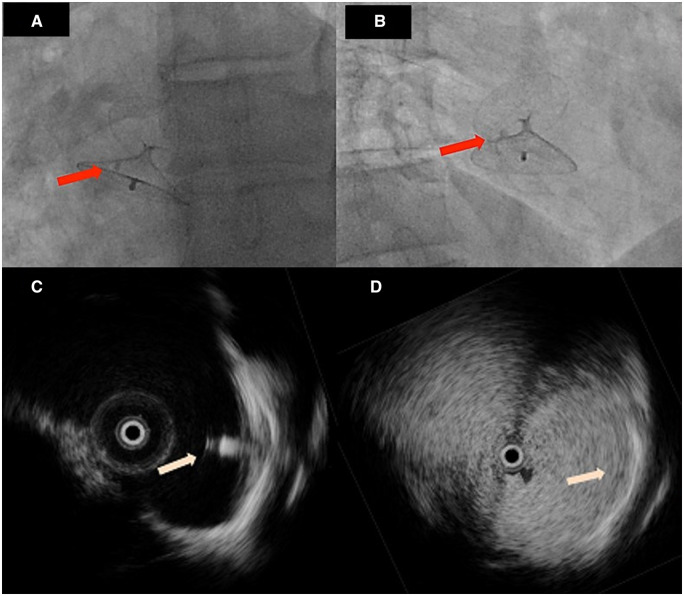
A 50-year-old man underwent transcatheter closure of PFO with mild interatrial septal bulging and tunnel-like morphology with a NobleStitch device. A transthoracic echocardiography performed immediately after PFO closure showed residual shunt (RS), which persisted unchanged at staged controls, due to the inability of the delivery system to capture both the septum primum and the septum secundum. A second procedure was performed with the implantation of a Figulla Flex II 27/30 mm device, with no RS detectable at control echocardiography.
The NobleStitch device is interesting in its concept, but several pitfalls may be encountered during its deployment. Opposite to permanent metallic devices, RSs after the procedure are not expected to decrease over time and should be managed with a different approach.
经导管闭合卵圆孔未闭(PFO)在特定患者的卒中预防方面已被证明优于药物治疗。除了传统的永久性金属装置外,一种基于缝线的系统NobleStitch EL已被开发作为一种潜在的替代方案。
一名50岁男性使用NobleStitch装置对伴有轻度房间隔膨出和隧道样形态的PFO进行经导管闭合。PFO闭合后立即进行的经胸超声心动图显示存在残余分流(RS),由于输送系统无法同时捕获原发隔和继发隔,在分期检查时RS持续不变。第二次手术植入了Figulla Flex II 27/30毫米装置,在对照超声心动图中未检测到RS。
NobleStitch装置在概念上很有趣,但在其部署过程中可能会遇到一些陷阱。与永久性金属装置不同,术后的RS预计不会随时间减少,应采用不同的方法进行处理。