Headache Research-Wolfson Centre for Age-Related Diseases, Institute of Psychiatry, Psychology and Neuroscience, King's College London, London, UK.
Headache Centre, Guy's and St Thomas's NHS Foundation Trust, King's Health Partners, London, UK.
Neurotherapeutics. 2021 Jan;18(1):556-568. doi: 10.1007/s13311-020-00967-7. Epub 2020 Nov 17.
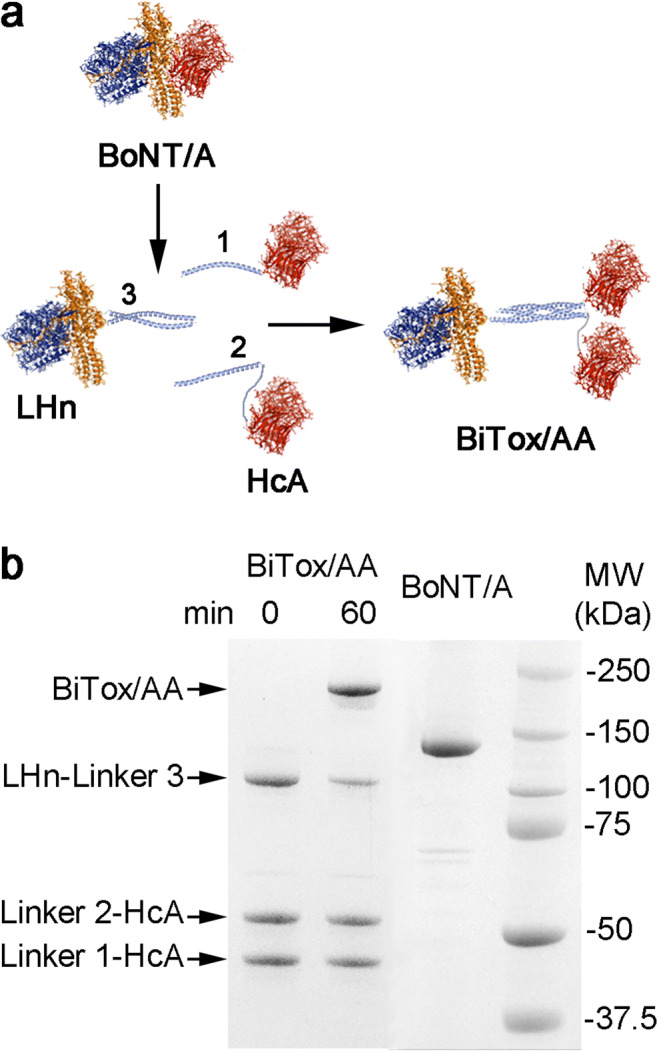
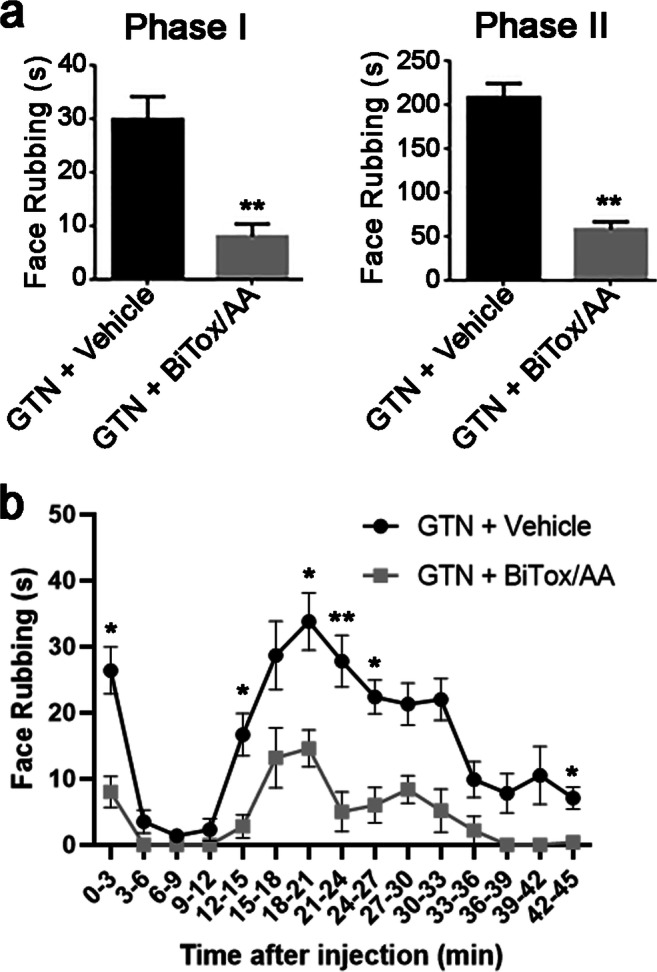
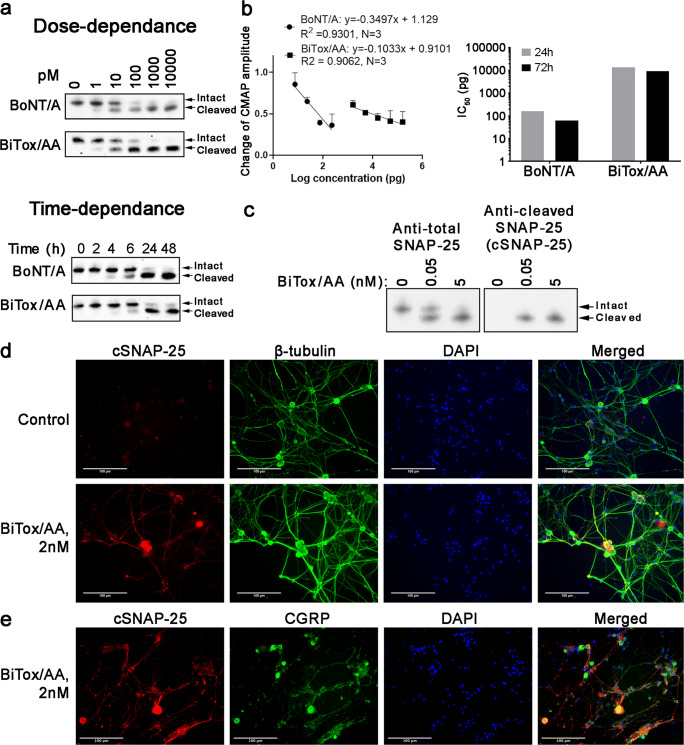
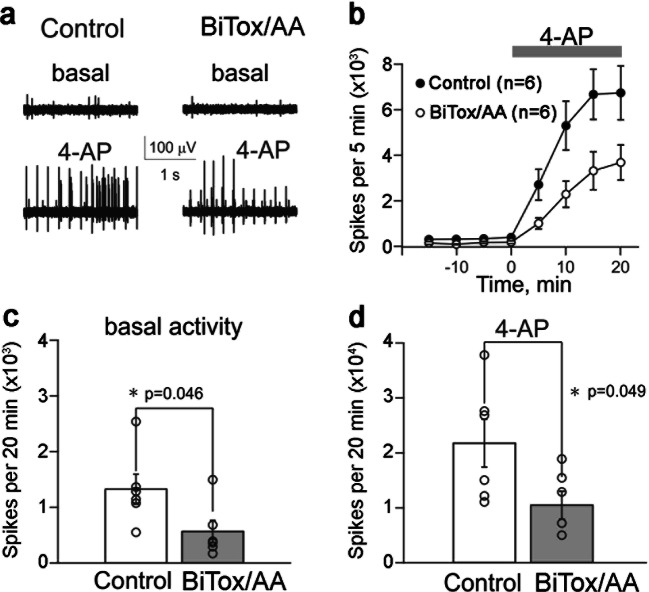
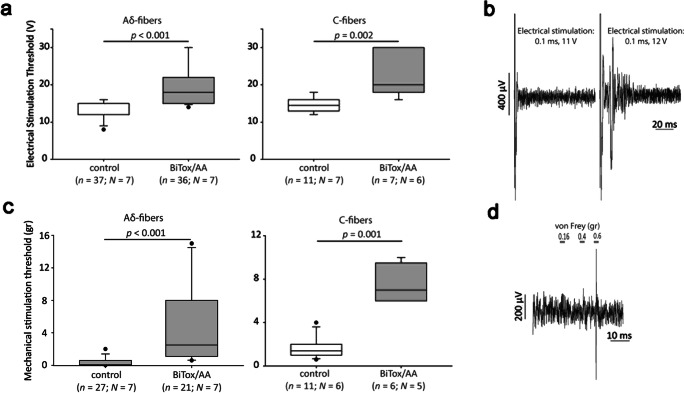
With a prevalence of 15%, migraine is the most common neurological disorder and among the most disabling diseases, taking into account years lived with disability. Current oral medications for migraine show variable effects and are frequently associated with intolerable side effects, leading to the dissatisfaction of both patients and doctors. Injectable therapeutics, which include calcitonin gene-related peptide-targeting monoclonal antibodies and botulinum neurotoxin A (BoNT/A), provide a new paradigm for treatment of chronic migraine but are effective only in approximately 50% of subjects. Here, we investigated a novel engineered botulinum molecule with markedly reduced muscle paralyzing properties which could be beneficial for the treatment of migraine. This stapled botulinum molecule with duplicated binding domain-binary toxin-AA (BiTox/AA)-cleaves synaptosomal-associated protein 25 with a similar efficacy to BoNT/A in neurons; however, the paralyzing effect of BiTox/AA was 100 times less when compared to native BoNT/A following muscle injection. The performance of BiTox/AA was evaluated in cellular and animal models of migraine. BiTox/AA inhibited electrical nerve fiber activity in rat meningeal preparations while, in the trigeminovascular model, BiTox/AA raised electrical and mechanical stimulation thresholds in Aδ- and C-fiber nociceptors. In the rat glyceryl trinitrate (GTN) model, BiTox/AA proved effective in inhibiting GTN-induced hyperalgesia in the orofacial formalin test. We conclude that the engineered botulinum molecule provides a useful prototype for designing advanced future therapeutics for an improved efficacy in the treatment of migraine.
偏头痛的患病率为 15%,是最常见的神经疾病之一,也是导致残疾年数最多的疾病之一。目前用于偏头痛的口服药物的效果各不相同,且常伴有难以忍受的副作用,导致患者和医生都不满意。包括降钙素基因相关肽靶向单克隆抗体和肉毒神经毒素 A(BoNT/A)在内的注射治疗药物为慢性偏头痛的治疗提供了新的范例,但仅对约 50%的患者有效。在这里,我们研究了一种新型工程化的肉毒杆菌分子,它具有明显降低肌肉瘫痪特性,可能有益于偏头痛的治疗。这种带有重复结合域-二进制毒素-AA(BiTox/AA)的订书针状肉毒杆菌分子在神经元中与 BoNT/A 具有相似的突触相关蛋白 25 切割效果;然而,与原生 BoNT/A 相比,BiTox/AA 的肌肉注射瘫痪效果低 100 倍。在偏头痛的细胞和动物模型中评估了 BiTox/AA 的性能。BiTox/AA 抑制了大鼠脑膜制备中电神经纤维的活性,而在三叉神经血管模型中,BiTox/AA 提高了 Aδ 和 C 纤维伤害感受器的电和机械刺激阈值。在大鼠甘油三硝酸酯(GTN)模型中,BiTox/AA 被证明在抑制 GTN 诱导的口腔福尔马林试验中的痛觉过敏方面有效。我们得出结论,该工程化的肉毒杆菌分子为设计用于偏头痛治疗的新型高效治疗药物提供了有用的原型。