Data Science Institute, Columbia University, New York, New York, United States.
Department of Biomedical Informatics, Columbia University Irving Medical Center, New York, New York, United States.
Appl Clin Inform. 2020 Oct;11(5):769-784. doi: 10.1055/s-0040-1718755. Epub 2020 Nov 18.
Self-tracking through mobile health technology can augment the electronic health record (EHR) as an additional data source by providing direct patient input. This can be particularly useful in the context of enigmatic diseases and further promote patient engagement.
This study aimed to investigate the additional information that can be gained through direct patient input on poorly understood diseases, beyond what is already documented in the EHR.
This was an observational study including two samples with a clinically confirmed endometriosis diagnosis. We analyzed data from 6,925 women with endometriosis using a research app for tracking endometriosis to assess prevalence of self-reported pain problems, between- and within-person variability in pain over time, endometriosis-affected tasks of daily function, and self-management strategies. We analyzed data from 4,389 patients identified through a large metropolitan hospital EHR to compare pain problems with the self-tracking app and to identify unique data elements that can be contributed via patient self-tracking.
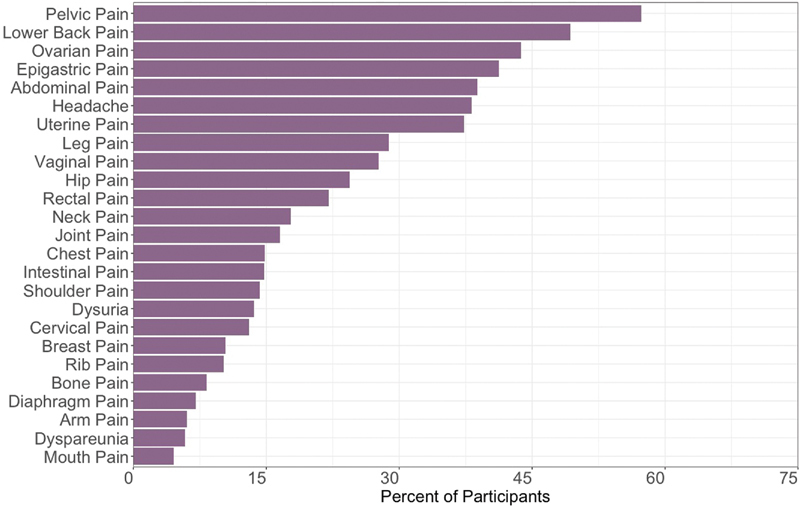
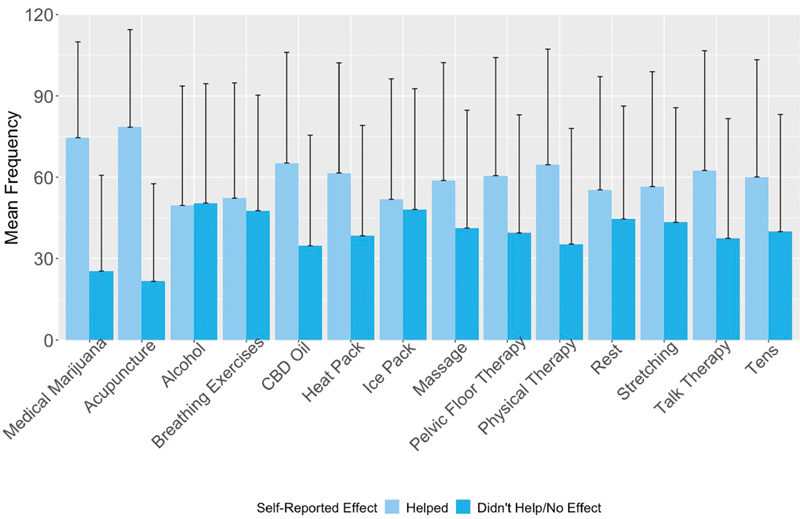
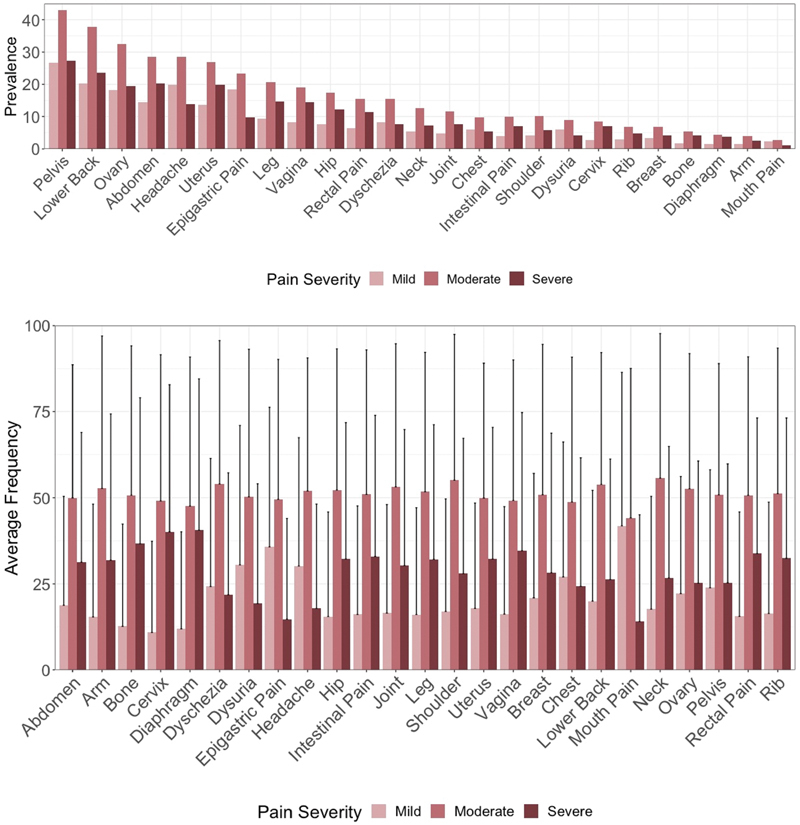
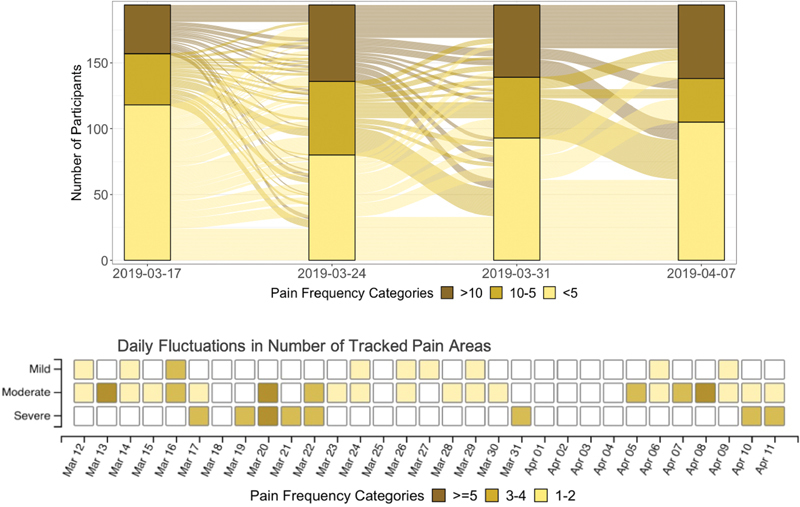
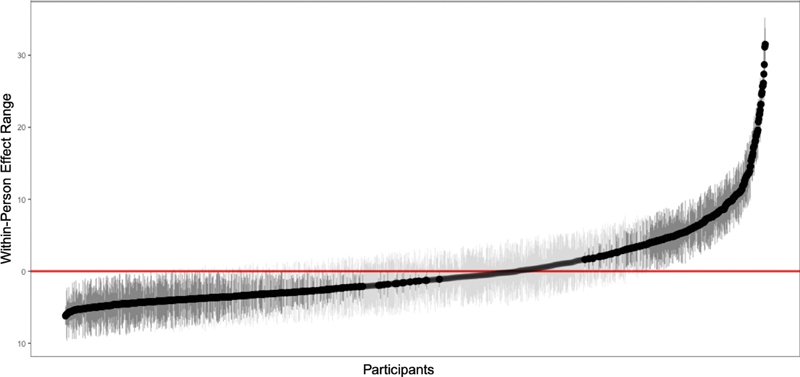
Pelvic pain was the most prevalent problem in the self-tracking sample (57.3%), followed by gastrointestinal-related (55.9%) and lower back (49.2%) pain. Unique problems that were captured by self-tracking included pain in ovaries (43.7%) and uterus (37.2%). Pain experience was highly variable both across and within participants over time. Within-person variation accounted for 58% of the total variance in pain scores, and was large in magnitude, based on the ratio of within- to between-person variability (0.92) and the intraclass correlation (0.42). Work was the most affected daily function task (49%), and there was significant within- and between-person variability in self-management effectiveness. Prevalence rates in the EHR were significantly lower, with abdominal pain being the most prevalent (36.5%).
For enigmatic diseases, patient self-tracking as an additional data source complementary to EHR can enable learning from the patient to more accurately and comprehensively evaluate patient health history and status.
通过移动健康技术进行自我追踪,可以通过提供直接的患者输入,作为电子健康记录 (EHR) 的附加数据源。这在神秘疾病的背景下特别有用,并进一步促进了患者的参与。
本研究旨在调查通过直接患者输入可以获得哪些额外信息,这些信息超出了 EHR 中已经记录的内容,用于了解理解不足的疾病。
这是一项观察性研究,包括两个经临床确诊为子宫内膜异位症的样本。我们使用一种用于跟踪子宫内膜异位症的研究应用程序分析了 6925 名患有子宫内膜异位症的女性的数据,以评估自我报告的疼痛问题的患病率、随时间推移的疼痛个体内和个体间的可变性、受子宫内膜异位症影响的日常功能任务以及自我管理策略。我们分析了从一家大型都市医院 EHR 中确定的 4389 名患者的数据,以将疼痛问题与自我追踪应用程序进行比较,并确定可以通过患者自我追踪提供的独特数据元素。
在自我追踪样本中,最常见的问题是盆腔疼痛(57.3%),其次是胃肠道相关疼痛(55.9%)和下背部疼痛(49.2%)。自我追踪中捕捉到的独特问题包括卵巢(43.7%)和子宫(37.2%)疼痛。随着时间的推移,疼痛体验在参与者之间和参与者内部都高度变化。个体内变化占疼痛评分总方差的 58%,基于个体内到个体间变异比(0.92)和组内相关系数(0.42),其变化幅度很大。工作是受影响最严重的日常功能任务(49%),自我管理效果的个体内和个体间变化很大。EHR 中的患病率明显较低,以腹痛最为常见(36.5%)。
对于神秘疾病,患者自我追踪作为 EHR 的附加数据源,可以帮助从患者那里学习,从而更准确和全面地评估患者的健康史和状况。