Intelligent Robotics Institute, School of Mechatronical Engineering, Beijing Institute of Technology, Beijing 100081, China.
The Beijing Advanced Innovation Center for Intelligent Robots and Systems, Beijing Institute of Technology, Beijing 100081, China.
Sensors (Basel). 2020 Nov 16;20(22):6543. doi: 10.3390/s20226543.
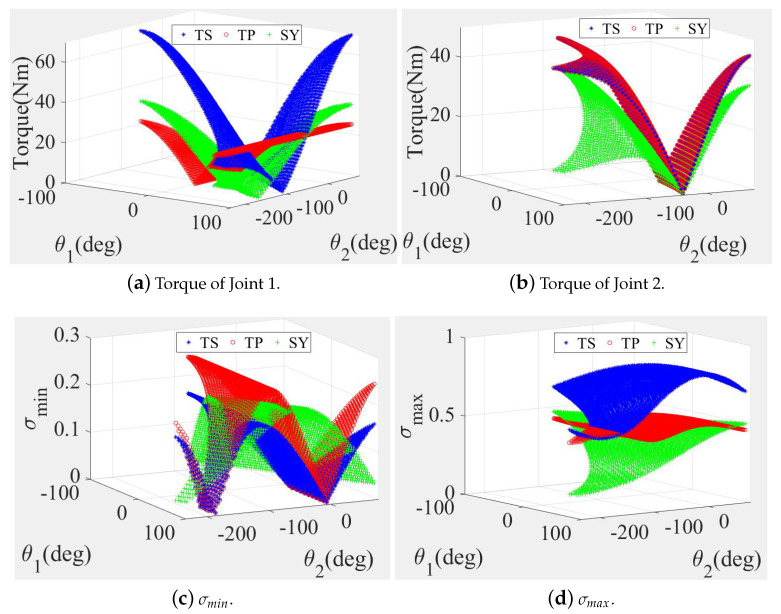
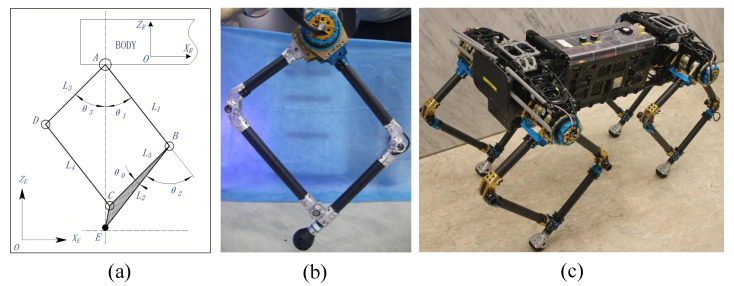
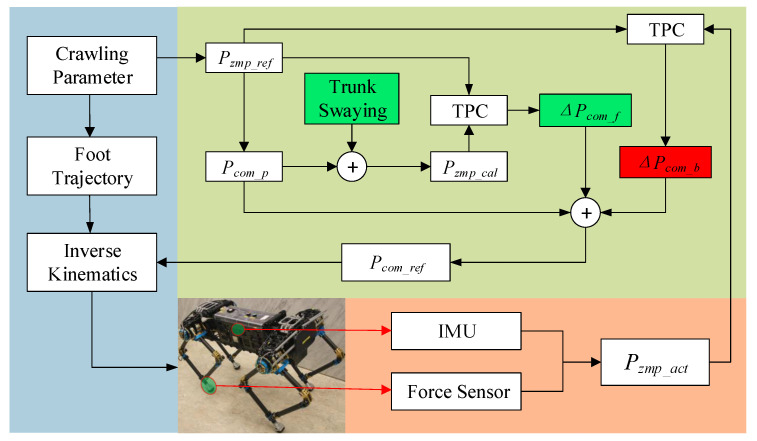
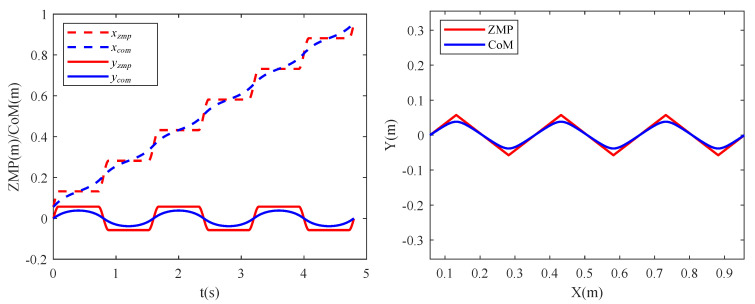
Load capacity is an important index to reflect the practicability of legged robots. Existing research into quadruped robots has not analyzed their load performance in terms of their structural design and control method from a systematic point of view. This paper proposes a structural design method and crawling pattern generator for a planar quadruped robot that can realize high-payload locomotion. First, the functions required to evaluate the leg's load capacity are established, and quantitative comparative analyses of the candidates are performed to select the leg structure with the best load capacity. We also propose a highly integrated design method for a driver module to improve the robot's load capacity. Second, in order to realize stable load locomotion, a novel crawling pattern generator based on trunk swaying is proposed which can realize lateral center of mass (CoM) movement by adjusting the leg lengths on both sides to change the CoM projection in the trunk width direction. Finally, loaded crawling simulations and experiments performed with our self-developed quadruped robot show that stable crawling with load ratios exceeding 66% can be realized, thus verifying the effectiveness and superiority of the proposed method.
负载能力是反映腿足机器人实用性的一个重要指标。现有的四足机器人研究尚未从系统的角度分析其结构设计和控制方法的负载性能。本文提出了一种平面四足机器人的结构设计方法和爬行模式生成器,可实现高负载运动。首先,建立了评估腿负载能力所需的功能,并对候选腿结构进行了定量比较分析,以选择具有最佳负载能力的腿结构。我们还提出了一种高度集成的驱动器模块设计方法,以提高机器人的负载能力。其次,为了实现稳定的负载运动,提出了一种基于躯干摆动的新型爬行模式生成器,通过调整两侧的腿长来实现侧向质心(CoM)运动,从而改变躯干宽度方向上的 CoM 投影。最后,通过对我们自主研发的四足机器人进行负载爬行仿真和实验,验证了负载比超过 66%的稳定爬行,从而验证了所提出方法的有效性和优越性。