Huang Jin-Feng, Zheng Xuan-Qi, Lin Jia-Liang, Zhang Kai, Tian Hai-Jun, Zhou Wen-Xian, Wang Hui, Gao Ze, Jin Hai-Ming, Wu Ai-Min
Department of Orthopaedics, The Second Affiliated Hospital and Yuying Children's Hospital of Wenzhou Medical University, Wenzhou, People's Republic of China.
The Second School of Medicine, Wenzhou Medical University, Wenzhou, People's Republic of China.
J Inflamm Res. 2020 Nov 10;13:883-895. doi: 10.2147/JIR.S278556. eCollection 2020.
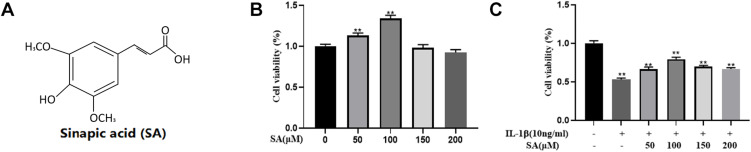
Low back pain (LBP) is a very common condition and leads to serious pain, disability, and price tag all over the world. Intervertebral disk degeneration (IDD) is one of the major reasons that contributed to LBP. The levels of interleukin 1 beta (IL-1β) increase significantly in degenerative disks. IL-1β also accelerates IDD. Sinapic acid (SA) has the effect of anti-inflammatory, antioxidant and antimicrobial. However, the effect of SA on IDD has never been studied. Therefore, the aim of this study was to figure out whether SA has protective effect on nucleus pulposus (NP) cells and further explore the possible underlying mechanism.
The nucleus pulposus (NP) tissues of rats were collected and cultured into NP cells. The NP cells were stimulated by IL-1β and treated with SA. In vitro treatment effects were evaluated by ELISA, Western blot assay, immunofluorescence, TUNEL method and real-time PCR. We conducted percutaneous needle puncture in the rat tail to build intervertebral disk degeneration model and treated rats with SA. In vivo treatment effects were evaluated by hematoxylin and eosin (HE) and safranin O (SO) staining and magnetic resonance imaging (MRI) method.
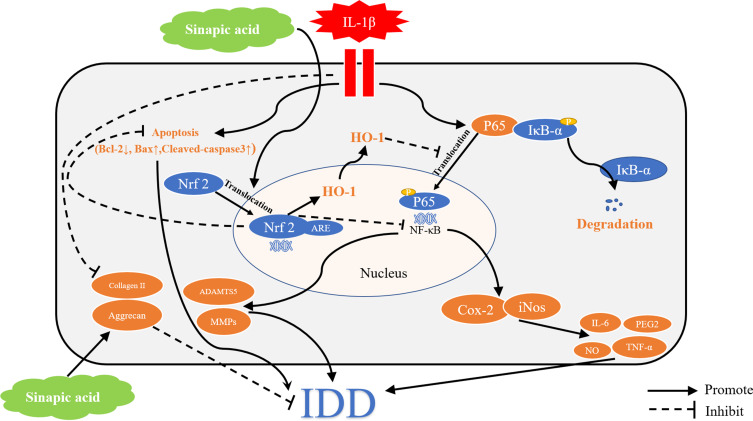
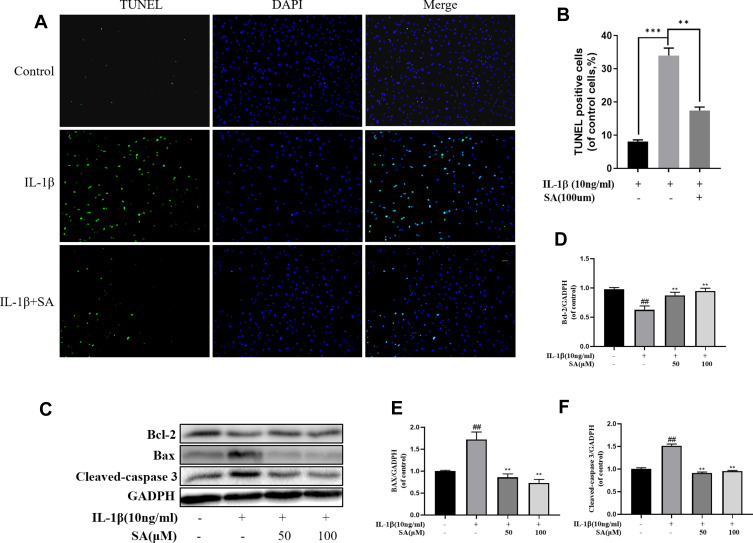
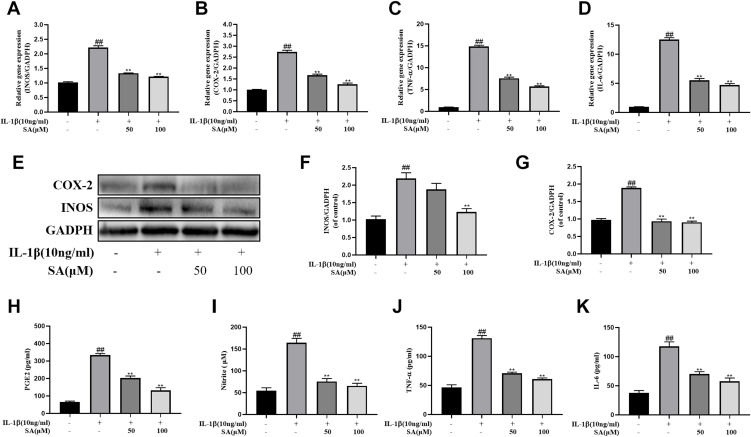
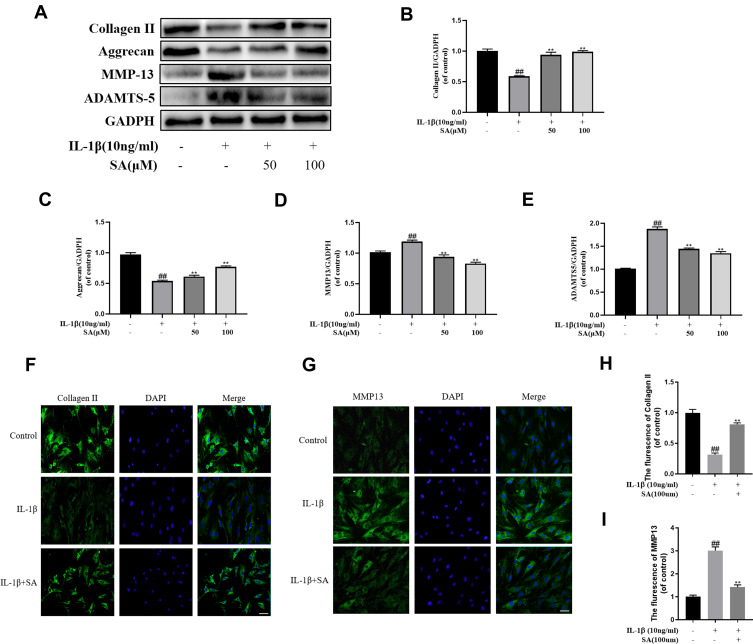
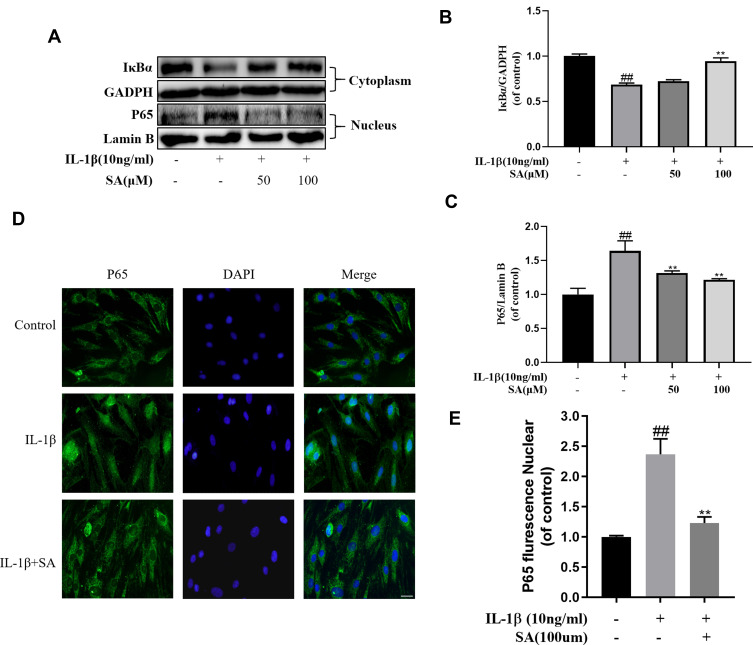
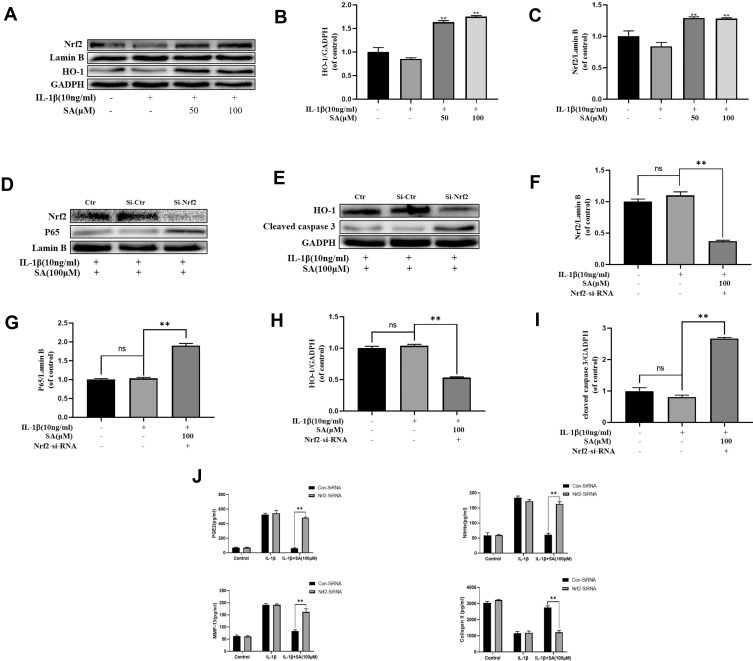
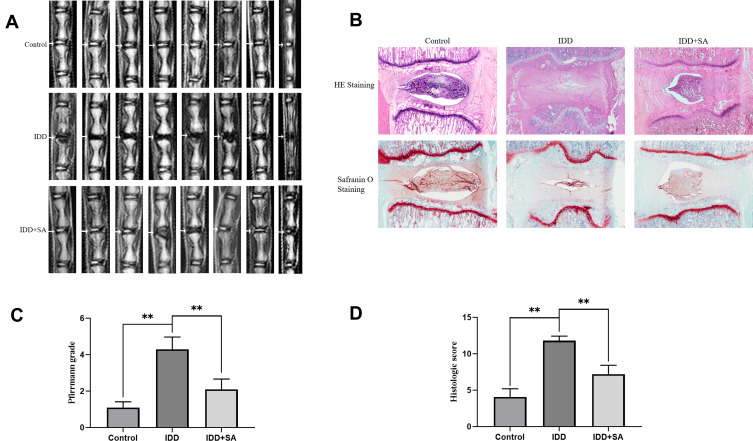
Our results showed that SA not only inhibited apoptosis but also suppressed inflammatory mediators including nitric oxide (NO), prostaglandin E2 (PGE2), cyclooxygenase 2 (COX-2), inducible nitric oxide synthase (iNOS) interleukin 6 (IL-6) and tumor necrosis factor alpha (TNF-α) in IL-1β-stimulated NP cells. As to extracellular matrix (ECM), SA could increase collagen II and aggrecan levels and reduce the expression of MMP13 and ADAMTS5 during the stimulation of IL-1β. Furthermore, SA could activate nuclear factor-erythroid 2-related factor-2 (Nrf2) to inhibit nuclear factor κB (NF-κB) induced by IL-1β. Nrf2 knockdown partly reduced the protective effect of SA on NP cells. Correspondingly, SA ameliorated IDD by promoting Nrf2 expression. In vivo results also showed that SA could delay the progression of IDD.
In conclusion, we demonstrated that SA could protect the degeneration of NP cells and revealed the underlying mechanism of SA on Nrf2 activation in NP cells.
下腰痛(LBP)是一种非常常见的病症,在全球范围内都会导致严重疼痛、残疾以及高昂代价。椎间盘退变(IDD)是导致LBP的主要原因之一。退变椎间盘中白细胞介素1β(IL-1β)水平显著升高。IL-1β也会加速IDD。芥子酸(SA)具有抗炎、抗氧化和抗菌作用。然而,SA对IDD的影响从未被研究过。因此,本研究的目的是弄清楚SA是否对髓核(NP)细胞具有保护作用,并进一步探索可能的潜在机制。
收集大鼠的髓核(NP)组织并培养成NP细胞。用IL-1β刺激NP细胞并用SA处理。通过酶联免疫吸附测定(ELISA)、蛋白质免疫印迹法、免疫荧光、TUNEL法和实时聚合酶链反应(PCR)评估体外处理效果。我们在大鼠尾部进行经皮针刺以建立椎间盘退变模型并用SA处理大鼠。通过苏木精-伊红(HE)和番红O(SO)染色以及磁共振成像(MRI)方法评估体内处理效果。
我们的结果表明,SA不仅抑制细胞凋亡,还抑制IL-1β刺激的NP细胞中的炎症介质,包括一氧化氮(NO)、前列腺素E2(PGE2)、环氧合酶2(COX-2)、诱导型一氧化氮合酶(iNOS)、白细胞介素6(IL-6)和肿瘤坏死因子α(TNF-α)。至于细胞外基质(ECM),在IL-1β刺激期间,SA可以增加Ⅱ型胶原蛋白和聚集蛋白聚糖水平,并降低基质金属蛋白酶13(MMP13)和含血小板解聚蛋白样金属蛋白酶5(ADAMTS5)的表达。此外,SA可以激活核因子E2相关因子2(Nrf2)以抑制IL-1β诱导的核因子κB(NF-κB)。Nrf2基因敲低部分降低了SA对NP细胞的保护作用。相应地,SA通过促进Nrf2表达改善了IDD。体内结果还表明,SA可以延缓IDD的进展。
总之,我们证明了SA可以保护NP细胞退变,并揭示了SA在NP细胞中激活Nrf2的潜在机制。