Nandakumar Mridula, Ishtiaq Farah
Centre for Ecological Sciences Indian Institute of Science Bangalore India.
Present address: Department of Biology Lund University Lund Sweden.
Ecol Evol. 2020 Oct 15;10(21):12246-12263. doi: 10.1002/ece3.6855. eCollection 2020 Nov.
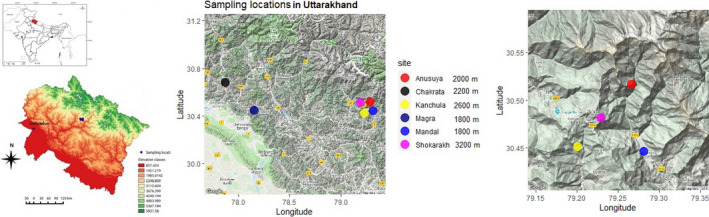
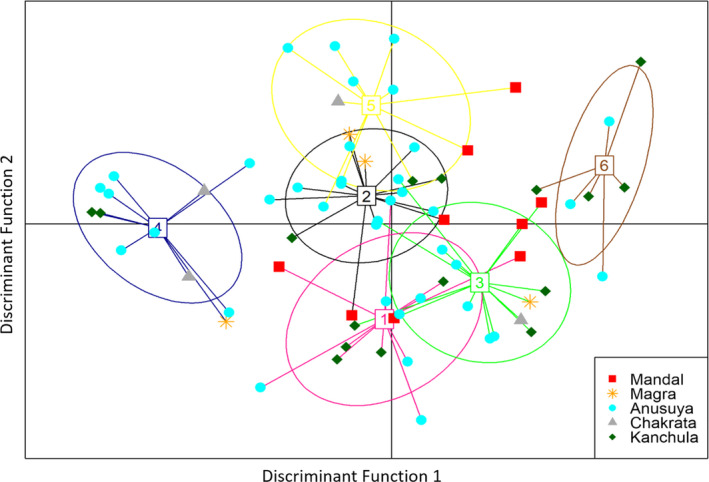
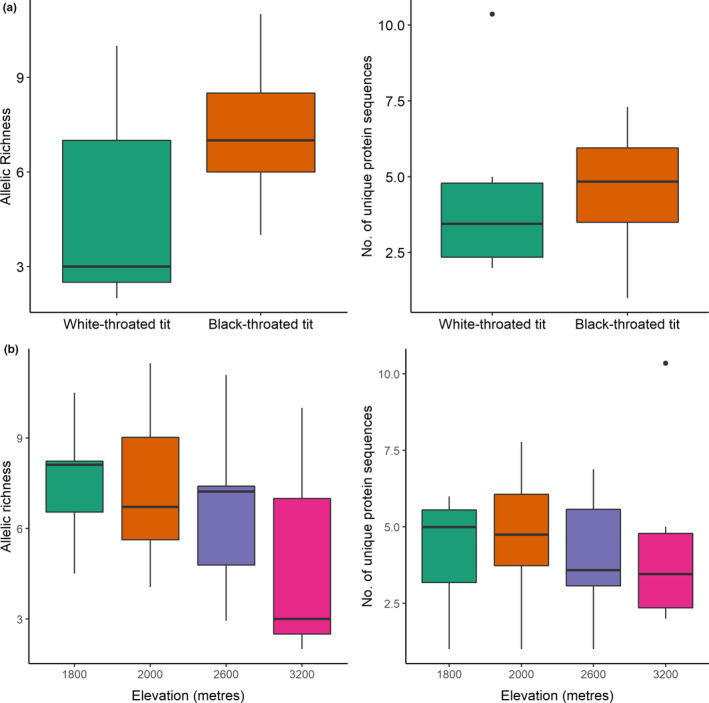
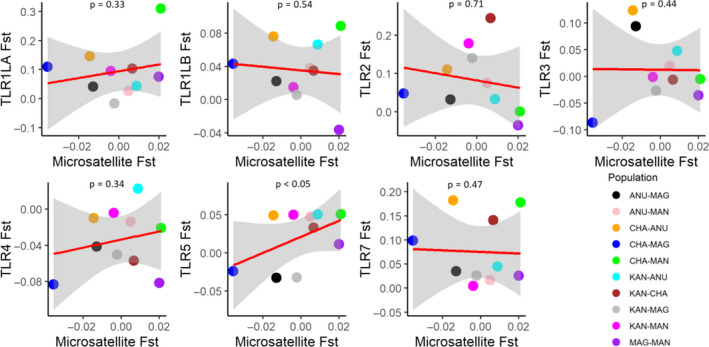
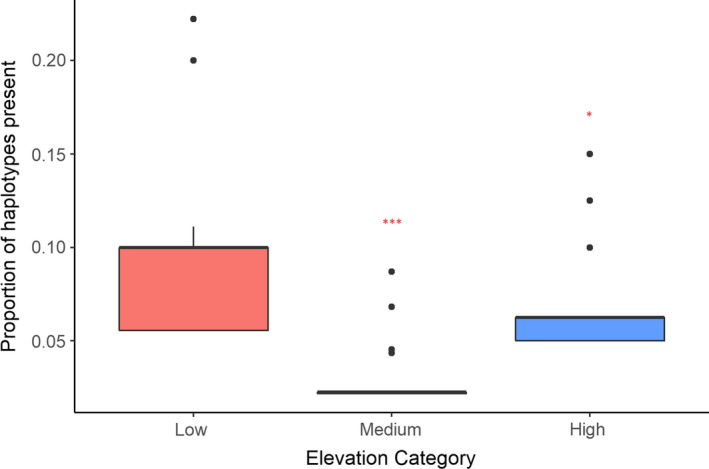
Genetic diversity is important for long-term viability of a population. Low genetic diversity reduces persistence and survival of populations and increases susceptibility to diseases. Comparisons of the neutral markers with functional loci such as immune genes [Toll-like receptors; TLR] can provide useful insights into evolutionary potential of a species and how the diversity of pathogens and selection pressures on their hosts are directly linked to their environment. In this study, we compare genetic diversity in neutral (eleven microsatellite loci) and adaptive (seven TLR loci) loci to determine genetic variation in a nonmigratory western Himalayan passerine, the black-throated tit (), distributed across an elevation gradient with varying degree of pathogen-mediated selection pressure. We further compare the diversity in TLR loci with a high-elevation sister species, the white-throated tit (). Our results indicate a lack of population genetic structure in the black-throated tit and signatures of a past bottleneck. In contrast, we found high diversity in TLR loci and locus-specific (TLR7) signatures of pathogen-mediated selection, which was comparable to diversity in the white-throated tit. Levels of diversity at TLR5 locus corresponded very closely with neutral microsatellite variation. We found evidence of positive selection in TLR1LA, TLR5, and TLR7 loci highlighting the importance in pathogen recognition. Our finding demonstrates that reduction in neutral variation does not necessarily lead to reduction in functional genetic diversity and probably helps in revival of population in a widespread species.
遗传多样性对于种群的长期生存能力至关重要。低遗传多样性会降低种群的持久性和存活率,并增加对疾病的易感性。将中性标记与免疫基因等功能基因座(Toll样受体;TLR)进行比较,可以为物种的进化潜力以及病原体多样性和宿主选择压力如何与它们的环境直接相关提供有用的见解。在本研究中,我们比较了中性(11个微卫星基因座)和适应性(7个TLR基因座)基因座的遗传多样性,以确定一种不迁徙的西喜马拉雅雀形目鸟类——黑喉山雀()的遗传变异,该物种分布在一个具有不同程度病原体介导选择压力的海拔梯度上。我们进一步将TLR基因座的多样性与一个高海拔的近缘物种——白喉山雀()进行了比较。我们的结果表明黑喉山雀缺乏种群遗传结构以及过去瓶颈效应的特征。相比之下,我们发现TLR基因座具有高多样性以及病原体介导选择的基因座特异性(TLR7)特征,这与白喉山雀的多样性相当。TLR5基因座的多样性水平与中性微卫星变异非常紧密地对应。我们在TLR1LA、TLR5和TLR7基因座中发现了正选择的证据,突出了其在病原体识别中的重要性。我们的发现表明,中性变异的减少不一定会导致功能遗传多样性的减少,并且可能有助于一个广泛分布物种的种群恢复。