Tucker Elizabeth W, Marais Suzaan, Seddon James A, van Crevel Reinout, Ganiem Ahmad Rizal, Ruslami Rovina, Zhang Wenhong, Sun Feng, Zhou Xian, Solomons Regan S, Cresswell Fiona V, Wilmshurst Jo, Rohlwink Ursula
Center for Infection and Inflammation Imaging Research, Johns Hopkins University School of Medicine, Baltimore, Maryland, USA.
Center for Tuberculosis Research, Johns Hopkins University School of Medicine, Baltimore, Maryland, USA.
Open Forum Infect Dis. 2020 Sep 23;7(11):ofaa445. doi: 10.1093/ofid/ofaa445. eCollection 2020 Nov.
Tuberculous meningitis (TBM) is a medical emergency, yet there are no standardized treatment guidelines for the medical or neurosurgical management of these patients and little data on neurocritical care. We conducted an international survey to understand current medical and neurosurgical TBM management and resource availability to provide baseline data needed for future multicenter trials addressing unanswered clinical research questions and the establishment of standardized guidelines.
An online survey of 77 questions covering medical and neurosurgical TBM management aimed at clinicians/nurses treating TBM was distributed as an anonymous link through email invitation, international organizations' membership distribution, and direct links on organizational webpages or social media. The survey remained open for 5 months. Data were summarized with frequencies and percentages.
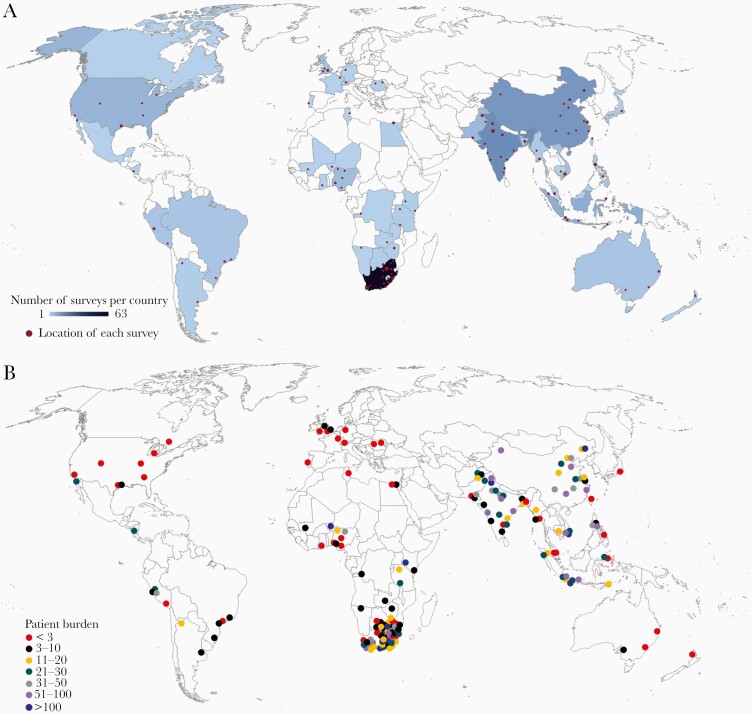
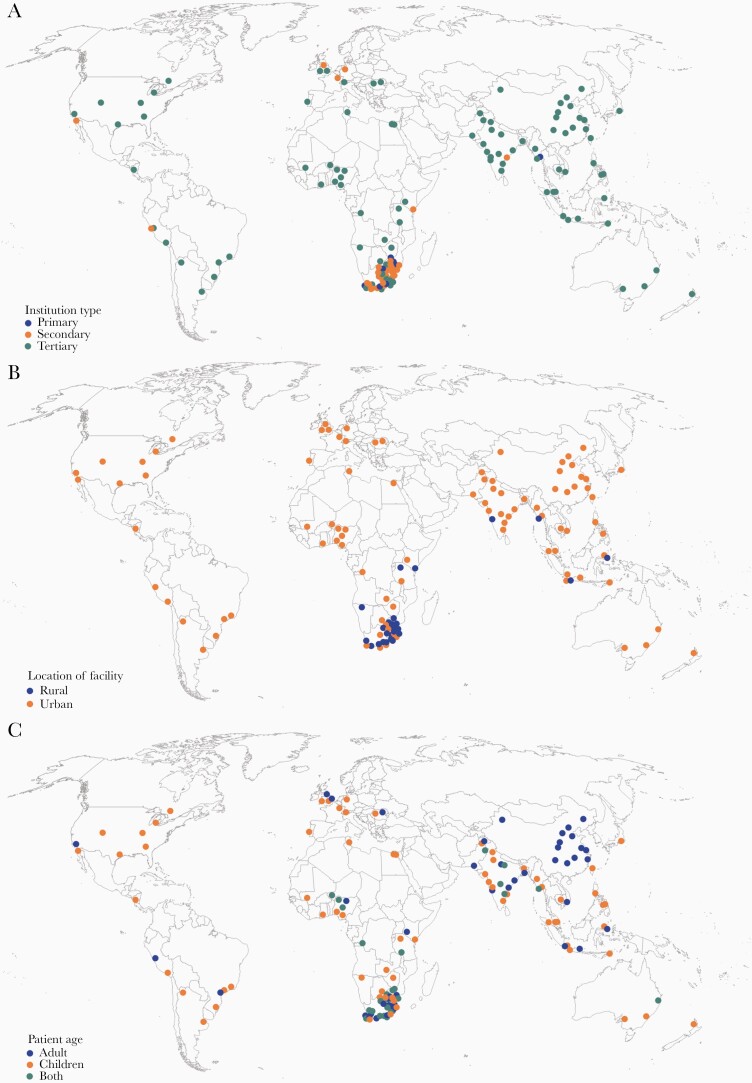
The survey had 222 responses from 43 countries representing 6 continents. Most respondents were from tertiary care facilities, with broad access to medical and neurosurgical resources. There was significant heterogeneity in general supportive care, and TBM-specific management demonstrated considerable divergence from current standard-of-care practices. The lack of standardized guidelines was identified as a major challenge in TBM management. General and neurocritical care were largely absent. Resources for bedside supportive care and noninvasive monitoring were broadly accessible.
These findings suggest that current TBM management could be improved by the establishment of internationally accepted treatment guidelines based on available evidence, and that numerous centers have resources available to participate in future multicenter trials, even for basic interventions, that may further improve patient outcomes globally.
结核性脑膜炎(TBM)是一种医疗急症,但对于这些患者的药物治疗或神经外科治疗,尚无标准化的治疗指南,且关于神经重症监护的数据很少。我们开展了一项国际调查,以了解当前TBM的药物和神经外科治疗管理情况以及资源可用性,从而提供未来多中心试验所需的基线数据,以解决尚未解答的临床研究问题并制定标准化指南。
针对治疗TBM的临床医生/护士开展了一项包含77个问题的在线调查,内容涵盖TBM的药物和神经外科治疗管理。该调查通过电子邮件邀请、国际组织成员分发以及组织网页或社交媒体上的直接链接,以匿名链接的形式进行分发。调查持续开放了5个月。数据以频率和百分比进行汇总。
该调查共收到来自6大洲43个国家的222份回复。大多数受访者来自三级医疗机构,能够广泛获取药物和神经外科资源。在一般支持治疗方面存在显著异质性,TBM特异性管理与当前的标准治疗实践存在很大差异。缺乏标准化指南被认为是TBM管理中的一项重大挑战。一般和神经重症监护基本缺失。床边支持治疗和无创监测资源广泛可用。
这些发现表明,基于现有证据制定国际认可的治疗指南可改善当前的TBM管理,并且许多中心有资源参与未来的多中心试验,即使是针对基础干预措施的试验,这可能会进一步改善全球患者的治疗效果。