Pediatric Endocrinology Unit, Karolinska University Hospital, Stockholm, Sweden.
Department of Women's and Children's Health, Karolinska Institutet, Stockholm, Sweden.
Am J Med Genet A. 2021 Feb;185(2):401-412. doi: 10.1002/ajmg.a.61974. Epub 2020 Nov 21.
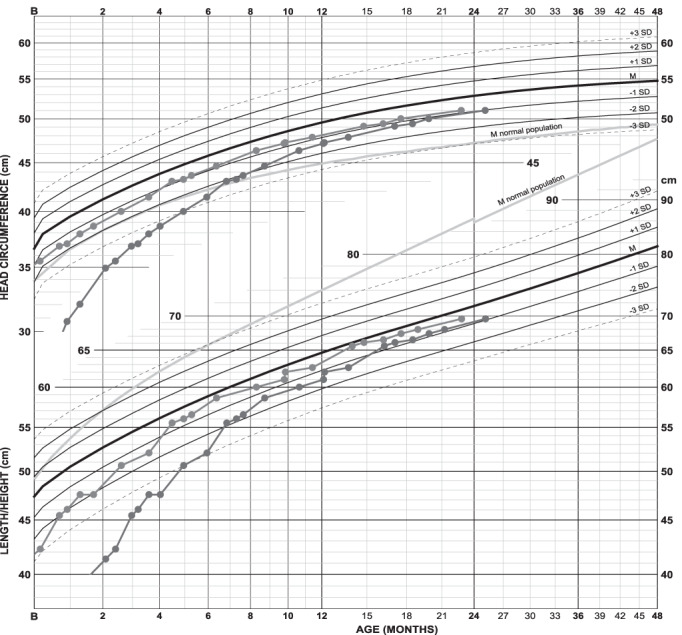
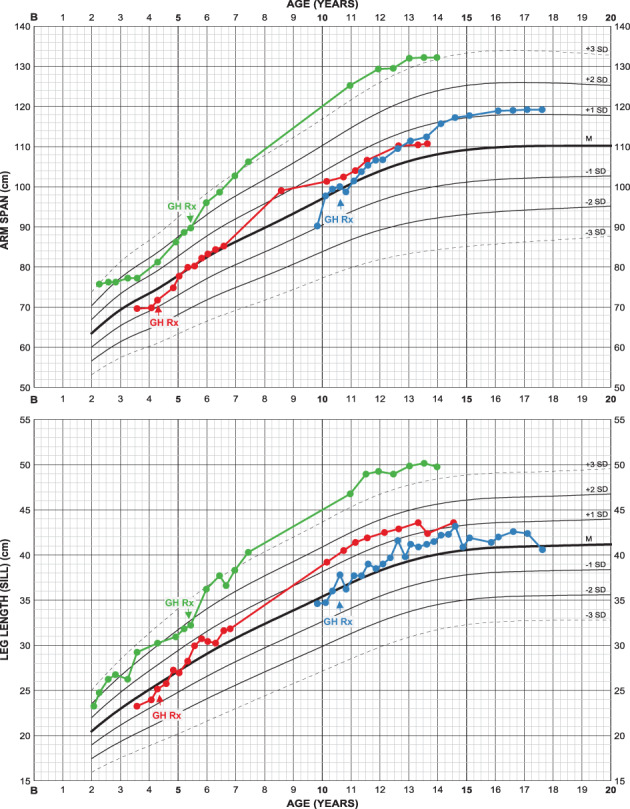
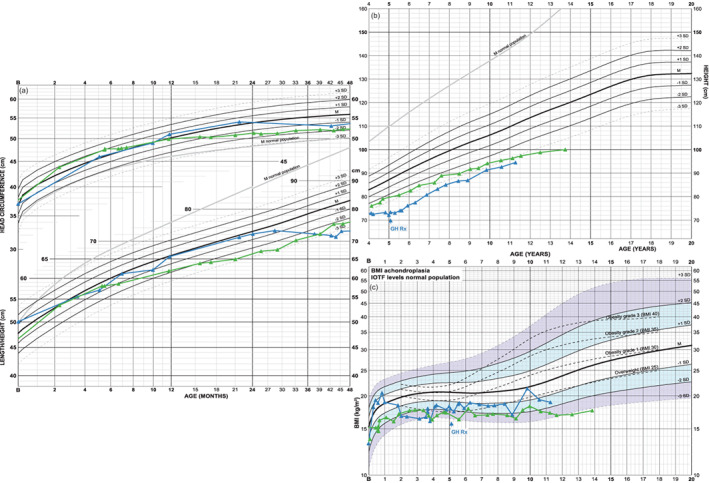
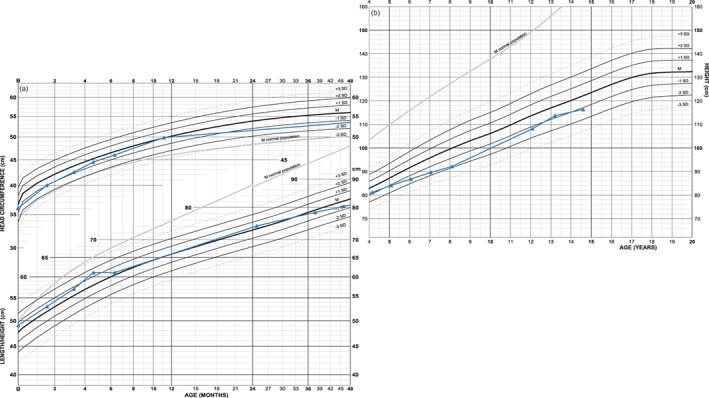
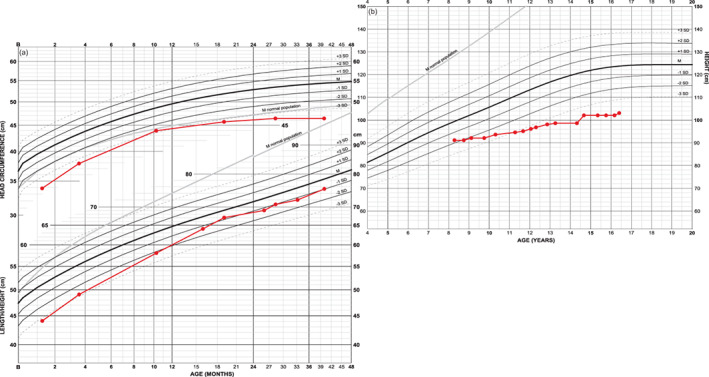
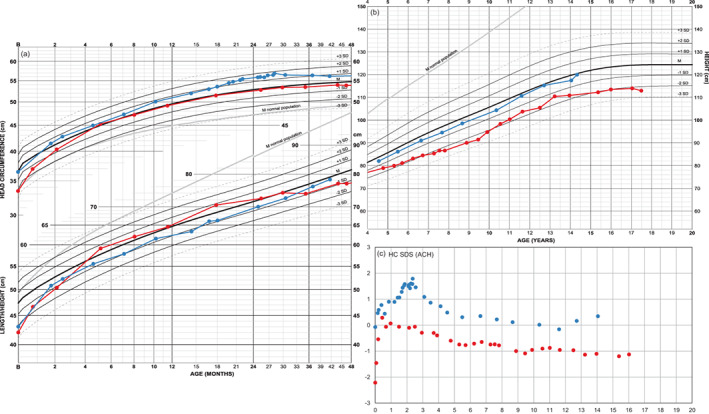
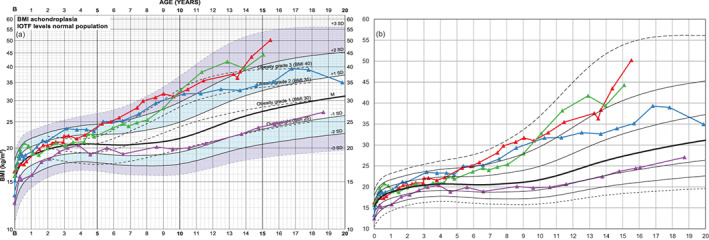
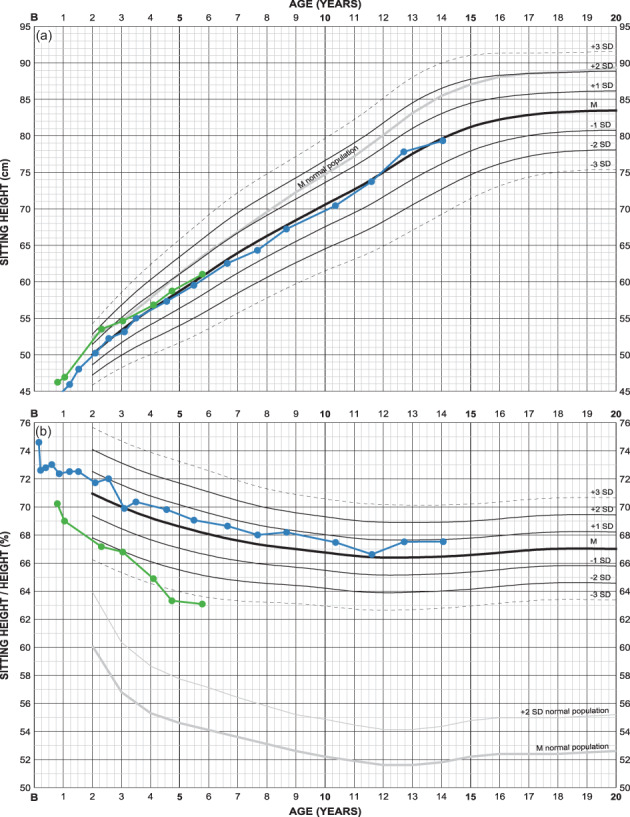
Clinical surveillance of infants and children with achondroplasia necessitates syndrome-specific charts due to extreme short stature with deviating body proportions. Height, arm span and leg length develop far below normal population ranges. We present growth and body proportion charts for ages 0-20 years, constructed from semi-longitudinal standardized measurements of about 450 children, along with some examples of achondroplasia typical and atypical growth pattern. We combine head circumference, height and weight for 0-4 years into one (infancy) page and height and weight for 4-20 years in another (childhood-adolescence) using nonlinear axes to account for the rapidly decreasing growth velocity. Similarly, weight and BMI are based on nonlinear axes to balance wide SD-channels at higher and narrow SD-channels at lower levels of weight/BMI. Charts for following sitting height, sitting height/height ratio, arm span, leg and foot length are also presented. Clinical examples illustrating the applicability of the charts include cases of extreme prematurity, extreme head circumference development before and after shunting, achondroplasia complicated by chromosomal or additional genetic abnormality and by growth hormone deficiency as well as of evaluating growth promoting therapy.
成骨不全侏儒症患儿的临床监测需要特定于综合征的图表,因为其存在极端的身材矮小和身体比例失调。身高、臂展和腿长的发育远低于正常人群范围。我们提供了 0-20 岁的生长和身体比例图表,这些图表是根据大约 450 名儿童的半纵向标准化测量数据构建的,同时还展示了一些成骨不全侏儒症典型和非典型的生长模式示例。我们将头围、身高和体重结合在一起,用于 0-4 岁的婴儿期在一页上,4-20 岁的儿童期在另一页上(使用非线性坐标轴),以考虑到生长速度的快速下降。同样,体重和 BMI 也基于非线性坐标轴,以平衡体重/BMI 较高水平的较宽 SD 通道和较低水平的较窄 SD 通道。还提供了用于跟踪坐高、坐高/身高比、臂展、腿长和脚长的图表。用于说明图表适用性的临床示例包括极端早产、分流前后头围发育极端、成骨不全侏儒症伴染色体或其他遗传异常以及生长激素缺乏症,以及评估生长促进治疗的情况。