Department of Paediatrics, The Hospital for Sick Children and University of Toronto, Toronto, ON M5G 1X8, Canada.
Centre for Global Child Health, The Hospital for Sick Children, Toronto, ON M5G 1X8, Canada.
J Trop Pediatr. 2021 Jul 2;67(3). doi: 10.1093/tropej/fmaa093.
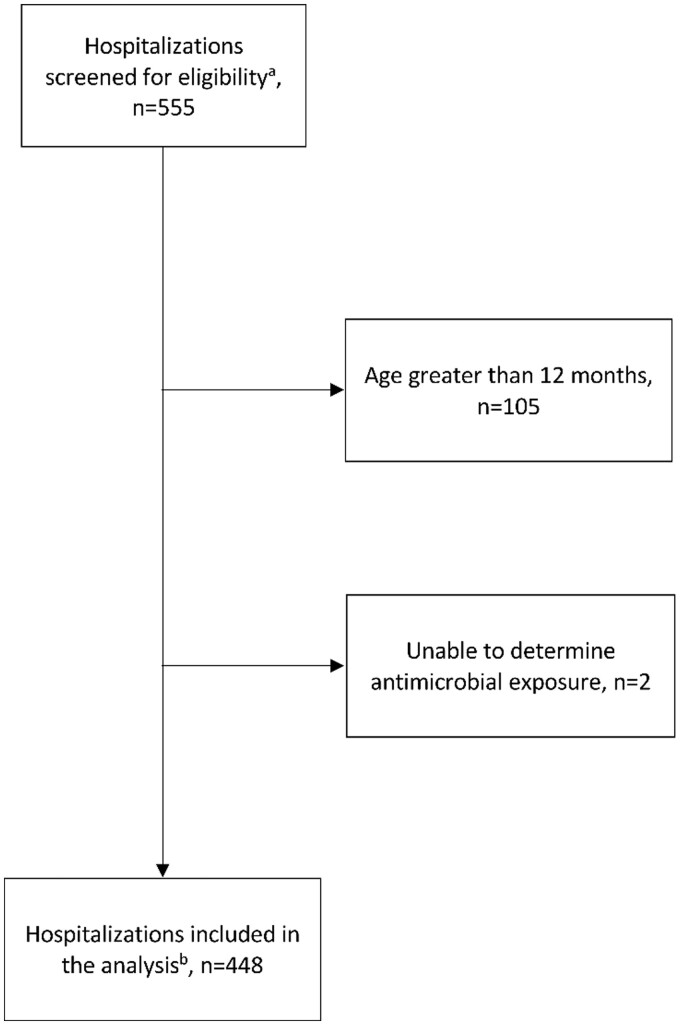
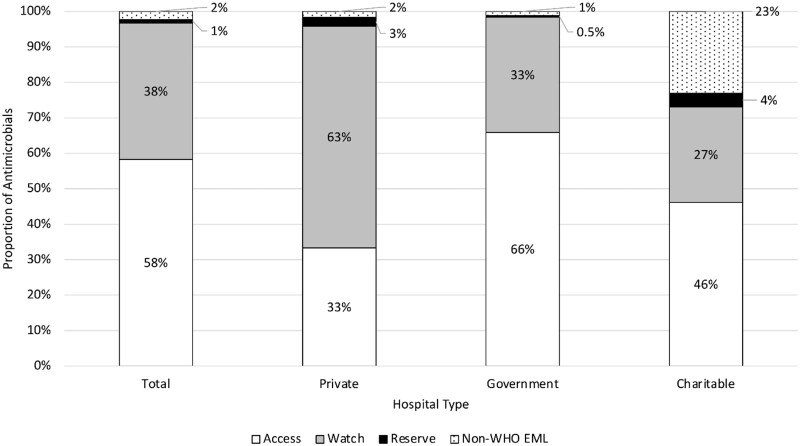
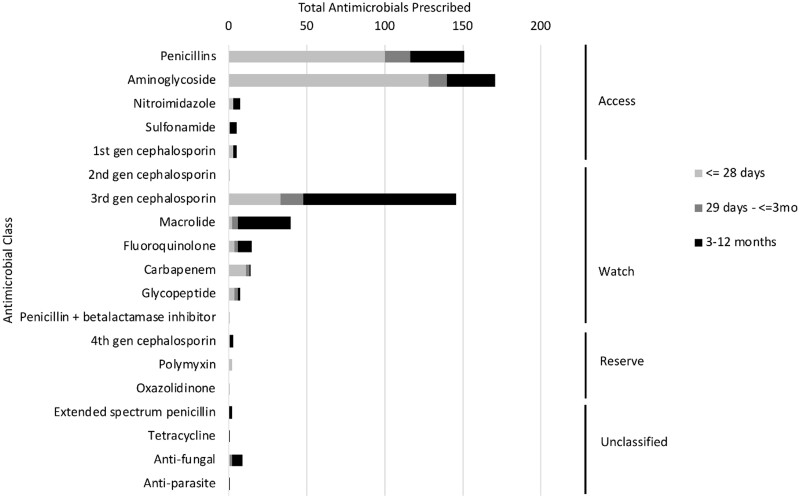
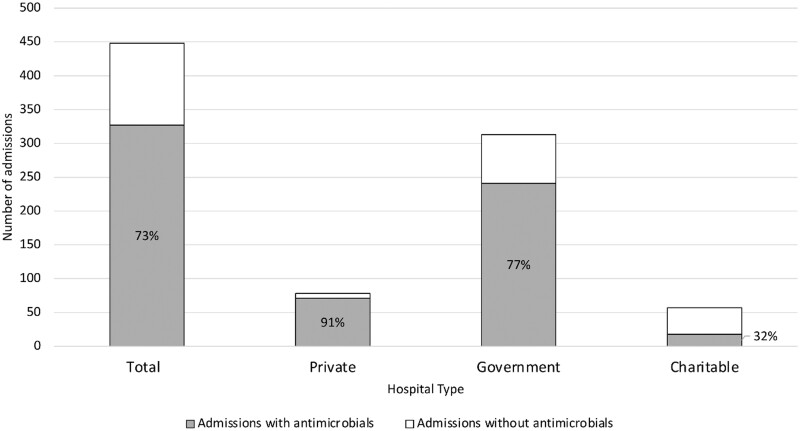
Empirical antimicrobial use is common in hospitalized infants and may contribute to antimicrobial resistance in low- and middle-income countries. In this observational birth cohort study nested in a randomized controlled trial in Dhaka, Bangladesh, inpatient antimicrobial prescription data were extracted from serious adverse event forms completed for hospitalizations of infants (0-12 months of age). The primary outcome was the proportion of inpatient admissions where systemic antimicrobials were prescribed. Infant and hospitalization-related factors associated with antimicrobial prescriptions were determined. Among 1254 infants, there were 448 admissions to 32 facilities from 2014 to 2016. Antimicrobials were prescribed in 73% of admissions with a mean antimicrobial exposure rate of 0.25 antimicrobials per day of admission [95% confidence intervals (95% CIs): 0.24-0.27]. The most common antibiotics were aminoglycosides (29%), penicillins (26%) and third-generation cephalosporins (25%). In all, 58% of antibiotics were classified as 'access', 38% 'watch' and 1% 'reserve' using the World Health Organization (WHO) Essential Medicines List classification. WHO-recommended antimicrobial regimens were used in 68% of neonatal sepsis and 9% of lower respiratory tract infection (LRTI) admissions. 'Watch' antimicrobials were used in 26% of neonatal sepsis and 76% of LRTI admissions. Compared with private facilities, antimicrobial prescription rates were lower at government [rate ratio (RR) 0.71; 95% CI: 0.61-0.83] and charitable facilities (RR 0.39; 95% CI: 0.28-0.53), after adjustment for household wealth index and parental education. Younger infant age, older maternal age and longer admission were associated with higher prescription rates. These findings highlight the need for paediatric antimicrobial stewardship programs in Bangladesh.
在住院婴儿中,经验性使用抗菌药物很常见,这可能导致中低收入国家出现抗菌药物耐药性。在这项嵌套于孟加拉国达卡的一项随机对照试验的观察性出生队列研究中,从为婴儿(0-12 个月龄)住院治疗填写的严重不良事件表中提取住院患者抗菌药物处方数据。主要结局是开具全身抗菌药物的住院患者比例。确定了与抗菌药物处方相关的婴儿和住院相关因素。在 1254 名婴儿中,有 448 名婴儿在 2014 年至 2016 年期间入住了 32 家医院。73%的住院患者开具了抗菌药物,平均入院日抗菌药物暴露率为 0.25 种/天(95%置信区间[95%CI]:0.24-0.27)。最常见的抗生素是氨基糖苷类(29%)、青霉素类(26%)和第三代头孢菌素类(25%)。所有抗生素中有 58%被归类为“必需”,38%为“酌情”,1%为“储备”,这是根据世界卫生组织(WHO)基本药物清单分类得出的。在所有新生儿败血症患者中,有 68%使用了 WHO 推荐的抗菌药物治疗方案,在所有下呼吸道感染(LRTI)患者中,有 9%使用了该方案。在新生儿败血症患者中,有 26%使用了“酌情”类抗生素,在 LRTI 患者中,有 76%使用了该类抗生素。在调整家庭财富指数和父母教育程度后,与私立医院相比,政府(比值比[RR] 0.71;95%置信区间[95%CI]:0.61-0.83)和慈善机构(RR 0.39;95%CI:0.28-0.53)医院的抗菌药物处方率较低。婴儿年龄较小、母亲年龄较大和住院时间较长与更高的处方率相关。这些发现突显了在孟加拉国开展儿科抗菌药物管理计划的必要性。