IRTA, Centre de Recerca en Sanitat Animal (CReSA, IRTA-UAB), Campus de la Universitat Autònoma de Barcelona, 08193, Bellaterra, Spain.
OIE Collaborating Centre for the Research and Control of Emerging and Re-Emerging Swine Diseases in Europe (IRTA-CReSA), Bellaterra, Barcelona, Spain.
Sci Rep. 2020 Nov 23;10(1):20354. doi: 10.1038/s41598-020-77313-6.
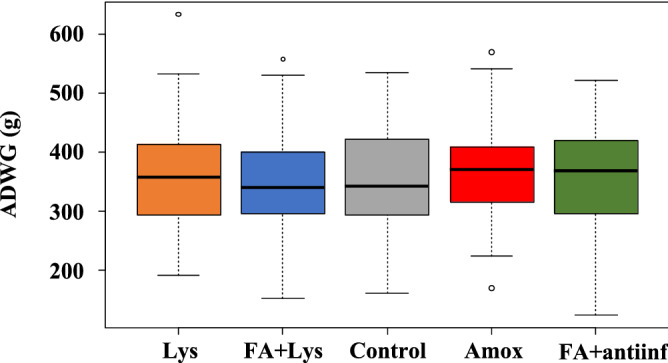
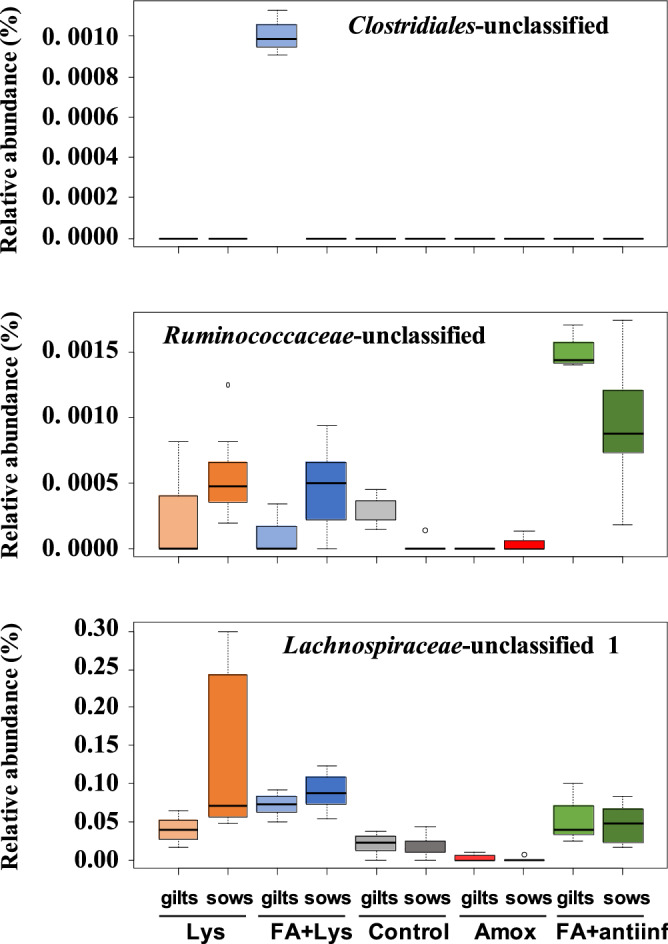
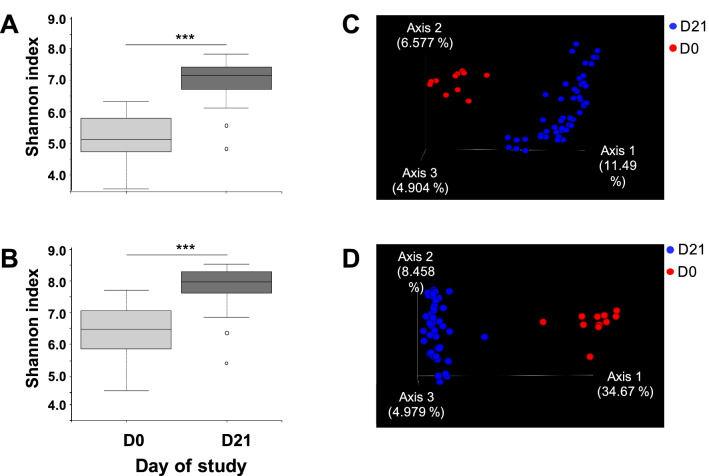
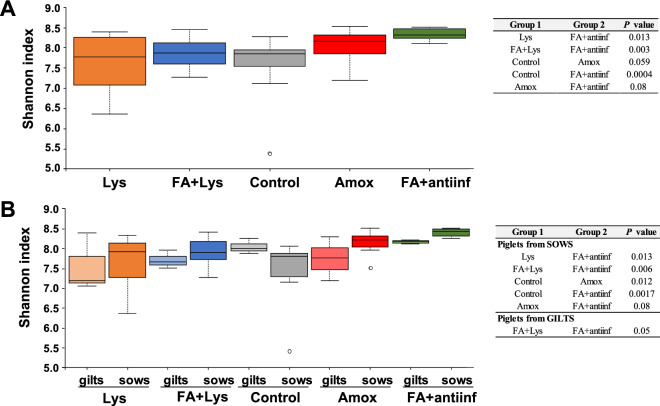
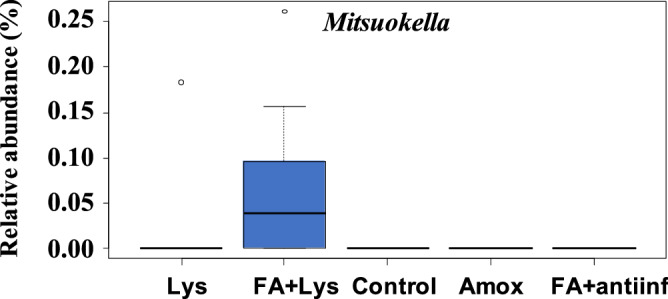
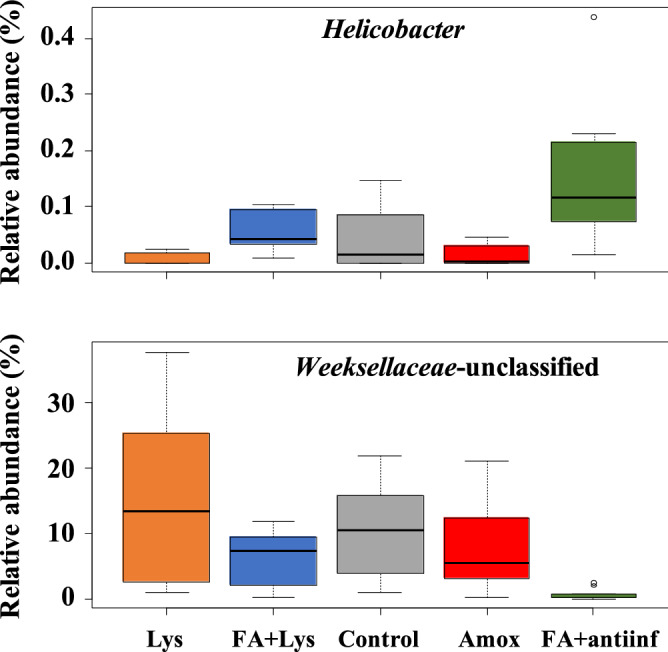
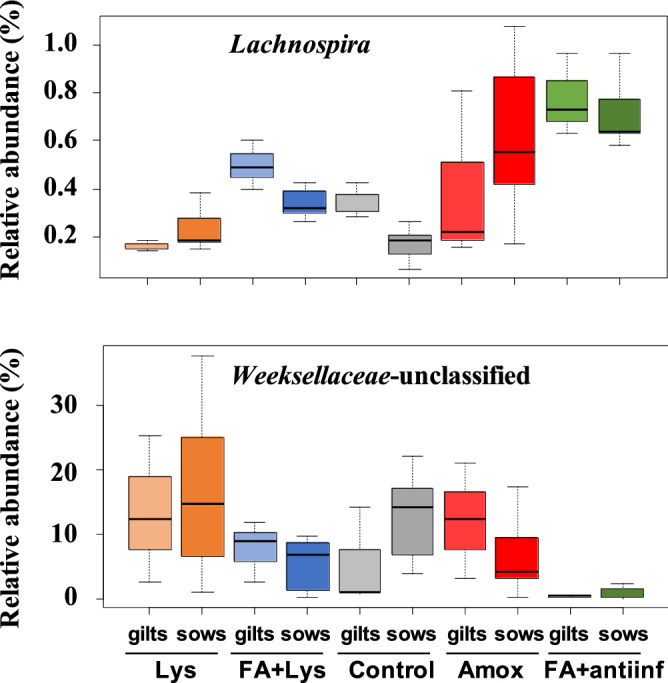
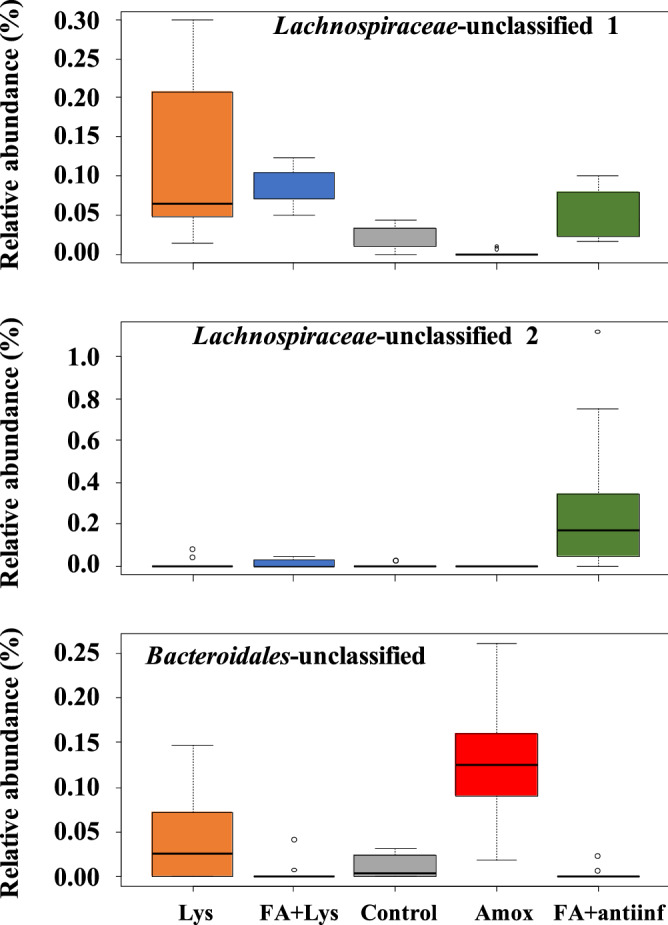
Medicated feed is a common strategy to control the occurrence of Streptococcus suis disease in swine production, but feed additives may constitute an alternative to metaphylaxis. In a farm with post-weaning S. suis disease, the following additives were tested: lysozyme (Lys), medium chain fatty acids plus lysozyme (FA + Lys), FA plus a natural anti-inflammatory (FA + antiinf) and amoxicillin (Amox). During the course of the study, FA + antiinf and Amox groups showed lower prevalence of clinical signs compatible with S. suis disease than the rest of the groups. Piglets from the FA + antiinf group showed high diversity and richness in their nasal and faecal microbiota. Diet supplements did not have major effects on the faecal microbiota, where the genus Mitsuokella was the only differentially present in the FA + Lys group. In the nasal microbiota, piglets from FA + antiinf presented higher differential abundance of a sequence variant from Ruminococcaceae and lower abundance of an unclassified genus from Weeksellaceae. In general, we detected more significant changes in the nasal than in the feacal microbiota, and found that parity of the dams affected the microbiota composition of their offspring, with piglets born to gilts exhibiting lower richness and diversity. Our results suggest that additives could be useful to control post-weaning disease when removing antimicrobials in farms.
药物饲料是控制猪生产中猪链球菌病发生的常用策略,但饲料添加剂可能构成预防措施的替代物。在一个有断奶后猪链球菌病的农场,测试了以下添加剂:溶菌酶(Lys)、中链脂肪酸加溶菌酶(FA+Lys)、FA 加天然抗炎剂(FA+antiinf)和阿莫西林(Amox)。在研究过程中,FA+antiinf 和 Amox 组的临床症状发生率低于其他组。FA+antiinf 组仔猪的鼻腔和粪便微生物群具有较高的多样性和丰富度。饮食补充剂对粪便微生物群没有重大影响,其中 Mitsuokella 属是 FA+Lys 组唯一存在差异的属。在鼻腔微生物群中,FA+antiinf 组仔猪的 Ruminococcaceae 序列变异体的丰度更高,而 Weeksellaceae 未分类属的丰度更低。总体而言,我们在鼻腔微生物群中检测到的变化比粪便微生物群更显著,并且发现母猪的胎次影响其后代的微生物群组成,与经产母猪所生的仔猪相比,初产母猪所生的仔猪的丰富度和多样性较低。我们的结果表明,在农场去除抗生素时,添加剂可能有助于控制断奶后疾病。