Ishibashi Ryoichi, Baba Yusuke, Kakinuma Kyoka, Takasaki Atsushi, Hiraga Chihiro, Harama Tomomi, Yamamoto Tetsuya, Nakamura Susumu, Koshizaka Masaya, Maezawa Yoshiro, Uchida Daigaku, Okajima Fumitaka
Department of Medicine, Division of Diabetes, Endocrinology and Metabolism, Kimitsu Chuo Hospital, Kisarazu, Chiba, Japan.
Department of Endocrinology, Hematology and Gerontology, Chiba University Graduate School of Medicine, Chiba, Japan.
Diabetes Ther. 2021 Jan;12(1):453-460. doi: 10.1007/s13300-020-00971-2. Epub 2020 Nov 25.
In Japan, several sodium glucose co-transporter 2 (SGLT2) inhibitors have been used for type 1 diabetes mellitus as an adjuvant therapy to insulin therapy; however, there are no clinical reports regarding the satisfaction of its use. Therefore, we conducted a survey among patients with type 1 diabetes undergoing treatment using an SGLT2 inhibitor.
This is a single-arm open-label prospective study including 24 patients with type 1 diabetes who were to be initiated on ipragliflozin treatment between March and August 2019. All participants provided written informed consent. They completed the Diabetes Treatment Satisfaction Questionnaire (DTSQ) for the survey and 3 months of observation after the administration of an SGLT2 inhibitor (50 mg of ipragliflozin), and changes from baseline diabetes treatment satisfaction were evaluated using modified DTSQ scores (five-step evaluation) and were analyzed.
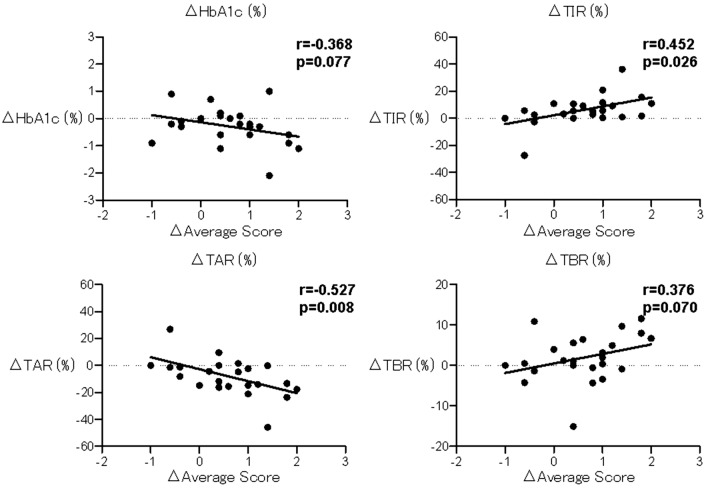
The average score for each question on DTSQ significantly increased [mean (standard deviation); 0.25 (0.25) vs 0.83 (0.77), P = 0.004]. Approximately 75% of the patients perceived an improvement in glycemic control over short periods of time. Finally, 54.2% of patients were highly satisfied and would recommend the SGLT2 inhibitor treatment [0.0 (0.0) vs. 0.92 (1.32), P < 0.001]. After the administration of ipragliflozin, reductions in body weight [24.0 (2.9) vs. 23.4 (2.9) kg/m, P = 0.002], total insulin [39.1 (12.9) vs. 34.3 (12.5) units, P = 0.013], and glycated hemoglobin [7.77 (0.97) vs. 7.40 (0.86) %, P = 0.013] were observed, without any severe side effects. Improvements in glycemic variability indexes were observed through flash glucose monitoring.
SGLT2 inhibitors may improve clinical treatment satisfaction by improving glycemic variability in patients with type 1 diabetes mellitus, while not inducing severe side effects with careful use.
This study is registered with the University Hospital Medical Information Network Clinical Trial Registry (UMIN000040487).
在日本,几种钠-葡萄糖协同转运蛋白2(SGLT2)抑制剂已被用于1型糖尿病的治疗,作为胰岛素治疗的辅助疗法;然而,关于其使用满意度尚无临床报告。因此,我们对正在使用SGLT2抑制剂进行治疗的1型糖尿病患者进行了一项调查。
这是一项单臂开放标签前瞻性研究,纳入了24例1型糖尿病患者,这些患者于2019年3月至8月开始接受依帕列净治疗。所有参与者均提供了书面知情同意书。他们完成了糖尿病治疗满意度问卷(DTSQ)用于调查,并在给予SGLT2抑制剂(50mg依帕列净)后进行了3个月的观察,使用改良的DTSQ评分(五步评估法)评估糖尿病治疗满意度相对于基线的变化,并进行分析。
DTSQ上每个问题的平均得分显著提高[平均值(标准差);0.25(0.25)对0.83(0.77),P = 0.004]。约75%的患者在短时间内感觉到血糖控制有所改善。最后,54.2%的患者高度满意并会推荐SGLT2抑制剂治疗[0.0(0.0)对0.92(1.32),P < 0.001]。给予依帕列净后,观察到体重[24.0(2.9)对23.4(2.9)kg/m,P = 0.002]、总胰岛素用量[39.1(12.9)对34.3(12.5)单位,P = 0.013]和糖化血红蛋白[7.77(0.97)对7.40(0.86)%,P = 0.013]均有所降低,且无任何严重副作用。通过动态血糖监测观察到血糖变异性指标有所改善。
SGLT2抑制剂可能通过改善1型糖尿病患者的血糖变异性来提高临床治疗满意度,同时谨慎使用不会诱发严重副作用。
本研究已在大学医院医学信息网络临床试验注册中心(UMIN000040487)注册。