Baba Yusuke, Ishibashi Ryoichi, Takasaki Atsushi, Ito Chiho, Watanabe Atsuko, Tokita Megumi, Meguro Miwako, Harama Tomomi, Hirayama Kiichi, Yamamoto Tetsuya, Nakamura Susumu, Koshizaka Masaya, Maezawa Yoshiro, Uchida Daigaku, Okajima Fumitaka
Department of Medicine, Division of Diabetes, Endocrinology and Metabolism, Kimitsu Chuo Hospital, Chiba, Japan.
Department of Endocrinology, Hematology and Gerontology, Chiba University Graduate School of Medicine, Chiba, Japan.
Diabetes Ther. 2021 May;12(5):1415-1427. doi: 10.1007/s13300-021-01047-5. Epub 2021 Mar 18.
Sodium glucose co-transporter 2 (SGLT2) inhibitors are widely used in the management of type 2 diabetes mellitus; they prevent cardiovascular events and reduce fat mass. However, little is known about the effects of SGLT2 inhibitors on type 1 diabetes mellitus as an adjuvant to insulin therapy. Therefore, we aimed to elucidate the effects of SGLT2 inhibitors on body composition of patients with type 1 diabetes mellitus and assess blood glucose variability.
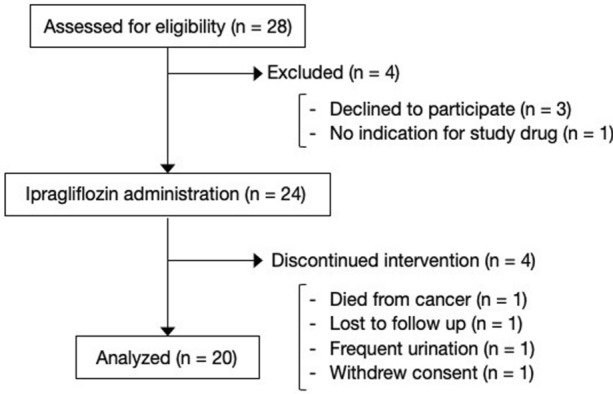
A single-center, single-arm, prospective, interventional study was performed on Japanese patients with type 1 diabetes mellitus who were not administered SGLT2 inhibitors prior to this study. These patients were equipped with flash glucose monitoring (FGM) and administered ipragliflozin 50 mg daily. Body composition was evaluated using bioelectrical impedance analysis, and glycemic variabilities were assessed using FGM before and after SGLT2 inhibitor treatment.
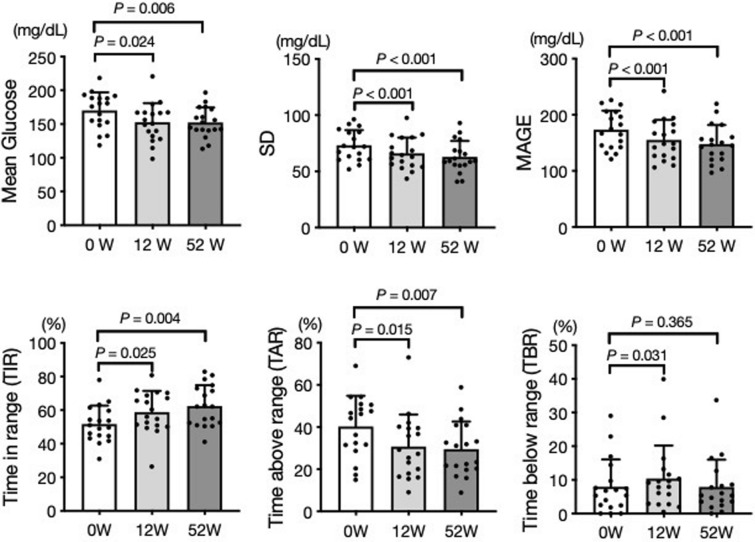
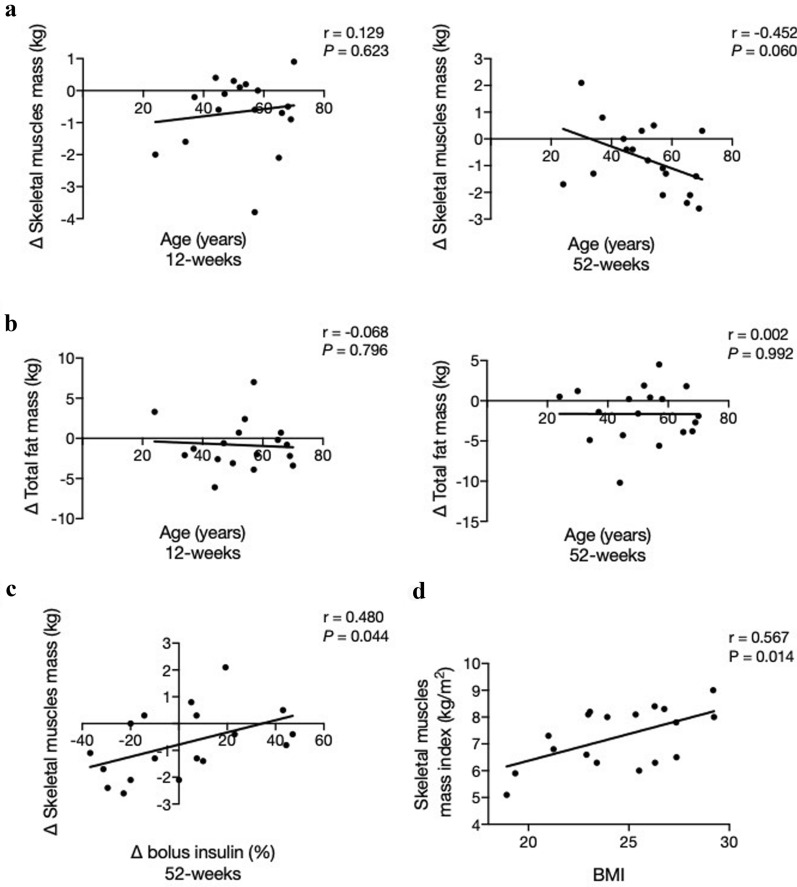
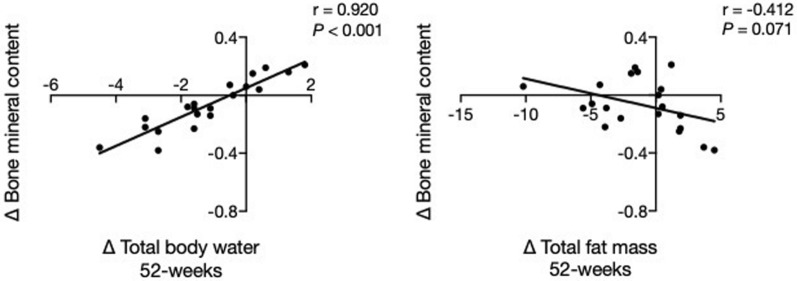
After 52 weeks of treatment, the total fat mass tended to be reduced (- 9.10% from baseline, P = 0.098). In addition, skeletal muscle mass also decreased (- 2.98% from baseline, P = 0.023). Although the basal insulin dose was reduced, SGLT2 inhibitors decreased HbA1c levels. FGM revealed that glycemic variabilities were also reduced, and time within the target glucose range increased (51.7% vs. 62.5%, P = 0.004).
SGLT2 inhibitors have beneficial effects on glycemic variabilities and fat mass reductions in patients with type 1 diabetes mellitus. However, loss of skeletal muscle is a major concern; therefore, caution is required when using SGLT2 inhibitors in lean patients with type 1 diabetes mellitus.
University Hospital Medical Information Network Clinical Trial Registry (UMIN000042407).
钠-葡萄糖协同转运蛋白2(SGLT2)抑制剂广泛用于2型糖尿病的管理;它们可预防心血管事件并减少脂肪量。然而,关于SGLT2抑制剂作为胰岛素治疗辅助药物对1型糖尿病的影响知之甚少。因此,我们旨在阐明SGLT2抑制剂对1型糖尿病患者身体成分的影响,并评估血糖变异性。
对本研究之前未使用SGLT2抑制剂的日本1型糖尿病患者进行了一项单中心、单臂、前瞻性干预研究。这些患者配备了动态葡萄糖监测(FGM),并每天服用50mg依帕列净。使用生物电阻抗分析评估身体成分,并在SGLT2抑制剂治疗前后使用FGM评估血糖变异性。
治疗52周后,总脂肪量有减少趋势(较基线减少9.10%,P = 0.098)。此外,骨骼肌量也减少了(较基线减少2.98%,P = 0.023)。虽然基础胰岛素剂量减少,但SGLT2抑制剂降低了糖化血红蛋白(HbA1c)水平。FGM显示血糖变异性也降低了,目标血糖范围内的时间增加了(51.7%对62.5%,P = 0.004)。
SGLT2抑制剂对1型糖尿病患者的血糖变异性和脂肪量减少有有益作用。然而,骨骼肌流失是一个主要问题;因此,在瘦的1型糖尿病患者中使用SGLT2抑制剂时需要谨慎。
大学医院医学信息网络临床试验注册中心(UMIN000042407)。