Li Jie, Ye Guang-Ying, Liu Hai-Lin, Wang Zai-Hua
Guangdong Provincial Key Lab of Ornamental Plant Germplasm Innovation and Utilization, Environmental Horticulture Research Institute, Guangdong Academy of Agricultural Sciences, Guangzhou, China.
PLoS One. 2020 Nov 25;15(11):e0242591. doi: 10.1371/journal.pone.0242591. eCollection 2020.
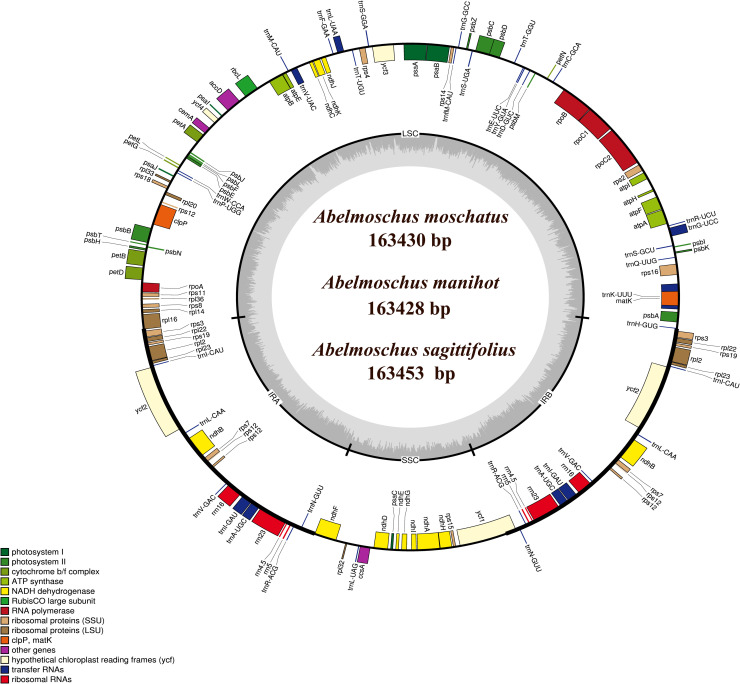
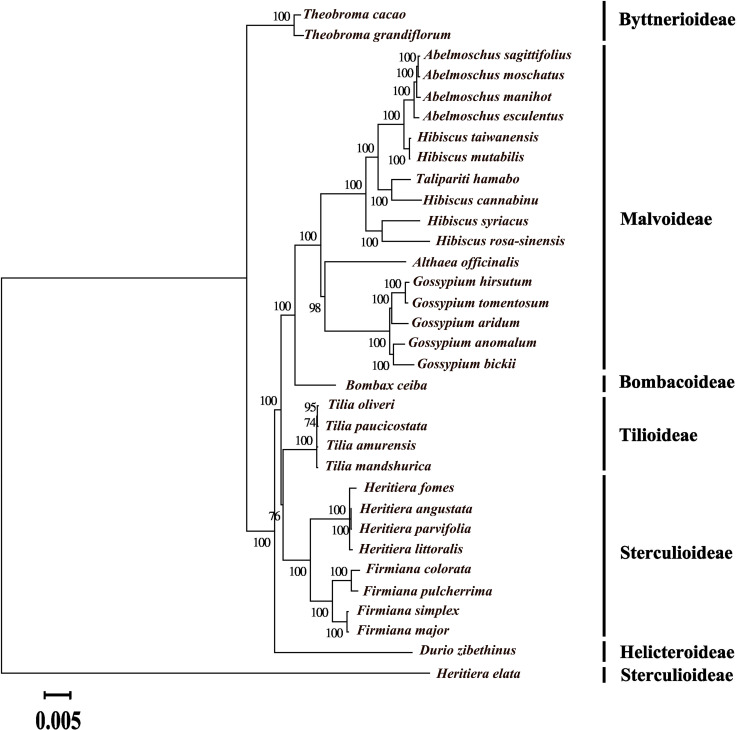
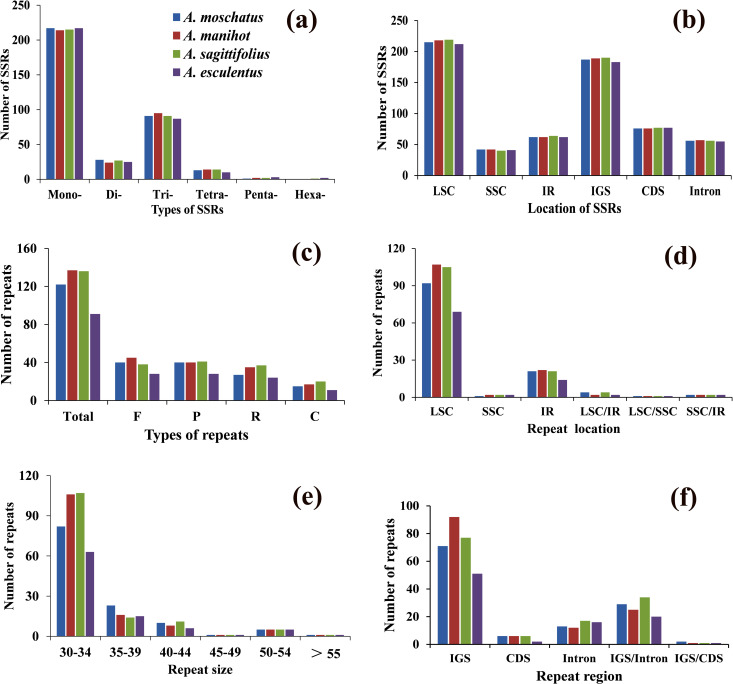
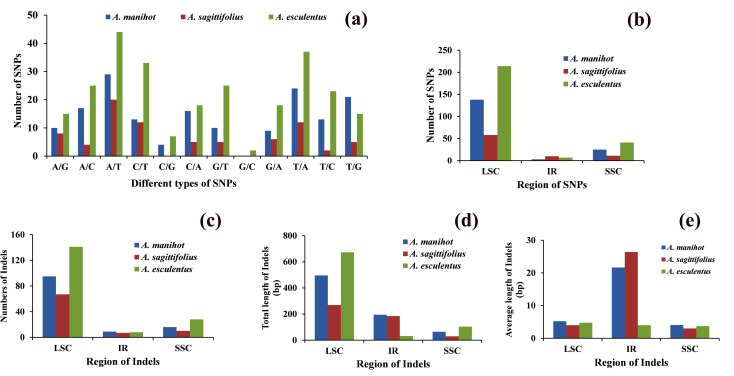
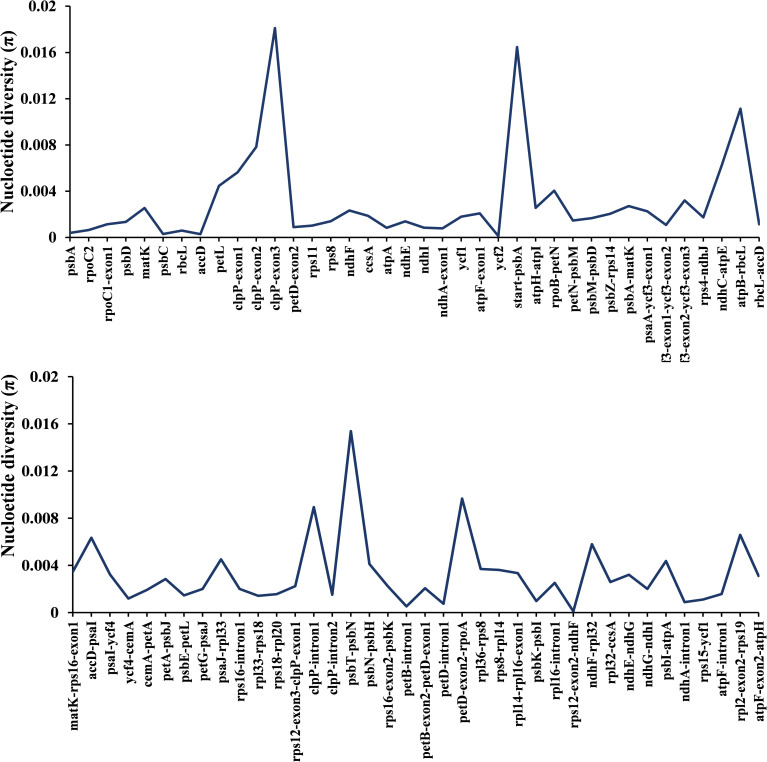
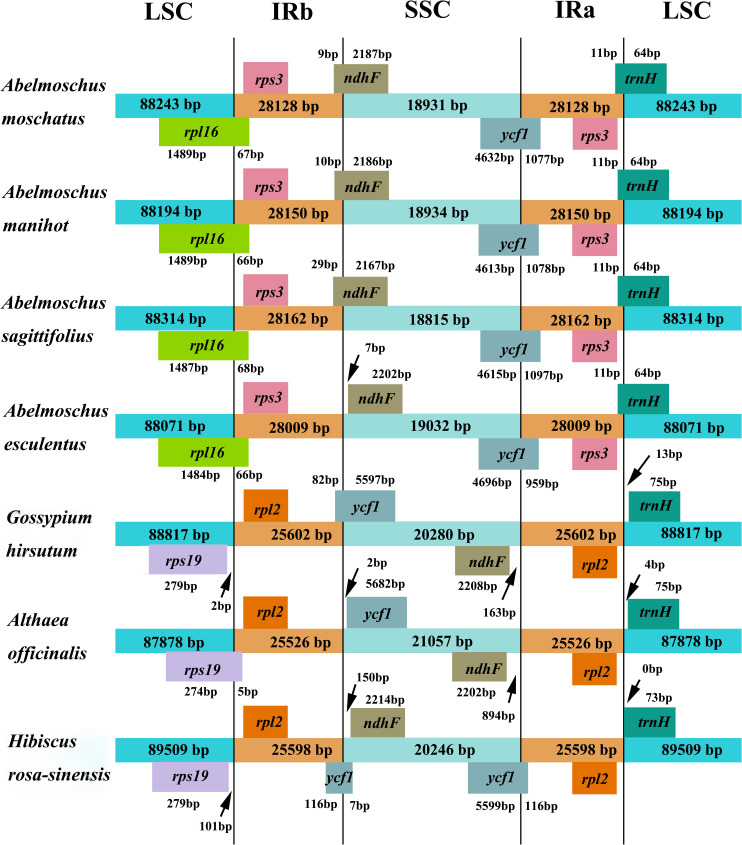
Abelmoschus is an economically and phylogenetically valuable genus in the family Malvaceae. Owing to coexistence of wild and cultivated form and interspecific hybridization, this genus is controversial in systematics and taxonomy and requires detailed investigation. Here, we present whole chloroplast genome sequences and annotation of three important species: A. moschatus, A. manihot and A. sagittifolius, and compared with A. esculentus published previously. These chloroplast genome sequences ranged from 163121 bp to 163453 bp in length and contained 132 genes with 87 protein-coding genes, 37 transfer RNA and 8 ribosomal RNA genes. Comparative analyses revealed that amino acid frequency and codon usage had similarity among four species, while the number of repeat sequences in A. esculentus were much lower than other three species. Six categories of simple sequence repeats (SSRs) were detected, but A. moschatus and A. manihot did not contain hexanucleotide SSRs. Single nucleotide polymorphisms (SNPs) of A/T, T/A and C/T were the largest number type, and the ratio of transition to transversion was from 0.37 to 0.55. Abelmoschus species showed relatively independent inverted-repeats (IR) boundary traits with different boundary genes compared with the other related Malvaceae species. The intergenic spacer regions had more polymorphic than protein-coding regions and intronic regions, and thirty mutational hotpots (≥200 bp) were identified in Abelmoschus, such as start-psbA, atpB-rbcL, petD-exon2-rpoA, clpP-intron1 and clpP-exon2.These mutational hotpots could be used as polymorphic markers to resolve taxonomic discrepancies and biogeographical origin in genus Abelmoschus. Moreover, phylogenetic analysis of 33 Malvaceae species indicated that they were well divided into six subfamilies, and genus Abelmoschus was a well-supported clade within genus Hibiscus.
黄秋葵属是锦葵科中一个具有经济价值和系统发育价值的属。由于野生和栽培形态的共存以及种间杂交,该属在系统分类学上存在争议,需要进行详细研究。在此,我们展示了三种重要物种(黄葵、木槿叶黄秋葵和箭叶黄秋葵)的完整叶绿体基因组序列及注释,并与之前发表的黄秋葵进行了比较。这些叶绿体基因组序列长度在163121 bp至163453 bp之间,包含132个基因,其中有87个蛋白质编码基因、37个转运RNA基因和8个核糖体RNA基因。比较分析表明,这四个物种的氨基酸频率和密码子使用具有相似性,而黄秋葵中的重复序列数量远低于其他三个物种。检测到六种简单序列重复(SSR)类型,但黄葵和木槿叶黄秋葵不含六核苷酸SSR。A/T、T/A和C/T的单核苷酸多态性(SNP)是数量最多的类型,转换与颠换的比率在0.37至0.55之间。与其他相关锦葵科物种相比,黄秋葵属物种显示出相对独立的反向重复(IR)边界特征,且边界基因不同。基因间隔区比蛋白质编码区和内含子区具有更多的多态性,在黄秋葵属中鉴定出30个突变热点(≥200 bp),如start-psbA、atpB-rbcL、petD-exon2-rpoA、clpP-intron1和clpP-exon2。这些突变热点可作为多态性标记,以解决黄秋葵属的分类差异和生物地理起源问题。此外,对33种锦葵科物种的系统发育分析表明,它们被很好地分为六个亚科,黄秋葵属是木槿属内一个得到充分支持的分支。