Blinova Ekaterina, Buzdin Anton, Enikeev Dmitry, Roshchin Dmitry, Suntsova Maria, Samyshina Elena, Drobyshev Aleksey, Deryabina Olga, Demura Tatiana, Blinov Dmitry, Shich Evgenia, Barakat Haydar, Borger Pieter, Merinov Dmitrij, Kachmazov Aleksandr, Serebrianyi Stanislav, Tumutolova Oxana, Potoldykova Natalia, Zhdanov Pavel, Grigoryan Vagarshak, Perepechin Dmitrij
Department of Clinical Anatomy and Operative Surgery, Department of Pathological Anatomy, Institute for Urology and Reproductive Health, Sechenov University, 119991 Moscow, Russia.
Laboratory of Bioinformatics, Institute for Personalized Medicine, Sechenov University, 119991 Moscow, Russia.
Life (Basel). 2020 Nov 23;10(11):305. doi: 10.3390/life10110305.
bladder cancer is one of the most common urinary tract malignancies. Establishment of robust predictors of disease progression and outcome is important for personalizing treatment of non-muscular invasive bladder carcinoma (NMIBC). In this study we evaluated association of PD-L1 expression with other prognostic biomarkers, such as expression of miRNA-145 and miRNA-200a, gene expression, and mutation status in tissue specimens of the luminal subtype of newly diagnosed high and low grade NMIBC.
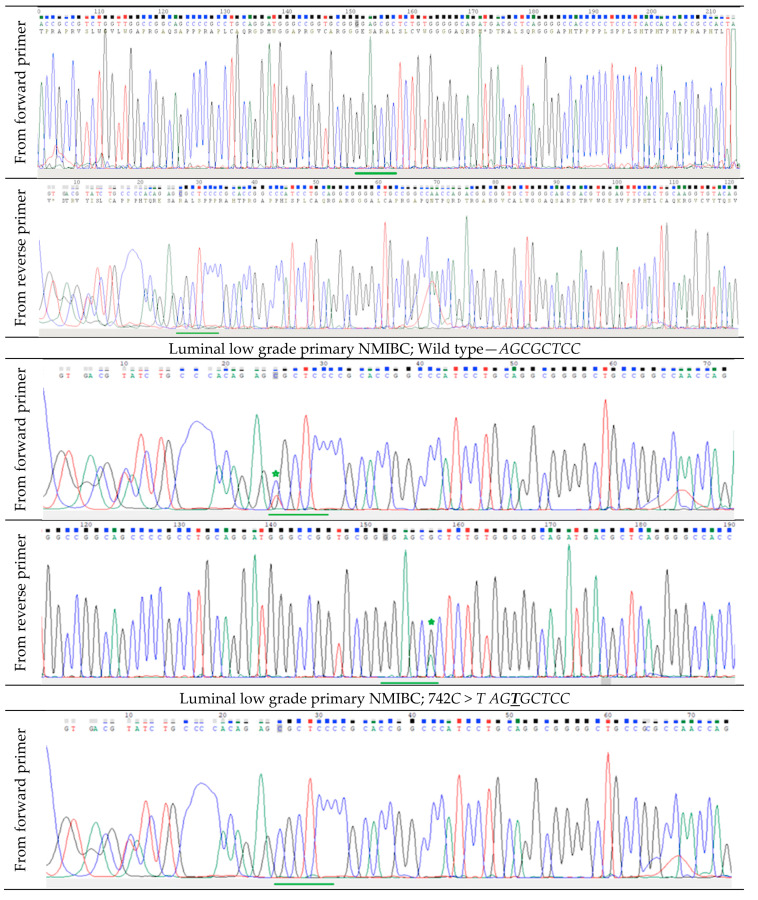
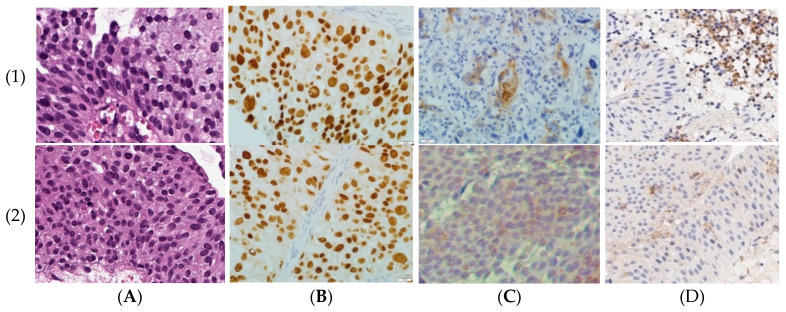
twenty patients with primary luminal NMIBC were enrolled in the study. Tumor grade and risk level were determined in accordance with European Organization for Research and Treatment of Cancer (EORTC) guidelines and World Health Organization (WHO) classification. Neoplasm molecular subtype and PD-L1 expression level were assessed by immunohistochemistry. We used real-time PCR to evaluate the expression of microRNAs and . We detected hotspot mutations in codons 248 and 249 by Sanger sequencing.
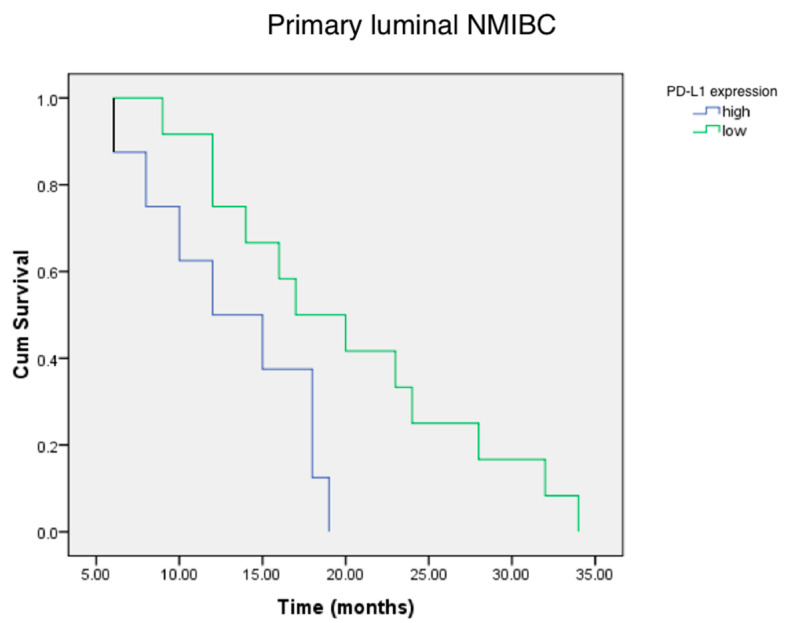
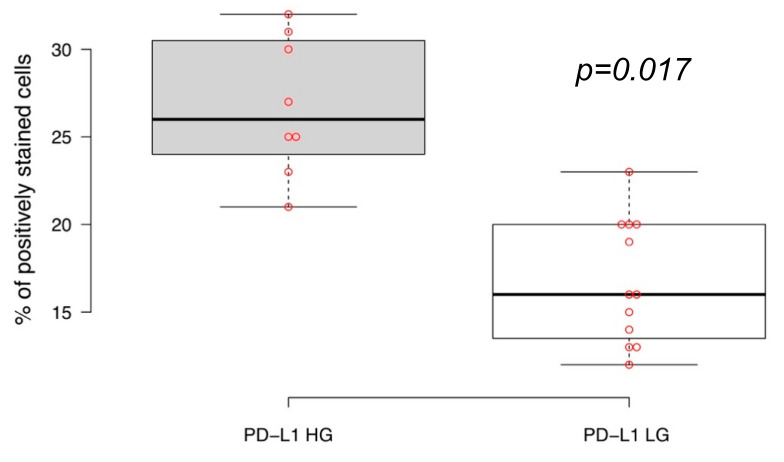
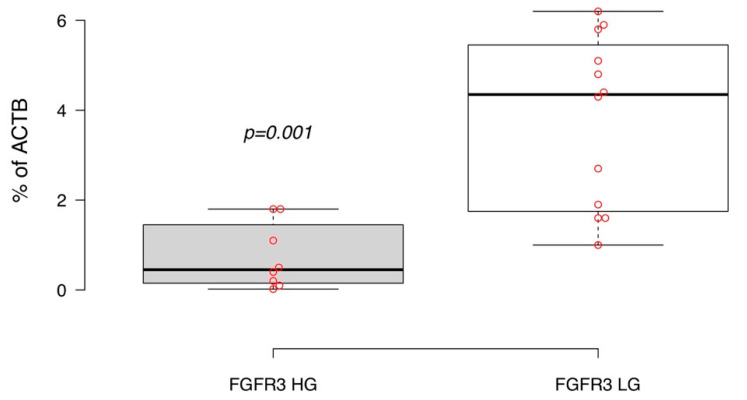
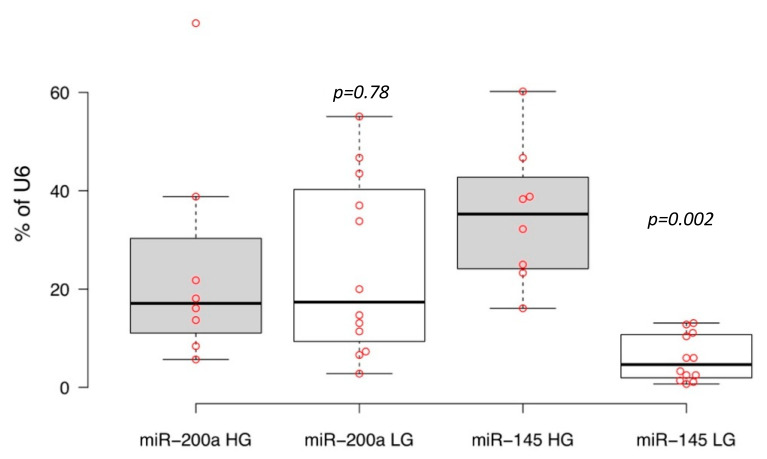
high grade primary luminal NMIBC showed comparatively higher expression of PD-L1 and microRNA-145 than a low grade tumor, whereas the latter had a higher expression and hotspot mutation rate. The tumor grade (HR = 571.72 [11.03-2.96] = 0.002), PD-L1 expression (HR = 2.33 [0.92-1.92] = 0.012), and expression (HR = 0.08 [0.17-0.42] = 0.003) were associated with relapse-free survival.
tumor grade in association with PD-L1 and expression can be considered as a complex predictor for primary luminal NMIBC progression.
膀胱癌是最常见的泌尿系统恶性肿瘤之一。建立可靠的疾病进展和预后预测指标对于非肌层浸润性膀胱癌(NMIBC)的个体化治疗至关重要。在本研究中,我们评估了PD-L1表达与其他预后生物标志物的相关性,如miRNA-145和miRNA-200a的表达、基因表达以及新诊断的高、低级别NMIBC管腔亚型组织标本中的突变状态。
20例原发性管腔型NMIBC患者纳入本研究。根据欧洲癌症研究与治疗组织(EORTC)指南和世界卫生组织(WHO)分类确定肿瘤分级和风险水平。通过免疫组织化学评估肿瘤分子亚型和PD-L1表达水平。我们使用实时PCR评估微小RNA的表达。通过Sanger测序检测密码子248和249中的热点突变。
高级别原发性管腔型NMIBC显示PD-L1和microRNA-145的表达相对高于低级别肿瘤,而后者具有更高的表达和热点突变率。肿瘤分级(HR = 571.72 [11.03 - 2.96],P = 0.002)、PD-L1表达(HR = 2.33 [0.92 - 1.92],P = 0.012)和表达(HR = 0.08 [0.17 - 0.42],P = 0.003)与无复发生存相关。
肿瘤分级与PD-L1和表达相关,可被视为原发性管腔型NMIBC进展的综合预测指标。