Univ. Bordeaux, INRAE, Bordeaux INP, NutriNeuro, UMR 1286, F-33000, Bordeaux, France.
Ann Romney Center for Neurologic Diseases, Department of Neurology, Brigham and Women´s Hospital, Harvard Medical School, Boston, MA, USA.
Nat Commun. 2020 Nov 30;11(1):6133. doi: 10.1038/s41467-020-19861-z.
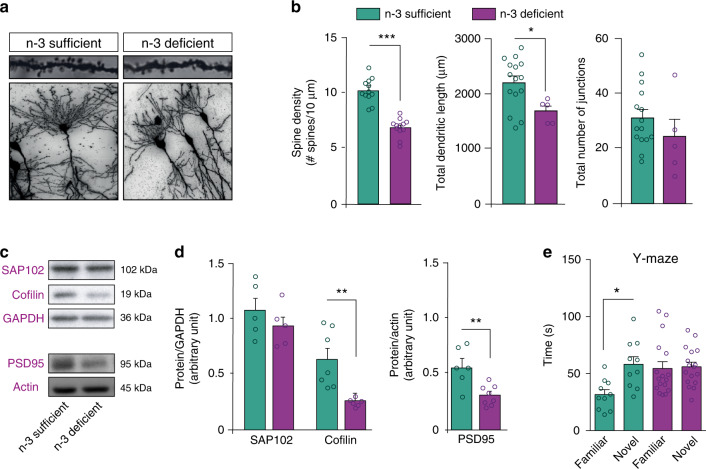
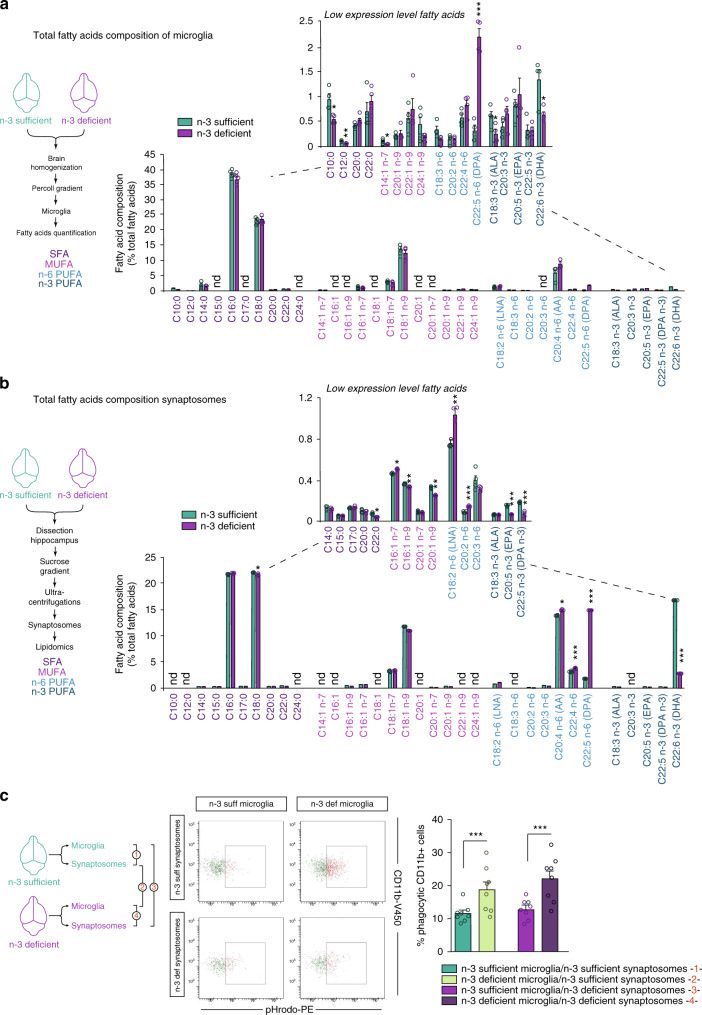
Omega-3 fatty acids (n-3 PUFAs) are essential for the functional maturation of the brain. Westernization of dietary habits in both developed and developing countries is accompanied by a progressive reduction in dietary intake of n-3 PUFAs. Low maternal intake of n-3 PUFAs has been linked to neurodevelopmental diseases in Humans. However, the n-3 PUFAs deficiency-mediated mechanisms affecting the development of the central nervous system are poorly understood. Active microglial engulfment of synapses regulates brain development. Impaired synaptic pruning is associated with several neurodevelopmental disorders. Here, we identify a molecular mechanism for detrimental effects of low maternal n-3 PUFA intake on hippocampal development in mice. Our results show that maternal dietary n-3 PUFA deficiency increases microglia-mediated phagocytosis of synaptic elements in the rodent developing hippocampus, partly through the activation of 12/15-lipoxygenase (LOX)/12-HETE signaling, altering neuronal morphology and affecting cognitive performance of the offspring. These findings provide a mechanistic insight into neurodevelopmental defects caused by maternal n-3 PUFAs dietary deficiency.
ω-3 脂肪酸(n-3PUFAs)对大脑的功能成熟至关重要。在发达国家和发展中国家,饮食习惯的西化伴随着饮食中 n-3PUFAs 的摄入量逐渐减少。母亲摄入 n-3PUFAs 不足与人类的神经发育疾病有关。然而,n-3PUFAs 缺乏介导的影响中枢神经系统发育的机制还知之甚少。活性小胶质细胞吞噬突触调节大脑发育。突触修剪受损与几种神经发育障碍有关。在这里,我们确定了低母源性 n-3PUFA 摄入对小鼠海马发育的不利影响的分子机制。我们的结果表明,母体饮食 n-3PUFA 缺乏会增加啮齿动物发育中的海马体中小胶质细胞介导的突触成分的吞噬作用,部分是通过激活 12/15-脂氧合酶(LOX)/12-HETE 信号通路,改变神经元形态,并影响后代的认知表现。这些发现为母体 n-3PUFAs 饮食缺乏引起的神经发育缺陷提供了机制上的见解。