Long Chunhong, Yu Jin
Beijing Computational Science Research Center, Beijing 100193, China.
Entropy (Basel). 2018 Apr 23;20(4):306. doi: 10.3390/e20040306.
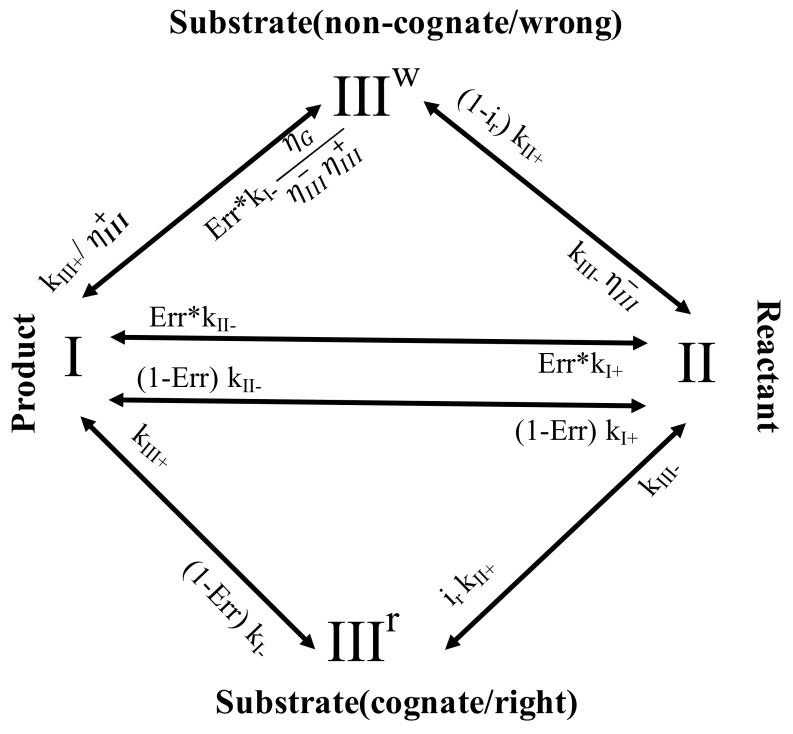
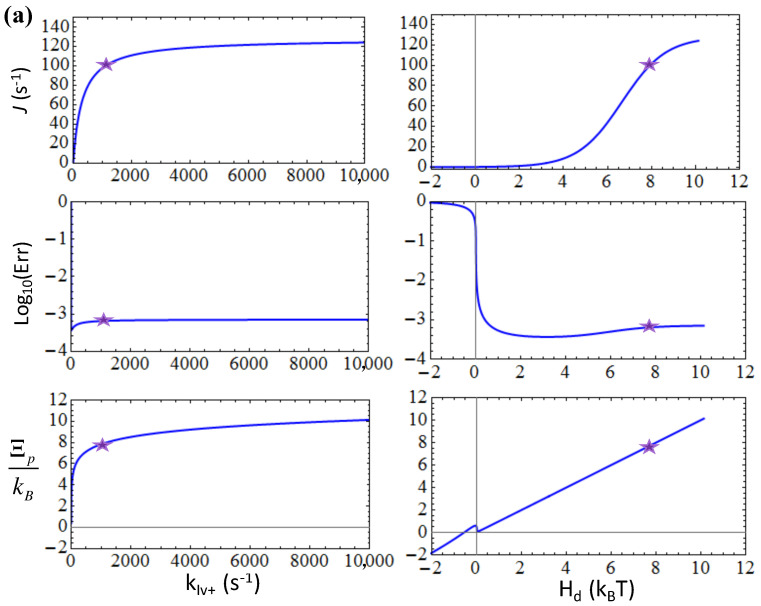
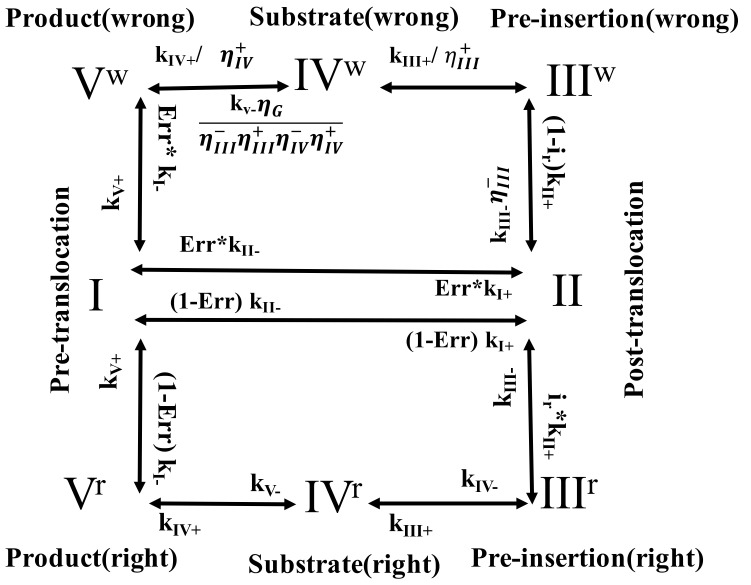
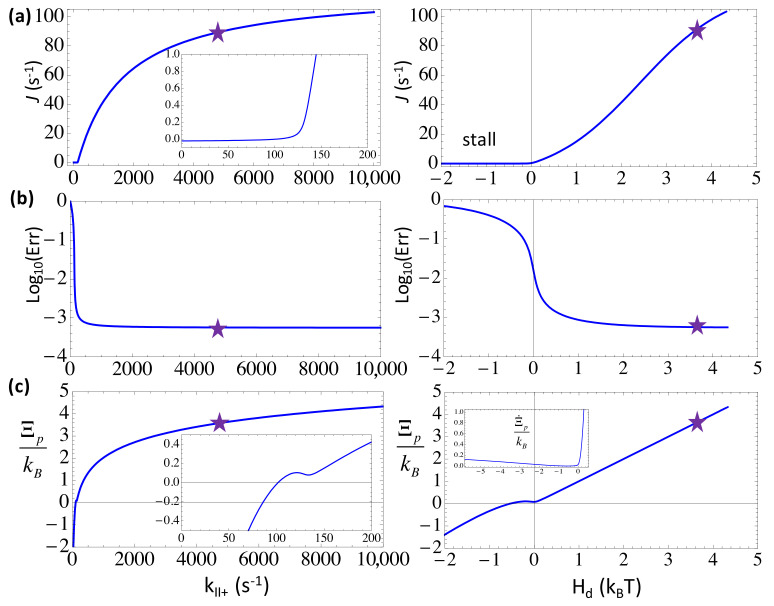
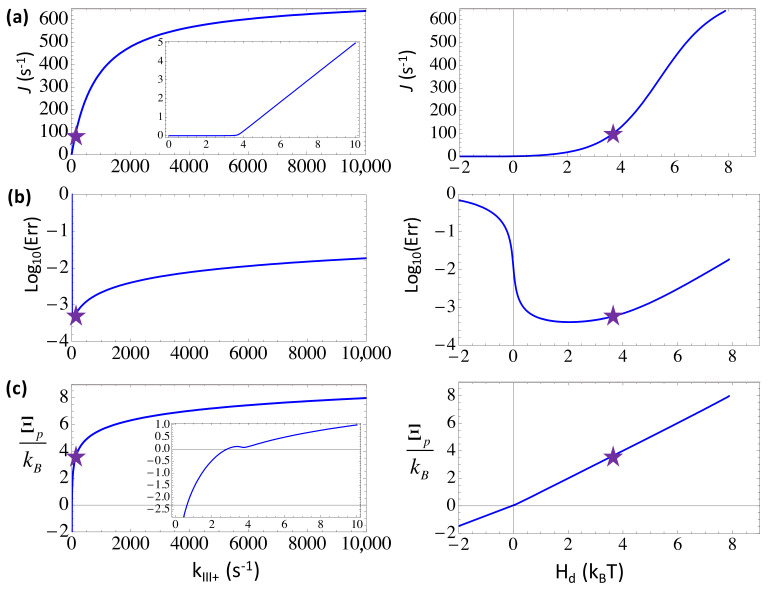
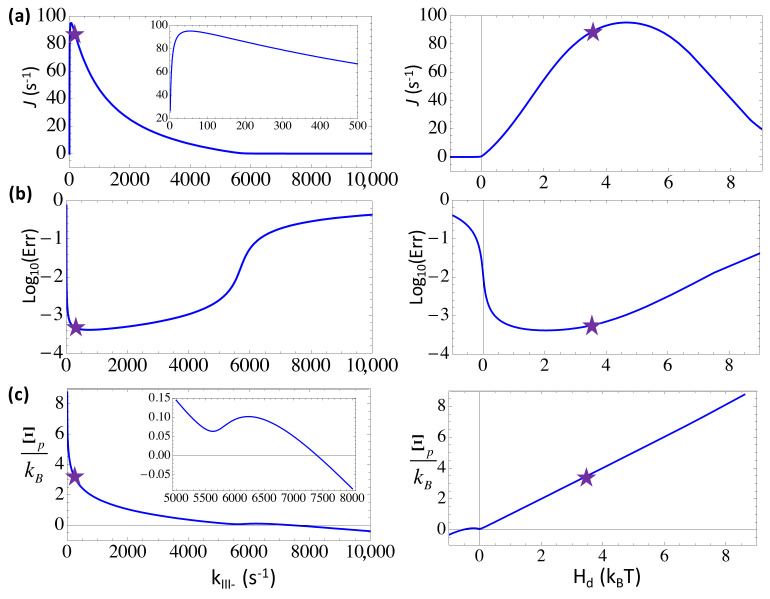
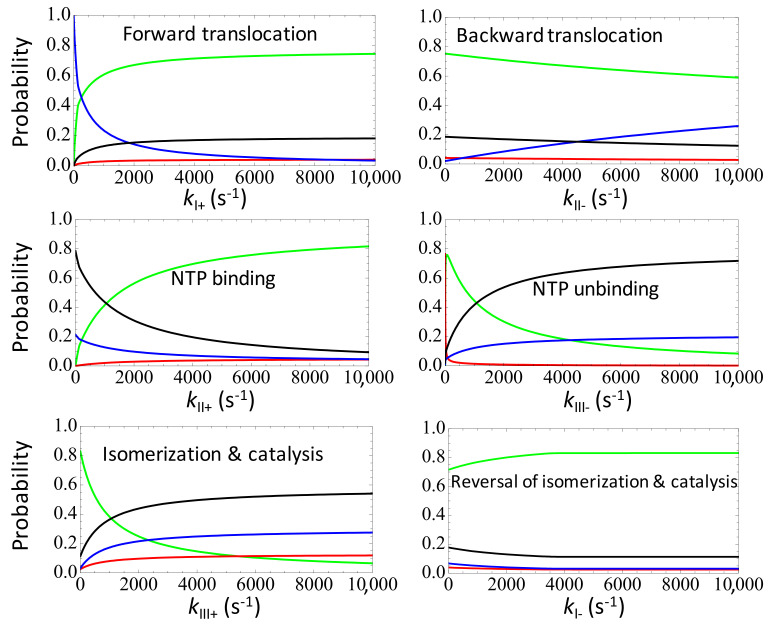
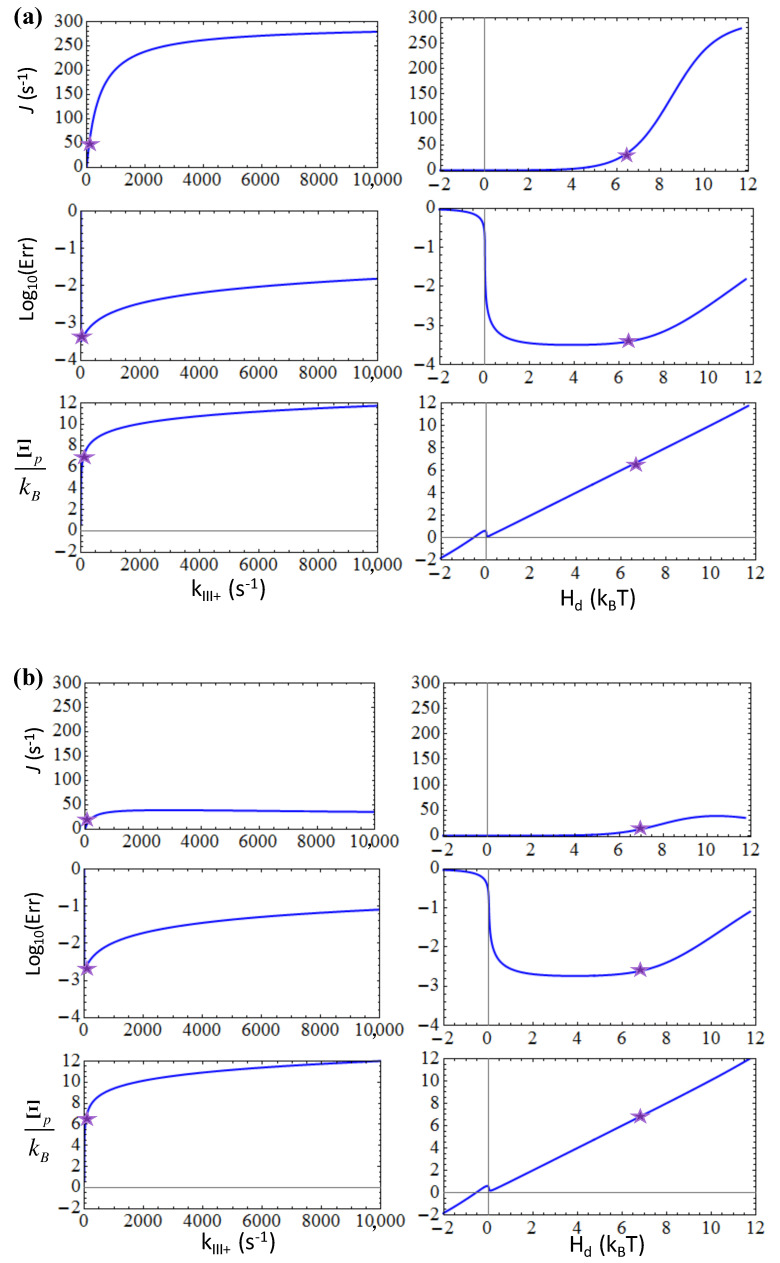
High fidelity gene transcription and replication require kinetic discrimination of nucleotide substrate species by RNA and DNA polymerases under chemical non-equilibrium conditions. It is known that sufficiently large free energy driving force is needed for each polymerization or elongation cycle to maintain far-from-equilibrium to achieve low error rates. Considering that each cycle consists of multiple kinetic steps with different transition rates, one expects that the kinetic modulations by polymerases are not evenly conducted at each step. We show that accelerations at different kinetic steps impact quite differently to the overall elongation characteristics. In particular, for forward transitions that discriminate cognate and non-cognate nucleotide species to serve as kinetic selection checkpoints, the transition cannot be accelerated too quickly nor retained too slowly to obtain low error rates, as balancing is needed between the nucleotide selectivity and the non-equilibrium driving. Such a balance is not the same as the speed-accuracy tradeoff in which high accuracy is always obtained at sacrifice of speed. For illustration purposes, we used three-state and five-state models of nucleotide addition in the polymerase elongation and show how the non-equilibrium steady state characteristics change upon variations on stepwise forward or backward kinetics. Notably, by using the multi-step elongation schemes and parameters from T7 RNA polymerase transcription elongation, we demonstrate that individual transitions serving as selection checkpoints need to proceed at moderate rates in order to sustain the necessary non-equilibrium drives as well as to allow nucleotide selections for an optimal error control. We also illustrate why rate-limiting conformational transitions of the enzyme likely play a significant role in the error reduction.
高保真基因转录和复制需要RNA和DNA聚合酶在化学非平衡条件下对核苷酸底物种类进行动力学区分。已知每个聚合或延伸循环需要足够大的自由能驱动力来维持远离平衡状态,以实现低错误率。考虑到每个循环由具有不同转换速率的多个动力学步骤组成,人们预期聚合酶的动力学调节在每个步骤中并非均匀进行。我们表明,不同动力学步骤的加速对整体延伸特性的影响差异很大。特别是,对于区分同源和非同源核苷酸种类作为动力学选择检查点的正向转换,转换不能太快加速也不能太慢保留以获得低错误率,因为在核苷酸选择性和非平衡驱动之间需要平衡。这种平衡与速度-准确性权衡不同,在速度-准确性权衡中,总是以牺牲速度为代价获得高精度。为了说明目的,我们在聚合酶延伸中使用了核苷酸添加的三态和五态模型,并展示了逐步正向或反向动力学变化时非平衡稳态特征如何变化。值得注意的是,通过使用来自T7 RNA聚合酶转录延伸的多步延伸方案和参数,我们证明作为选择检查点的单个转换需要以适度的速率进行,以维持必要的非平衡驱动,并允许进行核苷酸选择以实现最佳错误控制。我们还说明了为什么酶的限速构象转变可能在减少错误中起重要作用。