Kajzer Anita, Ceglarska Magdalena, Sura Nika, Kajzer Wojciech, Borowski Tomasz, Tarnowski Michał, Pilecki Zbigniew
Department of Biomaterials and Medical Devices Engineering, Faculty of Biomedical Engineering, Silesian University of Technology, 41-800 Zabrze, Poland.
Synergia Science Club, Faculty of Biomedical Engineering, Silesian University of Technology, 41-800 Zabrze, Poland.
Materials (Basel). 2020 Dec 1;13(23):5484. doi: 10.3390/ma13235484.
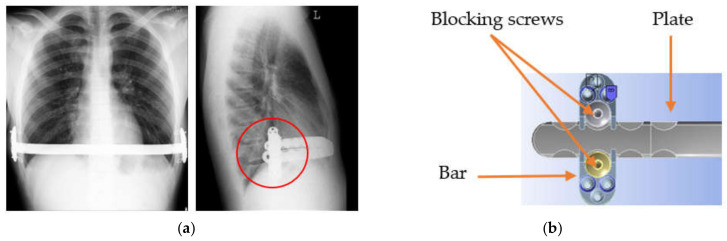
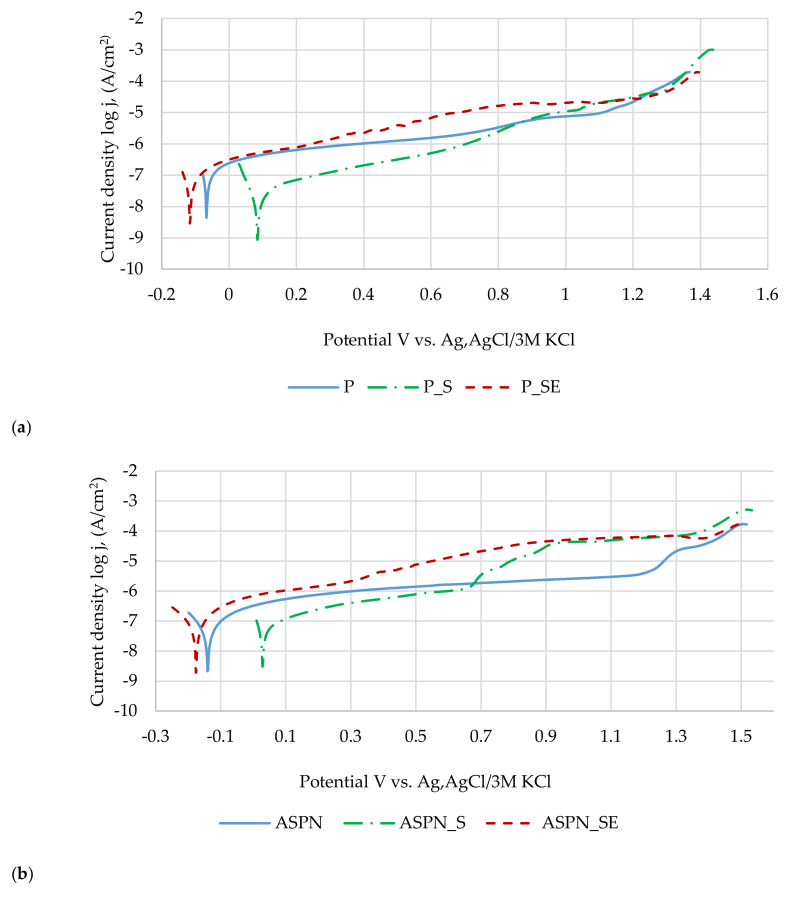
Harmful lesions occur in the body around multielement stabilisers made of AISI 316 LVM (Low Vacuum Melted) steel, caused by products of pitting, fretting or crevice corrosion. Preventing the effect is possible by modifying the surface of the steel implants. Therefore, the goal of the paper is the comparison of the mechanical and physiochemical properties of plates for treating deformations of the anterior chest wall made of AISI 316 LVM steel, subjected to diffusion and sterilisation processes and exposed to Ringer's solution. The surface of the implants was subjected to electrochemical polishing, chemical passivation and, in order to modify their properties, nitrocarburised and nitrided diffusion layers were created on selected stabilisers under glow discharge conditions with the use of an active screen at a temperature of 420 °C, over 60 min. The conducted studies involved the examination of the microstructure of the formed layers, surface roughness testing, analysis of contact angles and surface free energy, examination of resistance to pitting and crevice corrosion and examination of nanohardness. On the basis of the results of the conducted studies, it was established that the most advantageous set of properties after sterilisation and exposure to Ringer's solution was displayed by implants with a formed diffusion nitrocarburised layer.
在由AISI 316 LVM(低真空熔炼)钢制成的多元素稳定剂周围的身体部位会出现有害损伤,这些损伤是由点蚀、微动或缝隙腐蚀产物引起的。通过对钢植入物表面进行改性可以防止这种影响。因此,本文的目的是比较AISI 316 LVM钢制成的用于治疗前胸壁变形的钢板在经过扩散和灭菌处理并暴露于林格氏液后的力学和物理化学性能。植入物表面经过了电化学抛光、化学钝化,并且为了改变其性能,在420℃的温度下,使用活性屏在辉光放电条件下对选定的稳定剂进行了60多分钟的氮碳共渗和渗氮扩散层处理。所进行的研究包括对形成层的微观结构检查、表面粗糙度测试、接触角和表面自由能分析、点蚀和缝隙腐蚀抗性检查以及纳米硬度检查。根据所进行研究的结果,确定在经过灭菌和暴露于林格氏液后,具有形成的扩散氮碳共渗层的植入物表现出最有利的性能组合。