• 文献检索
  • 文档翻译
  • 深度研究
  • 学术资讯
  • Suppr Zotero 插件Zotero 插件
  • 邀请有礼
  • 套餐&价格
  • 历史记录
应用&插件
Suppr Zotero 插件Zotero 插件浏览器插件Mac 客户端Windows 客户端微信小程序
定价
高级版会员购买积分包购买API积分包
服务
文献检索文档翻译深度研究API 文档MCP 服务
关于我们
关于 Suppr公司介绍联系我们用户协议隐私条款
关注我们

Suppr 超能文献

核心技术专利:CN118964589B侵权必究
粤ICP备2023148730 号-1Suppr @ 2026

文献检索

告别复杂PubMed语法,用中文像聊天一样搜索,搜遍4000万医学文献。AI智能推荐,让科研检索更轻松。

立即免费搜索

文件翻译

保留排版,准确专业,支持PDF/Word/PPT等文件格式,支持 12+语言互译。

免费翻译文档

深度研究

AI帮你快速写综述,25分钟生成高质量综述,智能提取关键信息,辅助科研写作。

立即免费体验

基于深度学习和霍夫变换的钢结构腐蚀松动螺栓监测。

Monitoring of Corroded and Loosened Bolts in Steel Structures via Deep Learning and Hough Transforms.

机构信息

Department of Ocean Engineering, Pukyong National University, Nam-gu, Busan 48513, Korea.

出版信息

Sensors (Basel). 2020 Dec 2;20(23):6888. doi: 10.3390/s20236888.

DOI:10.3390/s20236888
PMID:33276512
原文链接:https://pmc.ncbi.nlm.nih.gov/articles/PMC7731320/
Abstract

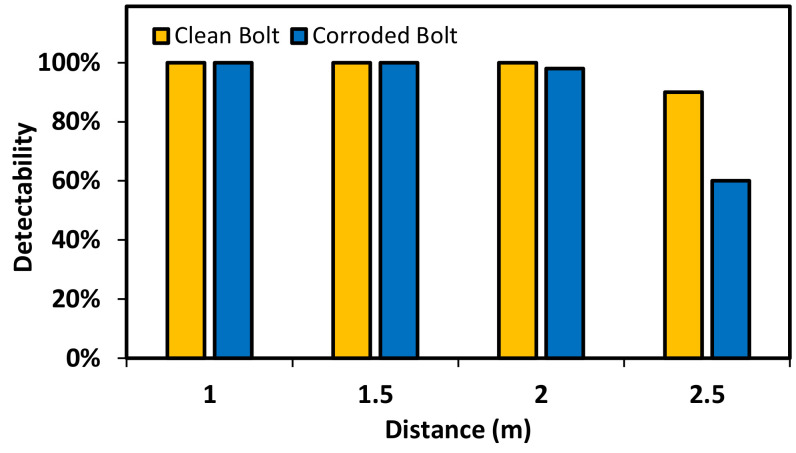
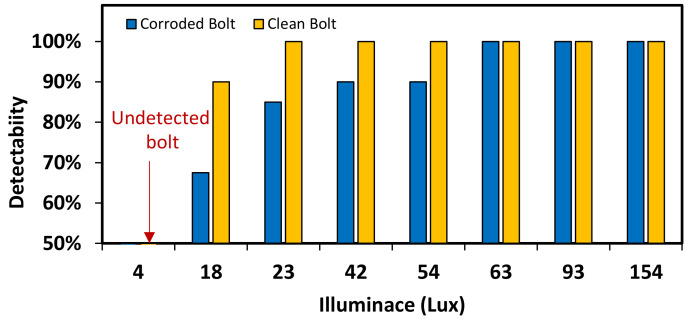
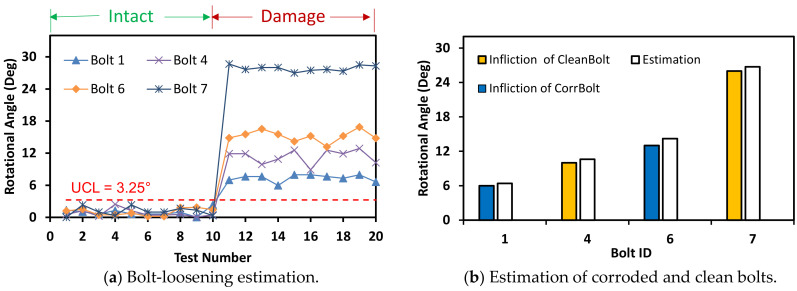
In this study, a regional convolutional neural network (RCNN)-based deep learning and Hough line transform (HLT) algorithm are applied to monitor corroded and loosened bolts in steel structures. The monitoring goals are to detect rusted bolts distinguished from non-corroded ones and also to estimate bolt-loosening angles of the identified bolts. The following approaches are performed to achieve the goals. Firstly, a RCNN-based autonomous bolt detection scheme is designed to identify corroded and clean bolts in a captured image. Secondly, a HLT-based image processing algorithm is designed to estimate rotational angles (i.e., bolt-loosening) of cropped bolts. Finally, the accuracy of the proposed framework is experimentally evaluated under various capture distances, perspective distortions, and light intensities. The lab-scale monitoring results indicate that the suggested method accurately acquires rusted bolts for images captured under perspective distortion angles less than 15° and light intensities larger than 63 lux.

摘要

在这项研究中,应用了一种基于区域卷积神经网络(RCNN)的深度学习和 Hough 线变换(HLT)算法来监测钢结构中腐蚀和松动的螺栓。监测目标是检测生锈的螺栓与未生锈的螺栓,并估计已识别螺栓的螺栓松动角度。为了实现这些目标,我们采用了以下方法。首先,设计了一种基于 RCNN 的自主螺栓检测方案,用于识别捕获图像中的腐蚀和干净的螺栓。其次,设计了一种基于 HLT 的图像处理算法,用于估计裁剪螺栓的旋转角度(即螺栓松动)。最后,在不同的捕获距离、透视失真和光照强度下,对所提出的框架的准确性进行了实验评估。实验室规模的监测结果表明,对于透视失真角度小于 15°和光照强度大于 63 勒克斯的图像,所提出的方法可以准确地获取生锈的螺栓。
https://cdn.ncbi.nlm.nih.gov/pmc/blobs/2926/7731320/3d5442246c1d/sensors-20-06888-g026.jpg
https://cdn.ncbi.nlm.nih.gov/pmc/blobs/2926/7731320/cf3dd9627aa6/sensors-20-06888-g001.jpg
https://cdn.ncbi.nlm.nih.gov/pmc/blobs/2926/7731320/bafe1cbdfc35/sensors-20-06888-g002.jpg
https://cdn.ncbi.nlm.nih.gov/pmc/blobs/2926/7731320/abdf38e54163/sensors-20-06888-g003.jpg
https://cdn.ncbi.nlm.nih.gov/pmc/blobs/2926/7731320/17b504c2319e/sensors-20-06888-g004.jpg
https://cdn.ncbi.nlm.nih.gov/pmc/blobs/2926/7731320/c98704078398/sensors-20-06888-g005.jpg
https://cdn.ncbi.nlm.nih.gov/pmc/blobs/2926/7731320/d40c8ea50f06/sensors-20-06888-g006.jpg
https://cdn.ncbi.nlm.nih.gov/pmc/blobs/2926/7731320/eeded98874dc/sensors-20-06888-g007.jpg
https://cdn.ncbi.nlm.nih.gov/pmc/blobs/2926/7731320/efb8c56b1121/sensors-20-06888-g008.jpg
https://cdn.ncbi.nlm.nih.gov/pmc/blobs/2926/7731320/432a17ae698c/sensors-20-06888-g009.jpg
https://cdn.ncbi.nlm.nih.gov/pmc/blobs/2926/7731320/4b1a4271c953/sensors-20-06888-g010.jpg
https://cdn.ncbi.nlm.nih.gov/pmc/blobs/2926/7731320/13ad70b3e165/sensors-20-06888-g011.jpg
https://cdn.ncbi.nlm.nih.gov/pmc/blobs/2926/7731320/e0223a7fd6f3/sensors-20-06888-g012.jpg
https://cdn.ncbi.nlm.nih.gov/pmc/blobs/2926/7731320/342f01fd007e/sensors-20-06888-g013.jpg
https://cdn.ncbi.nlm.nih.gov/pmc/blobs/2926/7731320/2f2003dde486/sensors-20-06888-g014.jpg
https://cdn.ncbi.nlm.nih.gov/pmc/blobs/2926/7731320/10c28b77aa18/sensors-20-06888-g015.jpg
https://cdn.ncbi.nlm.nih.gov/pmc/blobs/2926/7731320/451b76f31b76/sensors-20-06888-g016a.jpg
https://cdn.ncbi.nlm.nih.gov/pmc/blobs/2926/7731320/61ba94ff7f83/sensors-20-06888-g017.jpg
https://cdn.ncbi.nlm.nih.gov/pmc/blobs/2926/7731320/40993ea5d0f4/sensors-20-06888-g018.jpg
https://cdn.ncbi.nlm.nih.gov/pmc/blobs/2926/7731320/d924e5cc99f1/sensors-20-06888-g019.jpg
https://cdn.ncbi.nlm.nih.gov/pmc/blobs/2926/7731320/cb5e9eaa595c/sensors-20-06888-g020.jpg
https://cdn.ncbi.nlm.nih.gov/pmc/blobs/2926/7731320/8e08690f4a9d/sensors-20-06888-g021.jpg
https://cdn.ncbi.nlm.nih.gov/pmc/blobs/2926/7731320/c726642c46fb/sensors-20-06888-g022.jpg
https://cdn.ncbi.nlm.nih.gov/pmc/blobs/2926/7731320/74d7ddd1d5b7/sensors-20-06888-g023.jpg
https://cdn.ncbi.nlm.nih.gov/pmc/blobs/2926/7731320/56a0073a7df8/sensors-20-06888-g024.jpg
https://cdn.ncbi.nlm.nih.gov/pmc/blobs/2926/7731320/dbb280e529af/sensors-20-06888-g025.jpg
https://cdn.ncbi.nlm.nih.gov/pmc/blobs/2926/7731320/3d5442246c1d/sensors-20-06888-g026.jpg
https://cdn.ncbi.nlm.nih.gov/pmc/blobs/2926/7731320/cf3dd9627aa6/sensors-20-06888-g001.jpg
https://cdn.ncbi.nlm.nih.gov/pmc/blobs/2926/7731320/bafe1cbdfc35/sensors-20-06888-g002.jpg
https://cdn.ncbi.nlm.nih.gov/pmc/blobs/2926/7731320/abdf38e54163/sensors-20-06888-g003.jpg
https://cdn.ncbi.nlm.nih.gov/pmc/blobs/2926/7731320/17b504c2319e/sensors-20-06888-g004.jpg
https://cdn.ncbi.nlm.nih.gov/pmc/blobs/2926/7731320/c98704078398/sensors-20-06888-g005.jpg
https://cdn.ncbi.nlm.nih.gov/pmc/blobs/2926/7731320/d40c8ea50f06/sensors-20-06888-g006.jpg
https://cdn.ncbi.nlm.nih.gov/pmc/blobs/2926/7731320/eeded98874dc/sensors-20-06888-g007.jpg
https://cdn.ncbi.nlm.nih.gov/pmc/blobs/2926/7731320/efb8c56b1121/sensors-20-06888-g008.jpg
https://cdn.ncbi.nlm.nih.gov/pmc/blobs/2926/7731320/432a17ae698c/sensors-20-06888-g009.jpg
https://cdn.ncbi.nlm.nih.gov/pmc/blobs/2926/7731320/4b1a4271c953/sensors-20-06888-g010.jpg
https://cdn.ncbi.nlm.nih.gov/pmc/blobs/2926/7731320/13ad70b3e165/sensors-20-06888-g011.jpg
https://cdn.ncbi.nlm.nih.gov/pmc/blobs/2926/7731320/e0223a7fd6f3/sensors-20-06888-g012.jpg
https://cdn.ncbi.nlm.nih.gov/pmc/blobs/2926/7731320/342f01fd007e/sensors-20-06888-g013.jpg
https://cdn.ncbi.nlm.nih.gov/pmc/blobs/2926/7731320/2f2003dde486/sensors-20-06888-g014.jpg
https://cdn.ncbi.nlm.nih.gov/pmc/blobs/2926/7731320/10c28b77aa18/sensors-20-06888-g015.jpg
https://cdn.ncbi.nlm.nih.gov/pmc/blobs/2926/7731320/451b76f31b76/sensors-20-06888-g016a.jpg
https://cdn.ncbi.nlm.nih.gov/pmc/blobs/2926/7731320/61ba94ff7f83/sensors-20-06888-g017.jpg
https://cdn.ncbi.nlm.nih.gov/pmc/blobs/2926/7731320/40993ea5d0f4/sensors-20-06888-g018.jpg
https://cdn.ncbi.nlm.nih.gov/pmc/blobs/2926/7731320/d924e5cc99f1/sensors-20-06888-g019.jpg
https://cdn.ncbi.nlm.nih.gov/pmc/blobs/2926/7731320/cb5e9eaa595c/sensors-20-06888-g020.jpg
https://cdn.ncbi.nlm.nih.gov/pmc/blobs/2926/7731320/8e08690f4a9d/sensors-20-06888-g021.jpg
https://cdn.ncbi.nlm.nih.gov/pmc/blobs/2926/7731320/c726642c46fb/sensors-20-06888-g022.jpg
https://cdn.ncbi.nlm.nih.gov/pmc/blobs/2926/7731320/74d7ddd1d5b7/sensors-20-06888-g023.jpg
https://cdn.ncbi.nlm.nih.gov/pmc/blobs/2926/7731320/56a0073a7df8/sensors-20-06888-g024.jpg
https://cdn.ncbi.nlm.nih.gov/pmc/blobs/2926/7731320/dbb280e529af/sensors-20-06888-g025.jpg
https://cdn.ncbi.nlm.nih.gov/pmc/blobs/2926/7731320/3d5442246c1d/sensors-20-06888-g026.jpg

相似文献

1
Monitoring of Corroded and Loosened Bolts in Steel Structures via Deep Learning and Hough Transforms.基于深度学习和霍夫变换的钢结构腐蚀松动螺栓监测。
Sensors (Basel). 2020 Dec 2;20(23):6888. doi: 10.3390/s20236888.
2
Corroded Bolt Identification Using Mask Region-Based Deep Learning Trained on Synthesized Data.基于掩模区域的深度学习的腐蚀螺栓识别技术及其在合成数据上的训练。
Sensors (Basel). 2022 Apr 27;22(9):3340. doi: 10.3390/s22093340.
3
Bolt-Loosening Monitoring Framework Using an Image-Based Deep Learning and Graphical Model.基于图像的深度学习和图形模型的螺栓松动监测框架。
Sensors (Basel). 2020 Jun 15;20(12):3382. doi: 10.3390/s20123382.
4
Detection of Missing Bolts for Engineering Structures in Natural Environment Using Machine Vision and Deep Learning.利用机器视觉和深度学习技术检测自然环境中工程结构的缺失螺栓
Sensors (Basel). 2023 Jun 16;23(12):5655. doi: 10.3390/s23125655.
5
Loosening Identification of Multi-Bolt Connections Based on Wavelet Transform and ResNet-50 Convolutional Neural Network.基于小波变换和 ResNet-50 卷积神经网络的多螺栓连接松动识别。
Sensors (Basel). 2022 Sep 9;22(18):6825. doi: 10.3390/s22186825.
6
Image Registration-Based Bolt Loosening Detection of Steel Joints.基于图像配准的钢节点螺栓松动检测
Sensors (Basel). 2018 Mar 28;18(4):1000. doi: 10.3390/s18041000.
7
Vision-Based Detection of Bolt Loosening Using YOLOv5.基于视觉的螺栓松动检测:使用YOLOv5
Sensors (Basel). 2022 Jul 11;22(14):5184. doi: 10.3390/s22145184.
8
Vibration-Based Loosening Detection of a Multi-Bolt Structure Using Machine Learning Algorithms.基于振动的多螺栓结构松动检测的机器学习算法研究。
Sensors (Basel). 2022 Feb 5;22(3):1210. doi: 10.3390/s22031210.
9
Detection Method for Bolted Connection Looseness at Small Angles of Timber Structures based on Deep Learning.基于深度学习的木结构小角度螺栓连接松动检测方法
Sensors (Basel). 2021 Apr 29;21(9):3106. doi: 10.3390/s21093106.
10
Preload Monitoring of Bolted L-Shaped Lap Joints Using Virtual Time Reversal Method.基于虚拟时反法的螺栓连接 L 型搭接接头预载监测。
Sensors (Basel). 2018 Jun 13;18(6):1928. doi: 10.3390/s18061928.

引用本文的文献

1
Autonomous Image-Based Corrosion Detection in Steel Structures Using Deep Learning.基于深度学习的钢结构自主图像腐蚀检测
Sensors (Basel). 2024 Jun 4;24(11):3630. doi: 10.3390/s24113630.
2
Image-Based Bolt-Loosening Detection Using a Checkerboard Perspective Correction Method.基于棋盘格透视校正法的基于图像的螺栓松动检测
Sensors (Basel). 2024 May 21;24(11):3271. doi: 10.3390/s24113271.
3
Nut Geometry Inspection Using Improved Hough Line and Circle Methods.利用改进的霍夫线和圆方法进行螺母几何形状检测。

本文引用的文献

1
Image Registration-Based Bolt Loosening Detection of Steel Joints.基于图像配准的钢节点螺栓松动检测
Sensors (Basel). 2018 Mar 28;18(4):1000. doi: 10.3390/s18041000.
2
A computational approach to edge detection.一种基于计算的边缘检测方法。
IEEE Trans Pattern Anal Mach Intell. 1986 Jun;8(6):679-98.
Sensors (Basel). 2023 Apr 13;23(8):3961. doi: 10.3390/s23083961.
4
Corroded Bolt Identification Using Mask Region-Based Deep Learning Trained on Synthesized Data.基于掩模区域的深度学习的腐蚀螺栓识别技术及其在合成数据上的训练。
Sensors (Basel). 2022 Apr 27;22(9):3340. doi: 10.3390/s22093340.