Center for Immunology and Inflammation, The Feinstein Institutes for Medical Research, 350 Community Dr, Manhasset, NY, 11030, USA.
Elmezzi Graduate School of Molecular Medicine, Manhasset, NY, USA.
Mol Med. 2020 Dec 4;26(1):121. doi: 10.1186/s10020-020-00243-6.
Neonatal sepsis and the associated myocardial dysfunction remain a leading cause of infant mortality. Extracellular cold-inducible RNA-binding protein (eCIRP) acts as a ligand of triggering receptor expressed on myeloid cells-1 (TREM-1). M3 is a small CIRP-derived peptide that inhibits the eCIRP/TREM-1 interaction. We hypothesize that the eCIRP/TREM-1 interaction in cardiomyocytes contributes to sepsis-induced cardiac dysfunction in neonatal sepsis, while M3 is cardioprotective.
Serum was collected from neonates in the Neonatal Intensive Care Unit (NICU). 5-7-day old C57BL/6 mouse pups were used in this study. Primary murine neonatal cardiomyocytes were stimulated with recombinant murine (rm) CIRP with M3. TREM-1 mRNA and supernatant cytokine levels were assayed. Mitochondrial oxidative stress, ROS, and membrane potential were assayed. Neonatal mice were injected with rmCIRP and speckle-tracking echocardiography was conducted to measure cardiac strain. Sepsis was induced by i.p. cecal slurry. Mouse pups were treated with M3 or vehicle. After 16 h, echocardiography was performed followed by euthanasia for tissue analysis. A 7-day survival study was conducted.
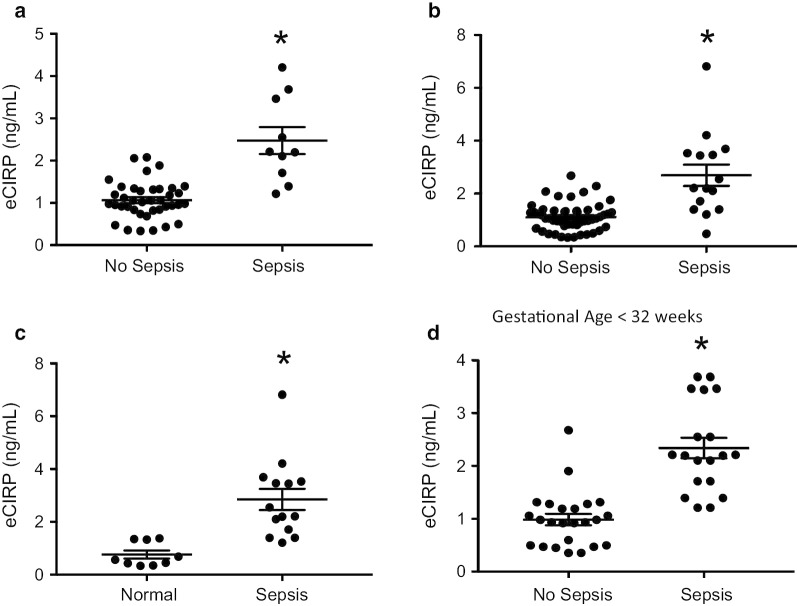
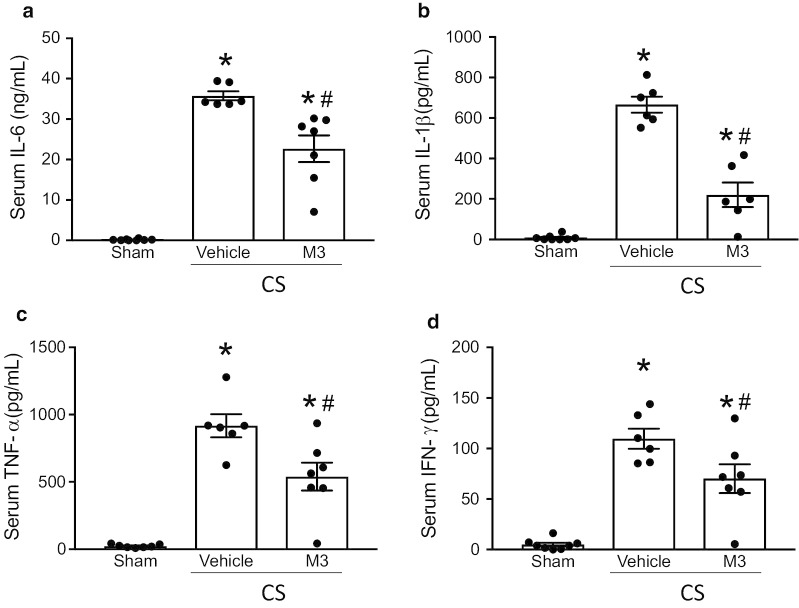
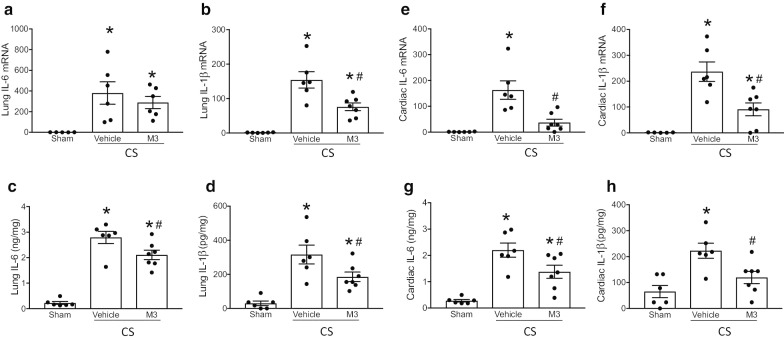
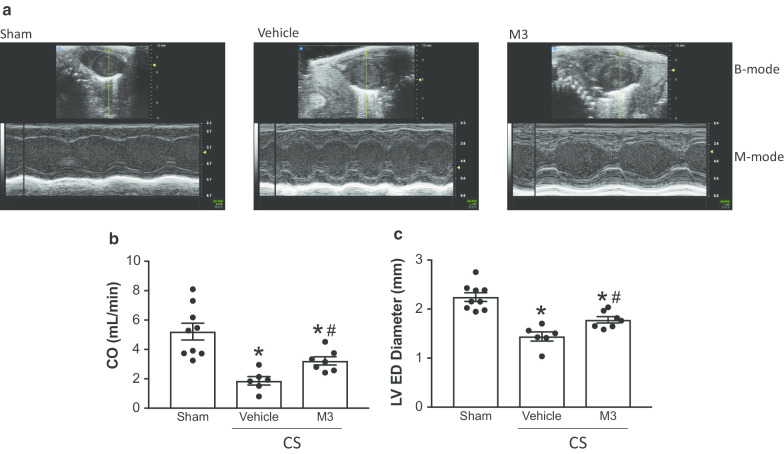
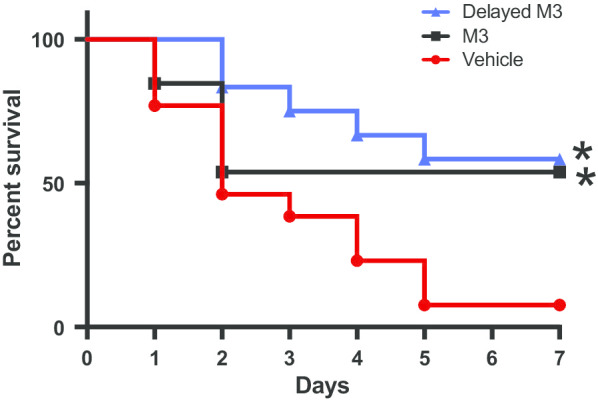
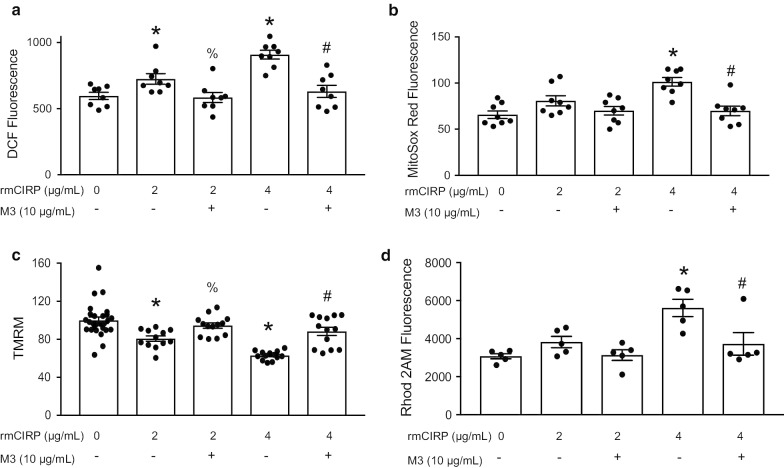
Serum eCIRP levels were elevated in septic human neonates. rmCIRP stimulation of cardiomyocytes increased TREM-1 gene expression. Stimulation of cardiomyocytes with rmCIRP upregulated TNF-α and IL-6 in the supernatants, while this upregulation was inhibited by M3. Stimulation of cardiomyocytes with rmCIRP resulted in a reduction in mitochondrial membrane potential (MMP) while M3 treatment returned MMP to near baseline. rmCIRP caused mitochondrial calcium overload; this was inhibited by M3. rmCIRP injection impaired longitudinal and radial cardiac strain. Sepsis resulted in cardiac dysfunction with a reduction in cardiac output and left ventricular end diastolic diameter. Both were improved by M3 treatment. Treatment with M3 attenuated serum, cardiac, and pulmonary levels of pro-inflammatory cytokines compared to vehicle-treated septic neonates. M3 dramatically increased sepsis survival.
Inhibition of eCIRP/TREM-1 interaction with M3 is cardioprotective, decreases inflammation, and improves survival in neonatal sepsis. Trial registration Retrospectively registered.
新生儿败血症和相关的心肌功能障碍仍然是婴儿死亡的主要原因。细胞外冷诱导 RNA 结合蛋白(eCIRP)作为髓样细胞表达的触发受体-1(TREM-1)的配体。M3 是一种小分子 CIRP 衍生肽,可抑制 eCIRP/TREM-1 相互作用。我们假设心肌细胞中的 eCIRP/TREM-1 相互作用导致新生儿败血症中的败血症性心脏功能障碍,而 M3 具有心脏保护作用。
从新生儿重症监护病房(NICU)的新生儿中采集血清。本研究使用 5-7 天大的 C57BL/6 幼鼠。用重组鼠(rm)CIRP 和 M3 刺激原代鼠新生心肌细胞。检测 TREM-1 mRNA 和上清细胞因子水平。检测线粒体氧化应激、ROS 和膜电位。用 rmCIRP 注射新生小鼠,并进行斑点追踪超声心动图测量心脏应变。通过腹腔内盲肠浆糊诱导败血症。用 M3 或载体处理小鼠幼仔。16 小时后进行超声心动图检查,然后安乐死进行组织分析。进行了为期 7 天的生存研究。
败血症人类新生儿的血清 eCIRP 水平升高。心肌细胞中 rmCIRP 的刺激增加了 TREM-1 基因的表达。rmCIRP 刺激心肌细胞增加了上清液中 TNF-α和 IL-6 的表达,而 M3 抑制了这种上调。rmCIRP 刺激心肌细胞导致线粒体膜电位(MMP)降低,而 M3 处理使 MMP 恢复接近基线。rmCIRP 导致线粒体钙超载;M3 抑制了这种超载。rmCIRP 注射损害了纵向和径向心脏应变。败血症导致心输出量和左心室舒张末期直径减少,从而导致心脏功能障碍。M3 治疗均可改善。与败血症的新生鼠相比,M3 治疗降低了血清、心脏和肺脏中的促炎细胞因子水平。M3 显著提高了败血症的存活率。
用 M3 抑制 eCIRP/TREM-1 相互作用具有心脏保护作用,可降低新生儿败血症中的炎症反应并提高存活率。
回顾性注册。