Division of Food Sciences, University of Nottingham, Sutton Bonington Campus, LE12 5RD, UK.
Campden BRI, Chipping Campden, Gloucestershire GL55 6LD, UK.
Food Chem. 2021 May 15;344:128663. doi: 10.1016/j.foodchem.2020.128663. Epub 2020 Nov 19.
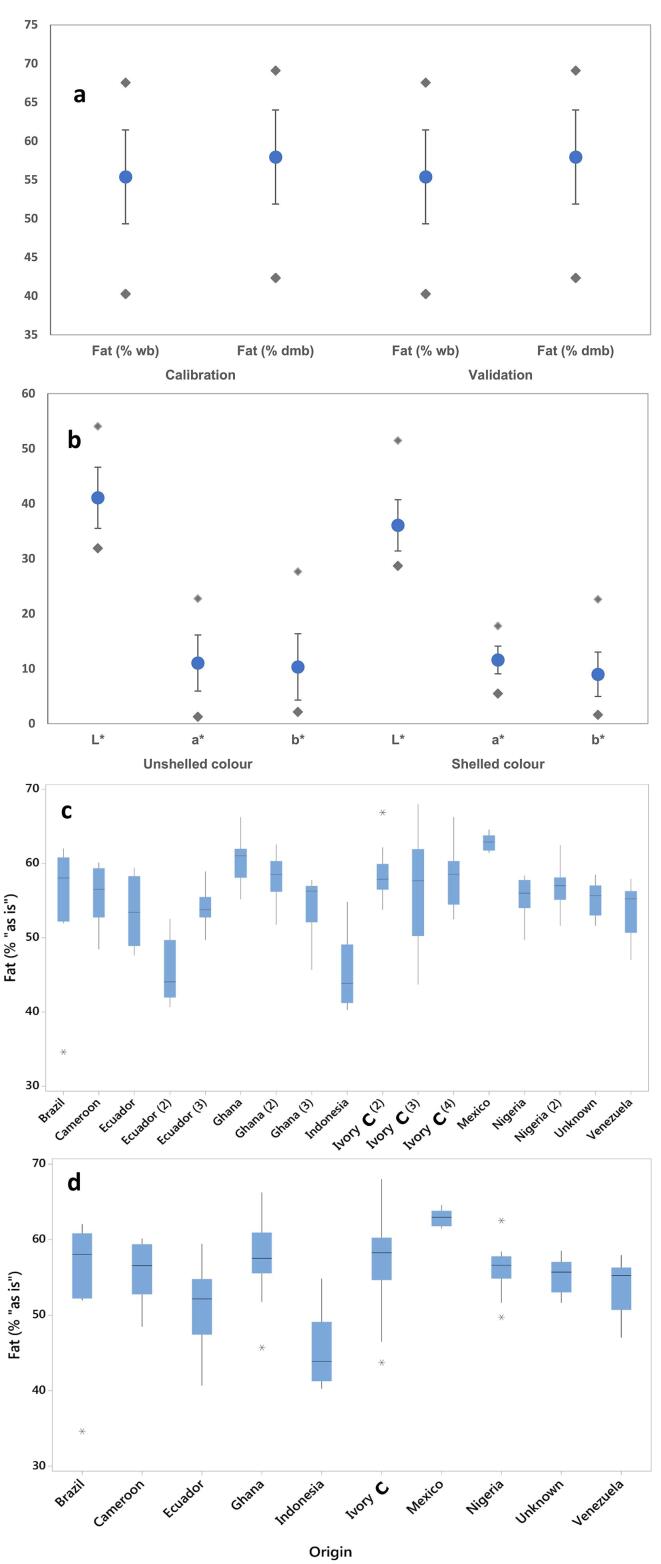
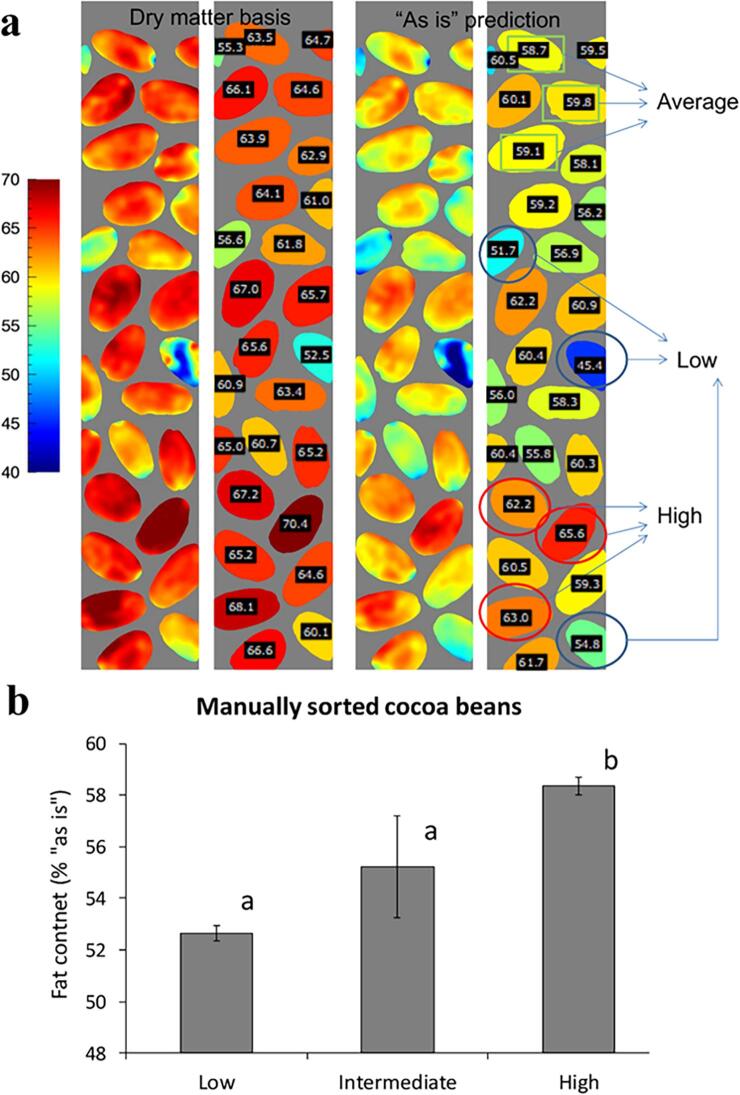
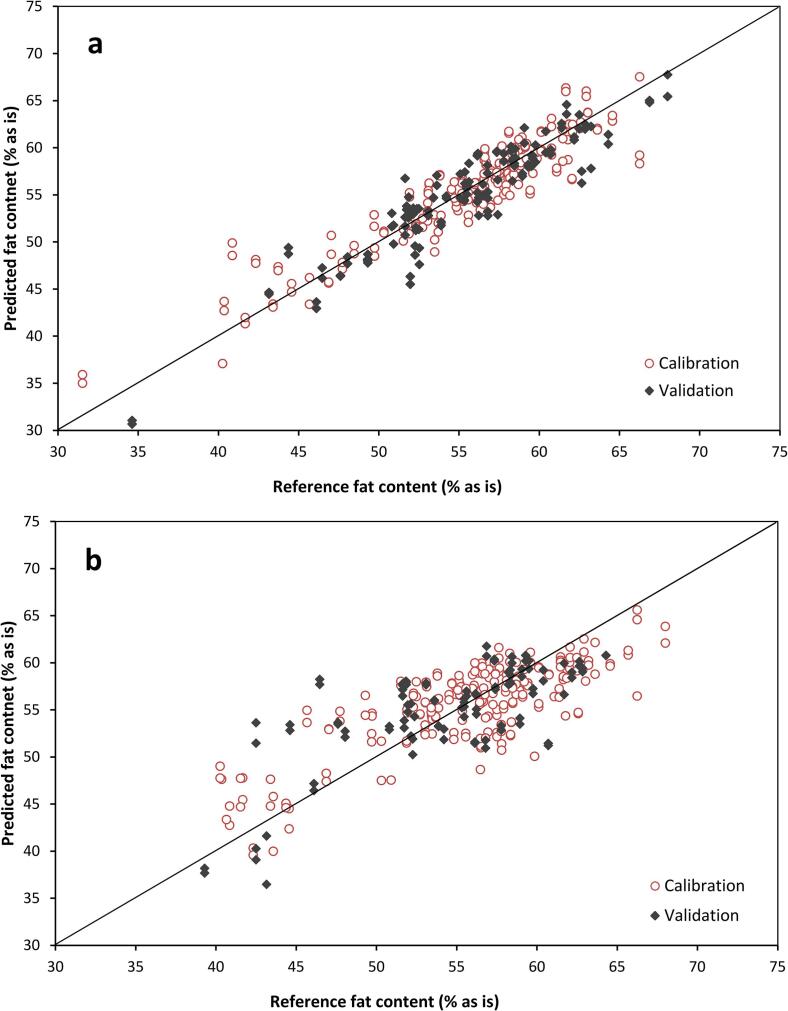
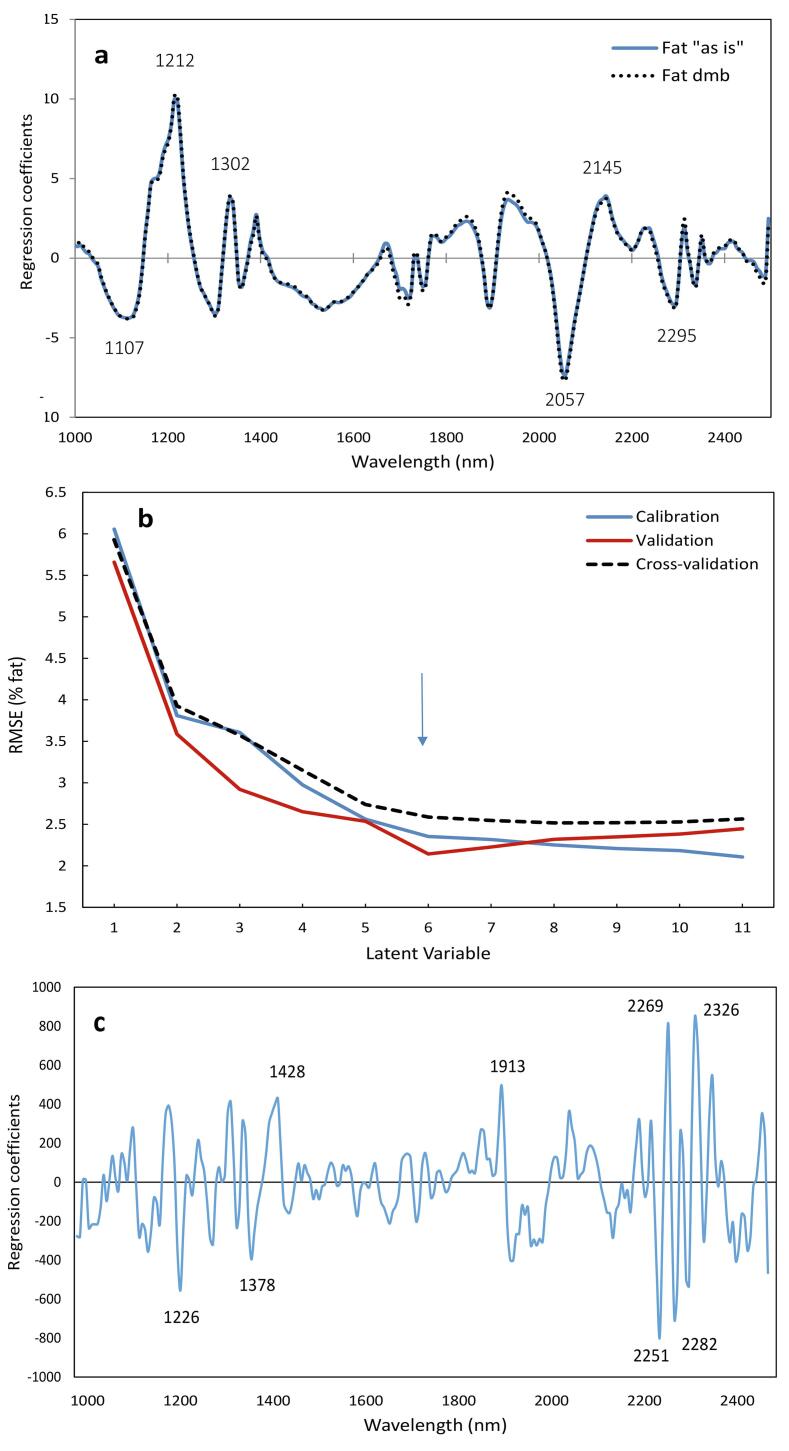
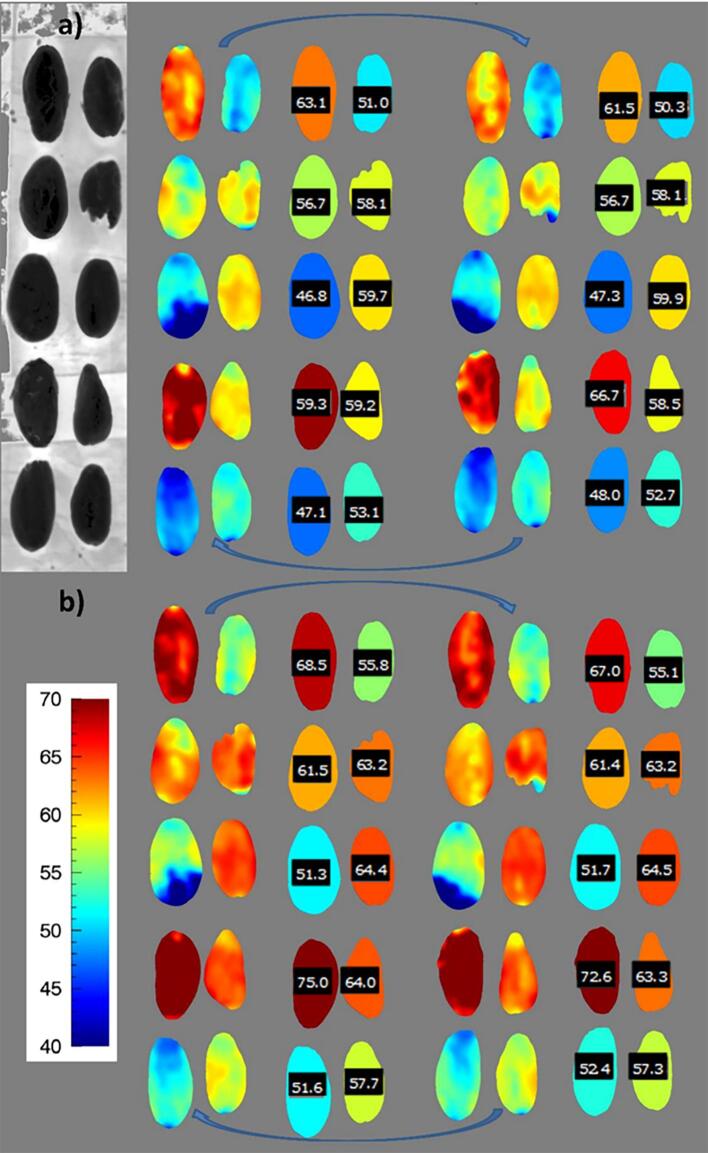
This work aimed to explore the possibility of predicting total fat content in whole dried cocoa beans at a single bean level using hyperspectral imaging (HSI). 170 beans randomly selected from 17 batches were individually analysed by HSI and by reference methodology for fat quantification. Both whole (i.e. in-shell) beans and shelled seeds (cotyledons) were analysed. Partial Least Square (PLS) regression models showed good performance for single shelled beans (R = 0.84, external prediction error of 2.4%). For both in-shell beans a slightly lower prediction error of 4.0% and R = 0.52 was achieved, but fat content estimation is still of interest given its wide range. Beans were manually segregated, demonstrating an increase by up to 6% in the fat content of sub-fractions. HSI was shown to be a valuable technique for rapid, non-contact prediction of fat content in cocoa beans even from scans of unshelled beans, enabling significant practical benefits to the food industry for quality control purposes and for obtaining a more consistent raw material.
本研究旨在探索利用高光谱成像(HSI)技术在单个豆粒水平上预测全干可可豆总脂肪含量的可能性。从 17 批中随机选择了 170 颗豆子,分别通过 HSI 和参考方法进行脂肪定量分析。对整豆(带壳)和去壳种子(子叶)进行了分析。偏最小二乘(PLS)回归模型对单个去壳豆粒的预测效果良好(R = 0.84,外部预测误差为 2.4%)。对于带壳豆粒,预测误差略高,为 4.0%,R = 0.52,但鉴于其广泛的范围,脂肪含量的估计仍然很有意义。通过手动对豆子进行分组,发现亚组分的脂肪含量增加了高达 6%。HSI 是一种快速、非接触式预测可可豆脂肪含量的有价值技术,即使对未去壳的豆子进行扫描也能实现,这为食品行业在质量控制和获得更一致的原材料方面带来了显著的实际效益。