Farahani Rahele A, Zhu Xiang-Yang, Tang Hui, Jordan Kyra L, Lerman Amir, Lerman Lilach O, Eirin Alfonso
Department of Internal Medicine, Division of Nephrology and Hypertension, Mayo Clinic, Rochester, MN, USA.
Department of Cardiovascular Diseases, Mayo Clinic, Rochester, MN, USA.
Stem Cells Int. 2020 Nov 17;2020:8845635. doi: 10.1155/2020/8845635. eCollection 2020.
Coexisting metabolic syndrome (MetS) and renal artery stenosis (RAS) are linked to poor renal outcomes. Mesenchymal stem/stromal cell- (MSC-) derived extracellular vesicles (EVs) from lean animals show superior ability to repair the experimental MetS+RAS kidney compared to EVs from MetS pig MSCs. We hypothesized that MetS leads to selective packaging in porcine EVs of microRNAs capable of targeting mitochondrial genes, interfering with their capacity to repair the MetS+RAS kidney.
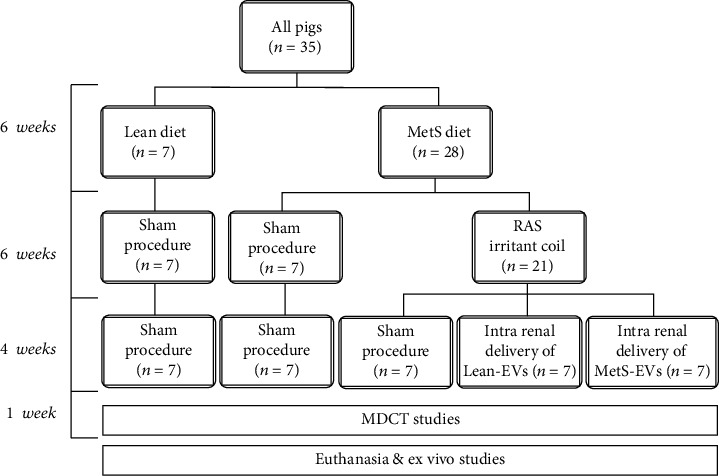
Five groups of pigs ( = 7 each) were studied after 16 weeks of diet-induced MetS and RAS (MetS+RAS) and MetS+RAS 4 weeks after a single intrarenal delivery of EVs harvested from allogeneic adipose tissue-derived MSCs isolated from Lean or MetS pigs, and Lean or MetS sham controls. Single-kidney blood flow (RBF) and glomerular filtration rate (GFR) were assessed in vivo with multidetector CT, whereas EV microRNA cargo, renal tubular mitochondrial structure and bioenergetics, and renal injury pathways were assessed ex vivo.
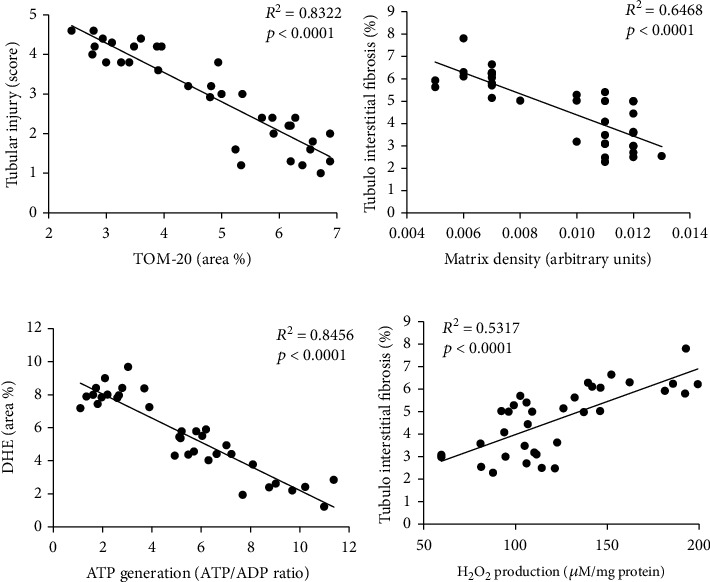
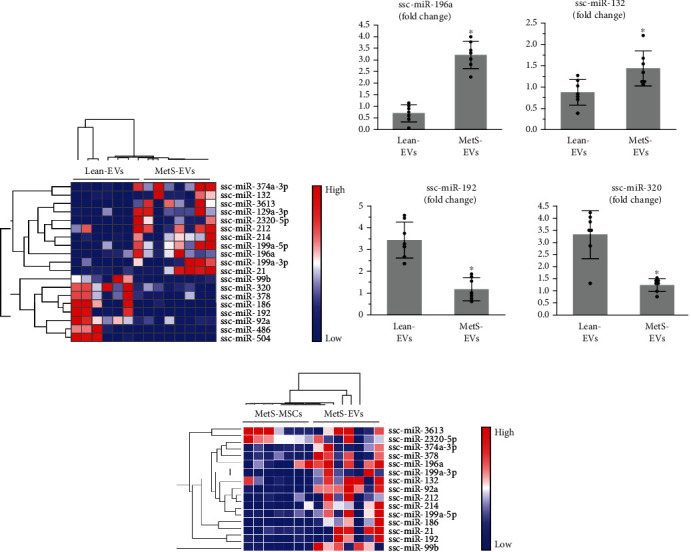
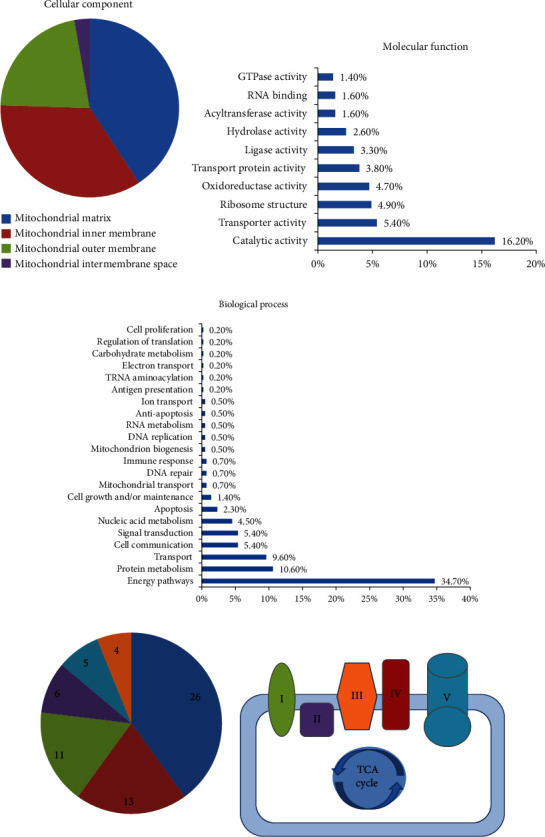
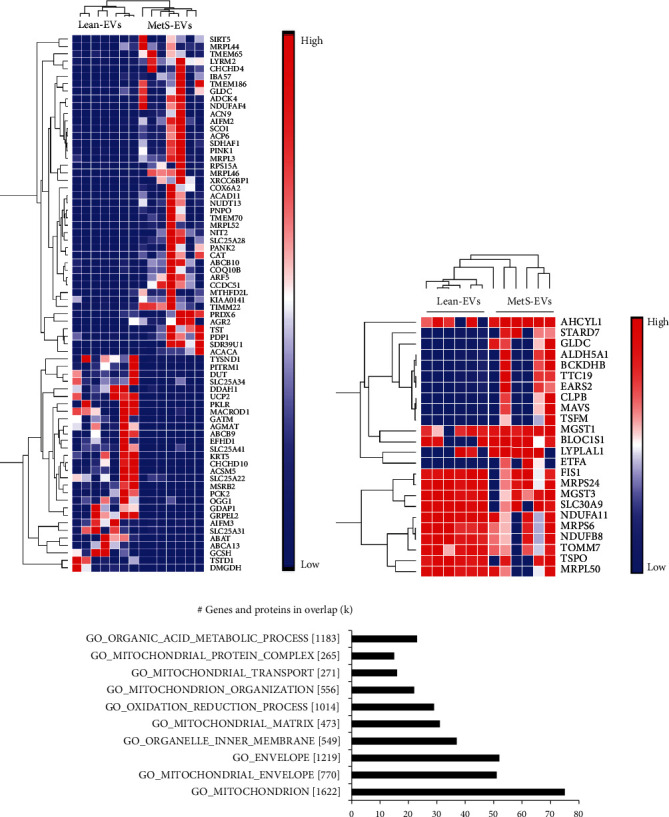
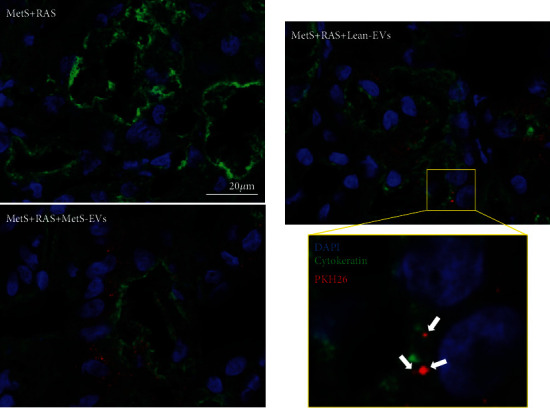
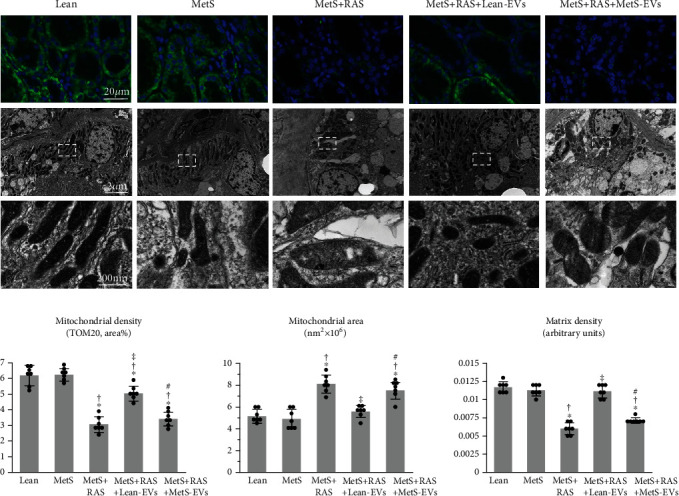
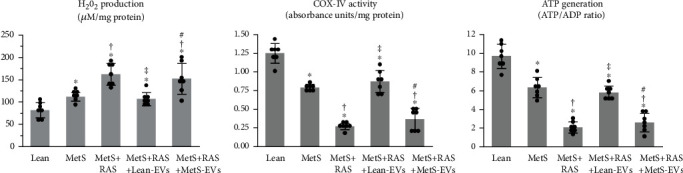
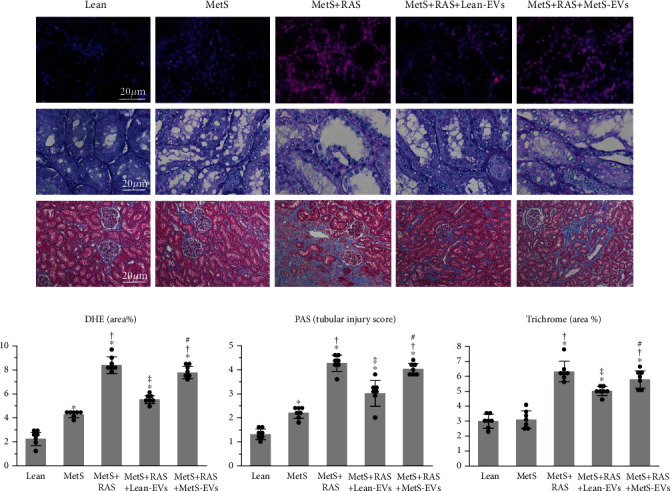
microRNA sequencing revealed 19 dysregulated microRNAs capable of targeting several mitochondrial genes in MetS-EVs versus Lean-EVs. Lean- and MetS-EVs were detected in the stenotic kidney 4 weeks after administration. However, only MetS-EVs failed to improve renal mitochondrial density, structure, and function or attenuate oxidative stress, tubular injury, and fibrosis. Furthermore, Lean-EVs but not MetS-EVs restored RBF and GFR in MetS+RAS.
MetS alters the cargo of mitochondria-related microRNAs in swine MSC-derived EVs, which might impair their capacity to repair the poststenotic kidney in MetS+RAS. These observations may contribute to develop approaches to improve the efficacy of MSC-EVs for patients with MetS.
并存的代谢综合征(MetS)和肾动脉狭窄(RAS)与不良肾脏结局相关。与来自患有代谢综合征猪的间充质干细胞(MSC)的细胞外囊泡(EV)相比,来自瘦动物的间充质干细胞/基质细胞(MSC)衍生的细胞外囊泡(EV)显示出更强的修复实验性MetS + RAS肾脏的能力。我们推测,MetS导致猪EV中能够靶向线粒体基因的微小RNA被选择性包装,从而干扰其修复MetS + RAS肾脏的能力。
在通过饮食诱导MetS和RAS 16周后(MetS + RAS),以及在从瘦猪或患有MetS的猪分离的同种异体脂肪组织来源的MSC收获的EV单次肾内递送4周后,研究五组猪(每组n = 7),以及瘦或MetS假手术对照组。使用多排CT在体内评估单肾血流量(RBF)和肾小球滤过率(GFR),而在体外评估EV微小RNA含量、肾小管线粒体结构和生物能量学以及肾损伤途径。
微小RNA测序显示,与瘦EV相比,MetS - EV中有19种失调的微小RNA能够靶向多个线粒体基因。给药4周后在狭窄肾脏中检测到瘦EV和MetS - EV。然而,只有MetS - EV未能改善肾线粒体密度、结构和功能,或减轻氧化应激、肾小管损伤和纤维化。此外,瘦EV而非MetS - EV恢复了MetS + RAS中的RBF和GFR。
MetS改变了猪MSC衍生的EV中与线粒体相关的微小RNA的含量,这可能损害其修复MetS + RAS中狭窄后肾脏的能力。这些观察结果可能有助于开发提高MSC - EV对MetS患者疗效的方法。