School of Mathematics and Statistics, UNSW Sydney, Kensington, NSW, Australia.
College of Engineering, Mathematical and Physical Sciences, University of Exeter, Exeter, United Kingdom.
PLoS One. 2020 Dec 7;15(12):e0243391. doi: 10.1371/journal.pone.0243391. eCollection 2020.
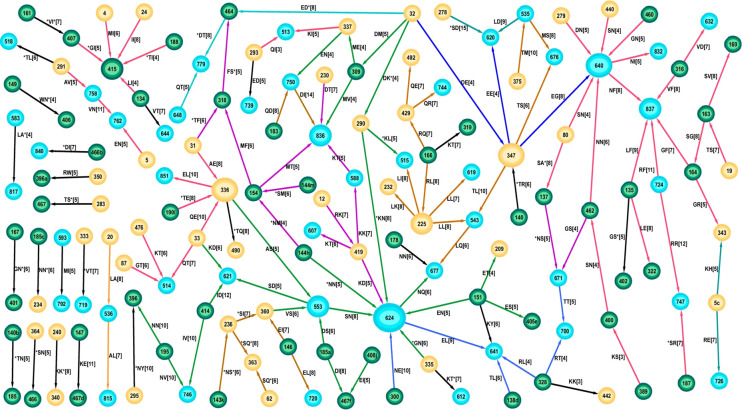
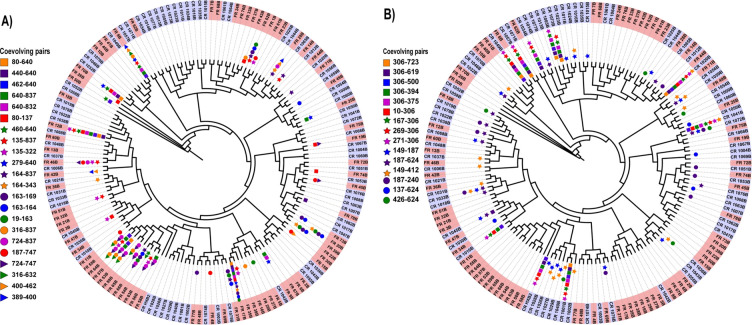
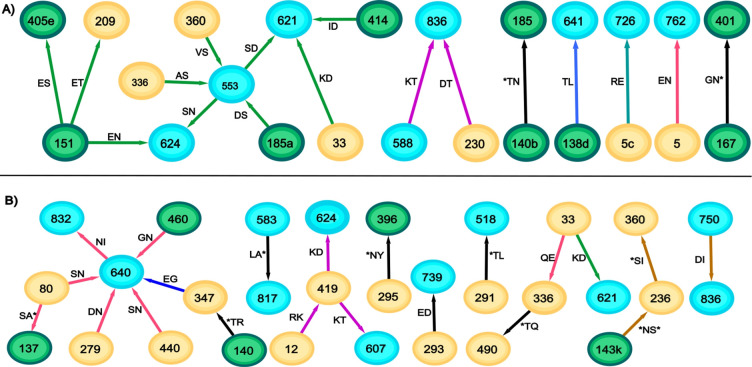
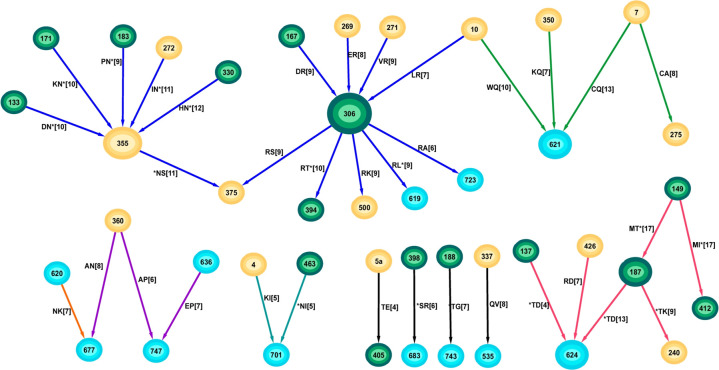
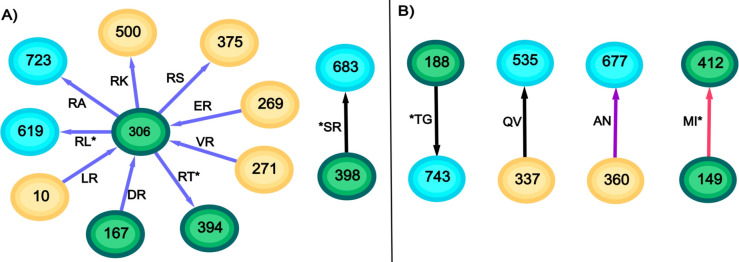
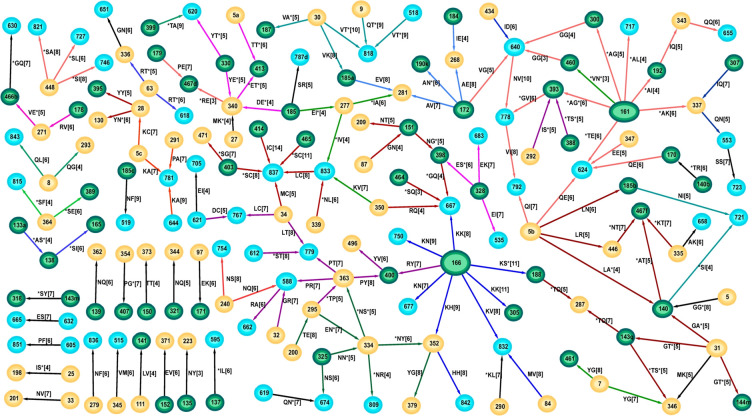
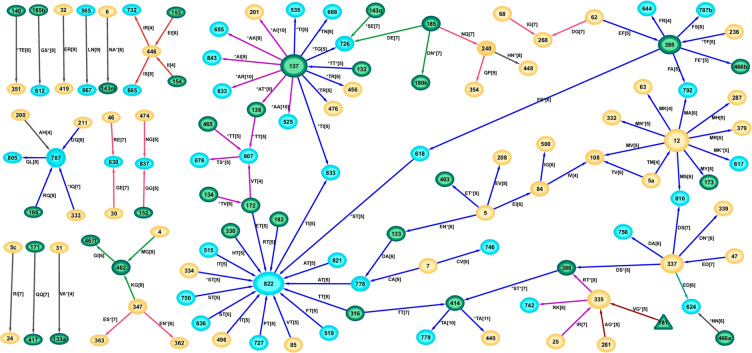
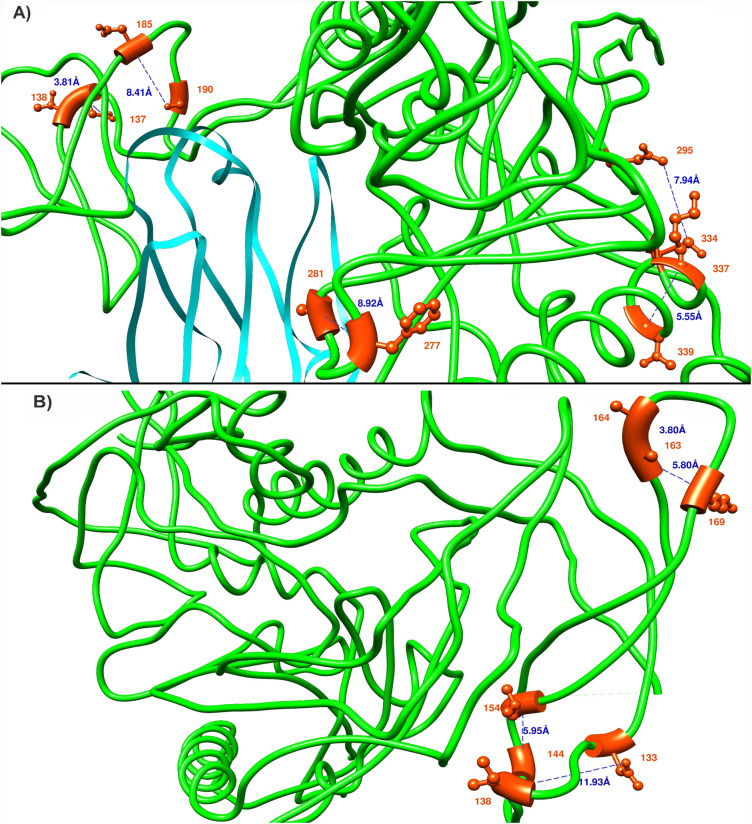
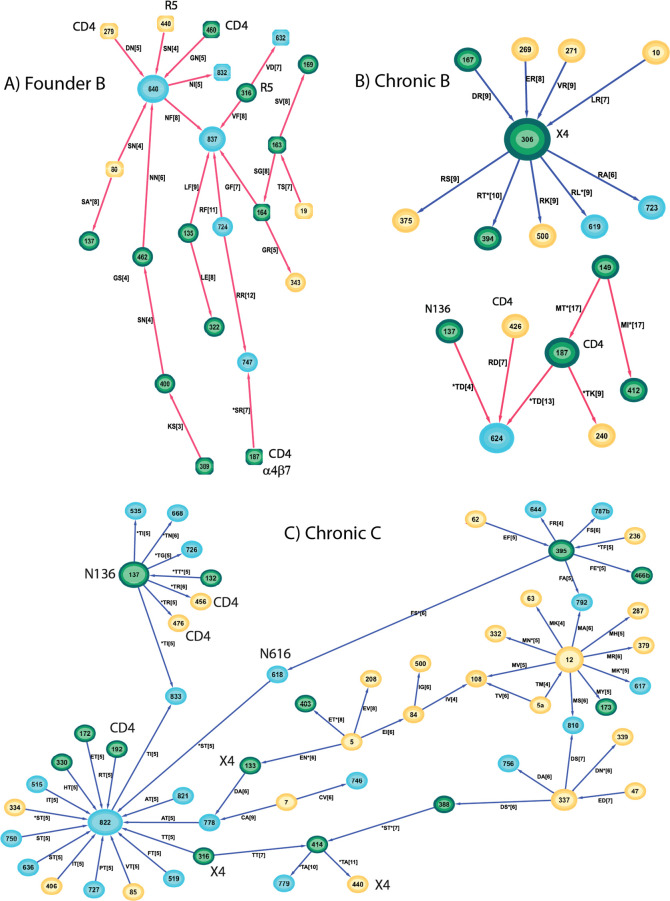
Human immunodeficiency virus (HIV) is subject to immune selective pressure soon after it establishes infection at the founder stage. As an individual progresses from the founder to chronic stage of infection, immune pressure forces a history of mutations that are embedded in envelope sequences. Determining this pathway of coevolving mutations can assist in understanding what is different with the founder virus and the essential pathways it takes to maintain infection. We have combined operations research and bioinformatics methods to extract key networks of mutations that differentiate founder and chronic stages for 156 subtype B and 107 subtype C envelope (gp160) sequences. The chronic networks for both subtypes revealed strikingly different hub-and-spoke topologies compared to the less structured transmission networks. This suggests that the hub nodes are impacted by the immune response and the resulting loss of fitness is compensated by mutations at the spoke positions. The major hubs in the chronic C network occur at positions 12, 137 (within the N136 glycan), and 822, and at position 306 for subtype B. While both founder networks had a more heterogeneous connected network structure, interestingly founder B subnetworks around positions 640 and 837 preferentially contained CD4 and coreceptor binding domains. Finally, we observed a differential effect of glycosylation between founder and chronic subtype B where the latter had mutational pathways significantly driven by N-glycosylation. Our study provides insights into the mutational pathways HIV takes to evade the immune response, and presents features more likely to establish founder infection, valuable for effective vaccine design.
人类免疫缺陷病毒(HIV)在创始阶段感染后很快就会受到免疫选择压力。随着个体从创始阶段到感染的慢性阶段进展,免疫压力迫使包膜序列中嵌入了一系列突变。确定这种共同进化突变的途径有助于了解创始病毒与维持感染所必需的途径有何不同。我们结合了运筹学和生物信息学方法,从 156 个 B 亚型和 107 个 C 亚型包膜(gp160)序列中提取出区分创始阶段和慢性阶段的关键突变网络。与结构不太复杂的传播网络相比,两种亚型的慢性网络显示出截然不同的中心节点和分支节点拓扑结构。这表明中心节点受到免疫反应的影响,而在分支节点的突变则补偿了适应性的损失。慢性 C 网络中的主要中心节点位于位置 12、137(在 N136 糖基内)和 822,以及位置 306 的 B 亚型。虽然创始网络的连接网络结构更加异构,但有趣的是,B 亚型围绕位置 640 和 837 的创始子网优先包含 CD4 和核心受体结合结构域。最后,我们观察到创始和慢性 B 亚型之间糖基化的差异效应,后者的突变途径明显受到 N-糖基化的驱动。我们的研究提供了对 HIV 逃避免疫反应所采取的突变途径的深入了解,并提出了更有可能建立创始感染的特征,这对有效疫苗设计具有重要价值。